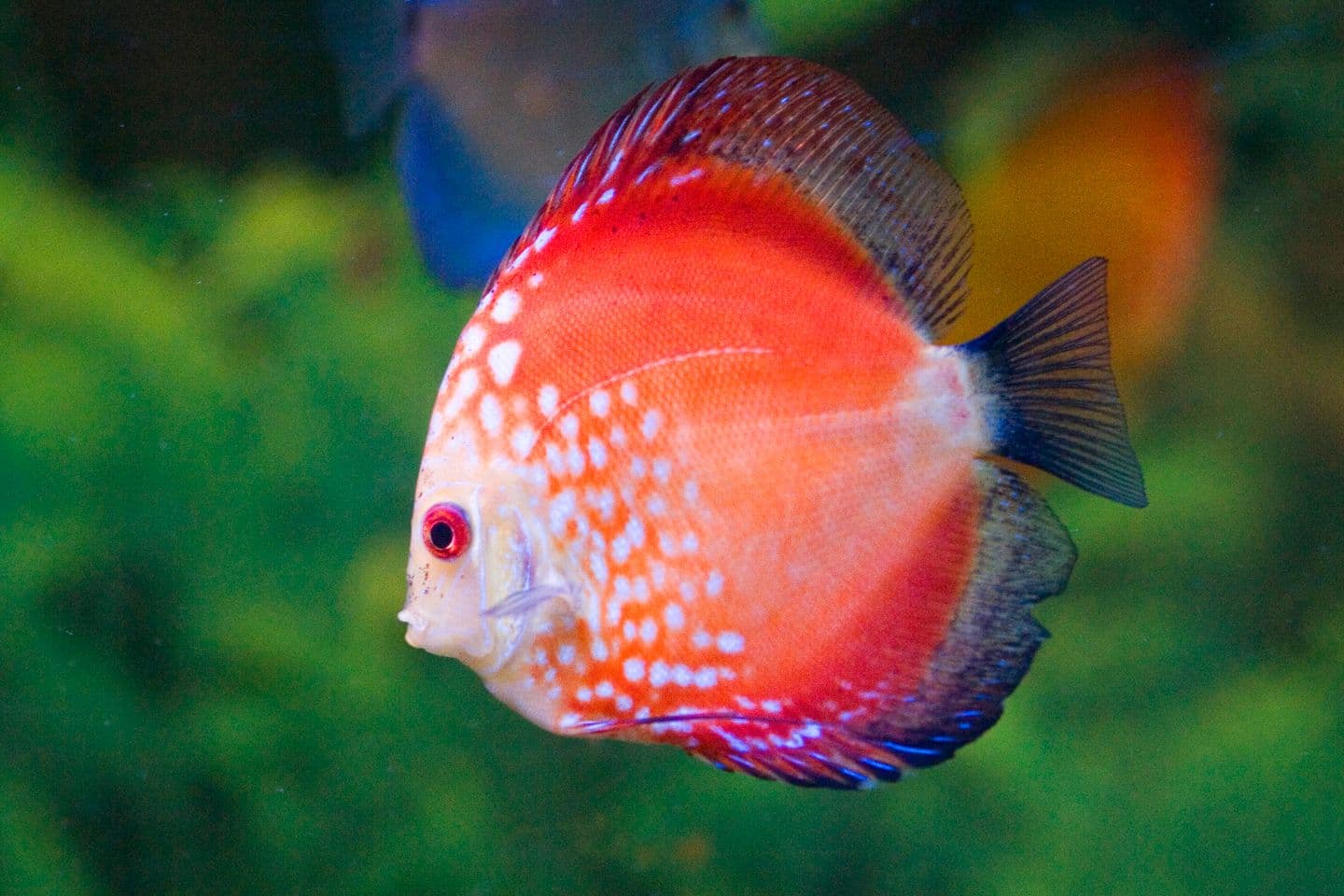
Discus: The Amazon Fish That Feeds Its Young With Its Own Skin
The discus is a tall, laterally flattened, almost perfectly round cichlid from slow, sheltered waters of the Amazon basin, prized for the huge range of colours and patterns developed through generatio
The discus is a tall, laterally flattened, almost perfectly round cichlid from slow, sheltered waters of the Amazon basin, prized for the huge range of colours and patterns developed through generations of selective breeding, from solid reds and blues to intricate pigeon blood and marble patterns. It reaches around fifteen to twenty centimetres and is widely regarded as one of the most demanding, and most rewarding, fish in the freshwater hobby.
One genuinely remarkable piece of biology sets it apart from almost every other aquarium fish: both parent discus secrete a nutrient-rich mucus from their skin, sometimes called discus milk, which their fry feed on directly for the first few weeks of life. This is real, documented parental care, not aquarium folklore, and few other fish in the world do anything like it.
Tank and water requirements
Discus are not a beginner's fish, whatever a shop might imply. A group of five or six needs a tank of at least two hundred litres, tall rather than long, kept at a genuinely warm twenty eight to thirty degrees and with soft, slightly acidic water for the best results. They are notably sensitive to poor water quality and ammonia spikes compared to hardier community fish.
Frequent partial water changes, often several times a week in a heavily stocked discus tank, are standard practice among serious keepers rather than an occasional chore, and this is the single biggest commitment a prospective discus owner should weigh up before buying.
Diet and behaviour
A varied diet of high-quality discus-specific pellets or beef heart mix, alongside live or frozen bloodworm, supports their size and colour. They are generally peaceful, shoaling fish that do best in a group of their own kind rather than as a lone specimen, and can be shy or easily stressed by boisterous tankmates.
Because of their specific water and temperature needs, discus are usually kept in a species-only tank or alongside a small number of similarly warm-water-tolerant, calm fish such as cardinal tetras, which share the same soft, warm Amazon water discus need.
Buying tips
Priced from around three hundred rupees for younger, plainer fish to several thousand rupees for premium colour strains, reflecting the specialised breeding involved
A genuinely advanced fish best attempted after experience with easier cichlids or a well-run community tank, not as a first fish
Buy from a specialist discus breeder or shop with visibly pristine, warm, well-maintained tanks rather than a general aquarium store
The scissortail rasbora, Rasbora trilineata, gets its name from the black-and-white banded tail fin, which opens and closes in a scissoring motion as the fish swims, a genuinely visible behaviour rath
Flushing a fish, whether dead or simply unwanted, down the toilet is a habit many Indian households have inherited without questioning it, and it carries real risks that are worth understanding.
A cover might seem like an afterthought compared to filtration or lighting, but for a saltwater tank it does real, unglamorous work: cutting evaporation, which matters a great deal given how salinity