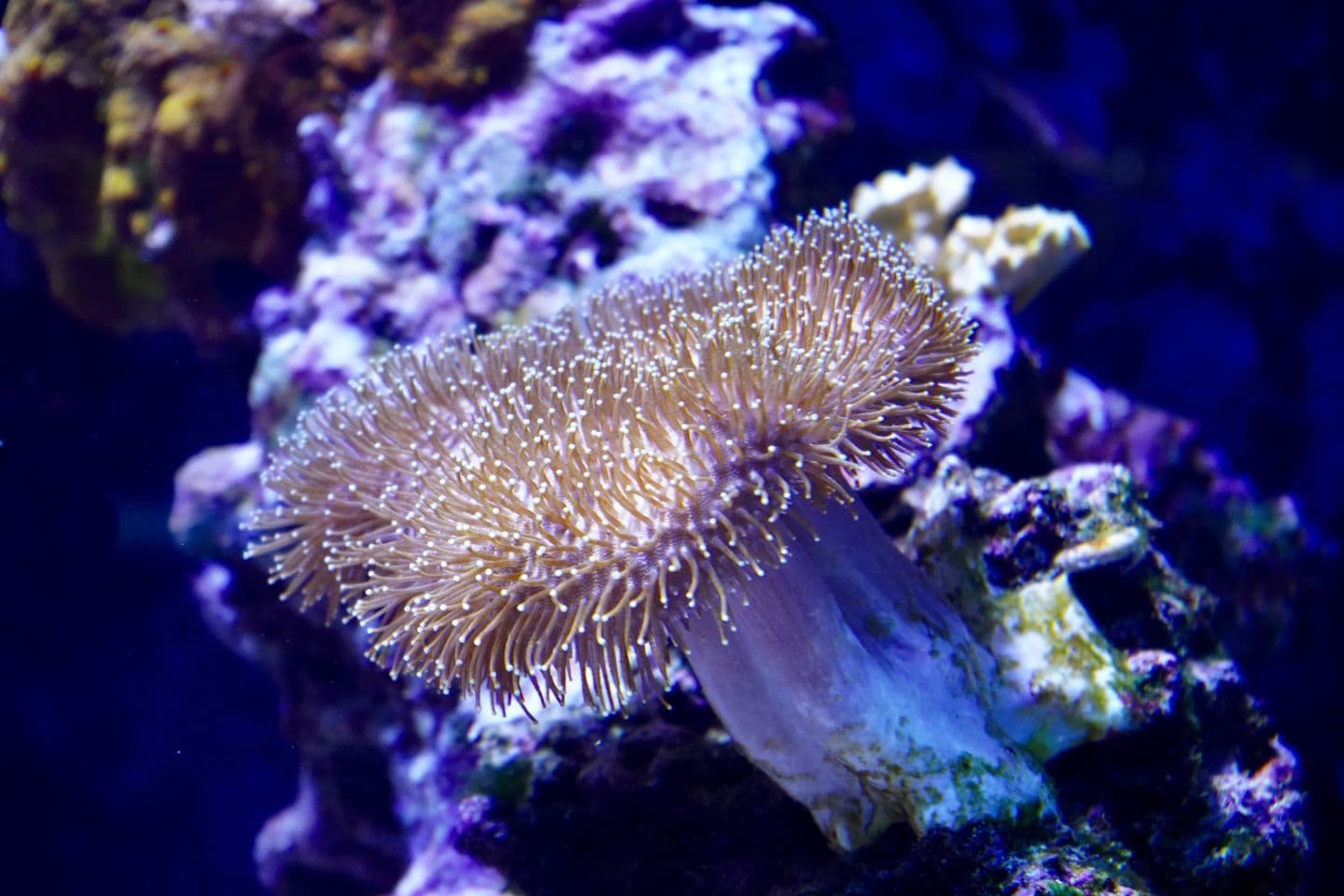
Corals are animals, not plants, even though a lot of their day to day energy comes from the algae living inside them. Understanding both halves of that equation, photosynthesis and direct feeding, is
Corals are animals, not plants, even though a lot of their day to day energy comes from the algae living inside them. Understanding both halves of that equation, photosynthesis and direct feeding, is the difference between corals that merely survive and corals that visibly thrive, grow and colour up.
The photosynthesis half of the story
Most reef building corals host a symbiotic algae called zooxanthellae within their tissue. Under aquarium lighting, this algae photosynthesises and shares a large share of the sugars it produces with the coral, in exchange for shelter and access to light. For many soft corals and zoanthids, this alone covers a significant part of daily energy needs.
Why light alone is not always enough
Photosynthesis supplies energy in the form of sugars, but it does not supply everything a growing coral needs. Proteins, amino acids, and trace nutrients largely have to come from actual food, whether captured directly or absorbed from the water as dissolved organics. This is why corals kept under good light but never fed can survive for a long time while still looking pale, undersized or slow to grow.
What different coral types eat
Soft corals and zoanthids: rely heavily on photosynthesis, but respond well to very fine foods such as phytoplankton and liquid amino acid supplements broadcast into the water.
LPS corals (large polyp stony, such as Duncan, hammer, torch and frogspawn): have larger mouths and visibly extend feeding tentacles, so they readily accept small meaty foods like mysis shrimp, chopped seafood or reef specific pellets, usually two to three times a week.
SPS corals (small polyp stony, such as Acropora and Montipora): have tiny polyps and do best with very fine suspended foods, rotifers, copepod nauplii and powdered coral foods, rather than anything with visible chunks.
Non-photosynthetic corals (such as sun corals and many gorgonians): have little to no zooxanthellae and rely almost entirely on direct feeding, needing frequent small meals of appropriately sized food and are considered advanced corals for exactly this reason.
How to feed corals in practice
Target feed LPS corals directly with a turkey baster or syringe, placing food close enough for the coral's tentacles to catch it, ideally with flow briefly reduced so food is not blown away before it can feed.
Broadcast feed fine foods for SPS and soft coral dominated tanks, dosing directly into an area of good flow so the food distributes across the tank.
Feed in the evening or when flow is naturally gentler in tanks with a wave or pulse setting, since many corals extend their feeding tentacles more fully once the lights begin to dim.
Getting the balance right
Overfeeding corals is a real risk, since uneaten food breaks down into nutrients that fuel algae growth and can throw off a stable reef tank's water chemistry. Start with modest amounts two to three times a week, watch how the corals respond over a couple of weeks, and adjust from there rather than feeding heavily from day one. A tank running a protein skimmer or other strong nutrient export can generally handle slightly more generous feeding than a tank without one, so match your feeding routine to how well your system exports waste, not just to how hungry the corals look.
A practical note for Indian keepers
Frozen coral foods need an uninterrupted cold chain, which can be inconsistent with smaller local stockists, so check that frozen mysis or coral blends feel solidly frozen at the point of purchase and are transported home in an insulated bag, especially during summer. Live phytoplankton, where available, has a short shelf life and should be kept refrigerated and used within the window stated on the bottle, since it loses much of its nutritional value once it dies off in storage.
The scissortail rasbora, Rasbora trilineata, gets its name from the black-and-white banded tail fin, which opens and closes in a scissoring motion as the fish swims, a genuinely visible behaviour rath
Flushing a fish, whether dead or simply unwanted, down the toilet is a habit many Indian households have inherited without questioning it, and it carries real risks that are worth understanding.
A cover might seem like an afterthought compared to filtration or lighting, but for a saltwater tank it does real, unglamorous work: cutting evaporation, which matters a great deal given how salinity