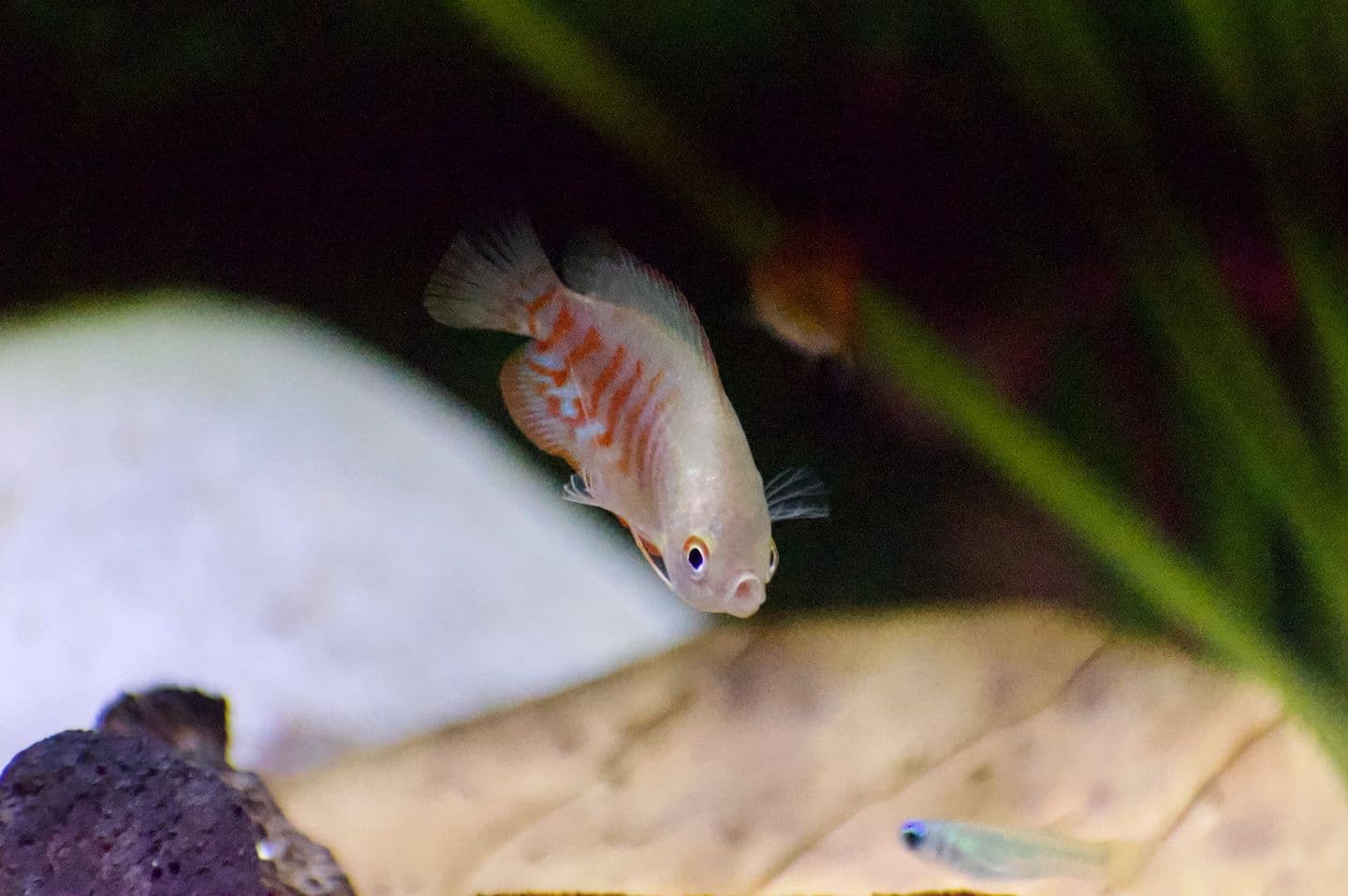
Three Spot Gourami: The Fish With a Trick Third Eye
The three spot gourami gets its name from an optical trick rather than an anatomical one: it has two visible dark spots, one at the middle of the body and one at the base of the tail, with the eye its
The three spot gourami gets its name from an optical trick rather than an anatomical one: it has two visible dark spots, one at the middle of the body and one at the base of the tail, with the eye itself counted as the third spot to make up the name. In its natural blue-grey form and in the popular selectively bred gold and opaline colour varieties, it reaches around twelve to fifteen centimetres, one of the larger commonly kept gouramis.
It is a hardy, adaptable fish that has been a mainstay of the aquarium hobby for a long time, valued for its easy care as much as its appearance.
Tank and water requirements
Given its adult size, a single three spot gourami or a calm pair needs a tank of at least a hundred litres, with floating plants and some open swimming space. It is highly tolerant of a wide range of water conditions, including typical Indian tap water, making it one of the easier gouramis from a water chemistry standpoint.
As with other labyrinth fish, a lid with an air gap above the water helps it breathe comfortably.
Diet and behaviour
An easy omnivorous diet of flakes, pellets and occasional live or frozen food suits it well. It can be territorial, particularly males towards each other or towards similarly shaped fish, and is generally best kept singly or as a calm pair rather than in a group of its own kind in a smaller tank.
It is otherwise reasonably peaceful with different-looking community fish and makes a hardy, low-maintenance centrepiece for a larger tank.
Buying tips
Priced around eighty to two hundred rupees per fish depending on colour form in most Indian shops
The gold and opaline colour varieties are more commonly available in India than the plain wild-type blue-grey form
Best kept singly or in a calm pair rather than a full group given its territorial streak
The scissortail rasbora, Rasbora trilineata, gets its name from the black-and-white banded tail fin, which opens and closes in a scissoring motion as the fish swims, a genuinely visible behaviour rath
Flushing a fish, whether dead or simply unwanted, down the toilet is a habit many Indian households have inherited without questioning it, and it carries real risks that are worth understanding.
A cover might seem like an afterthought compared to filtration or lighting, but for a saltwater tank it does real, unglamorous work: cutting evaporation, which matters a great deal given how salinity