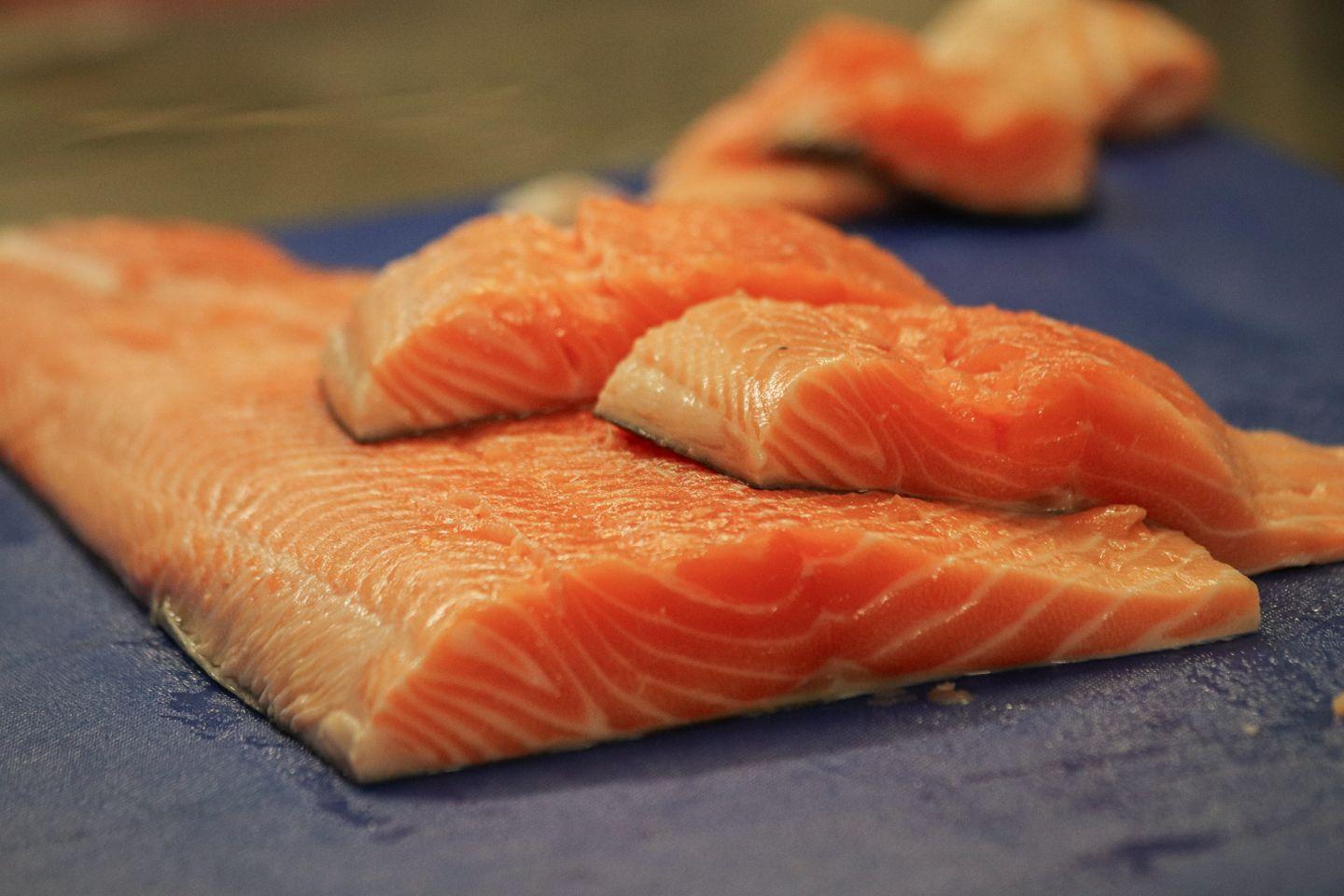
Salmon meal is a rendered, dried ingredient produced from salmon tissues. It provides concentrated protein and minerals. Depending on the raw material and processing, it may also contain…
Salmon meal is a rendered, dried ingredient produced from salmon tissues. It provides concentrated protein and minerals. Depending on the raw material and processing, it may also contain some marine fatty acids, but the amounts of EPA and DHA can vary and should not be assumed from the ingredient name.
Salmon meal differs from fish oil: fish oil is a concentrated fat ingredient, whereas salmon meal is primarily a protein-and-mineral ingredient. Any residual EPA or DHA in the meal is variable and should not be inferred without a product analysis. Heat processing and storage can affect amino-acid availability and the stability of residual fats.
A salmon-based food is not automatically hypoallergenic, and fish ingredients can trigger adverse food reactions in some pets. For cats, the finished formulation must meet taurine, arachidonic acid and other feline nutrient requirements. Manufacturers should specify species, composition and quality controls rather than relying on broad “fish protein” claims.
Under the AAFCO definition, animal by-product meal is a rendered product from animal tissues that cannot meet the criteria for other specifically defined rendered meals. The definition…
Pork meal is a rendered, dried ingredient made from pork tissues. The process removes most moisture and some fat, producing a concentrated source of protein and minerals for pet-food…
Lamb meal is a rendered, dried ingredient made from lamb tissues. Rendering removes much of the water and fat, leaving a concentrated source of protein and minerals. Because it is a meal,…