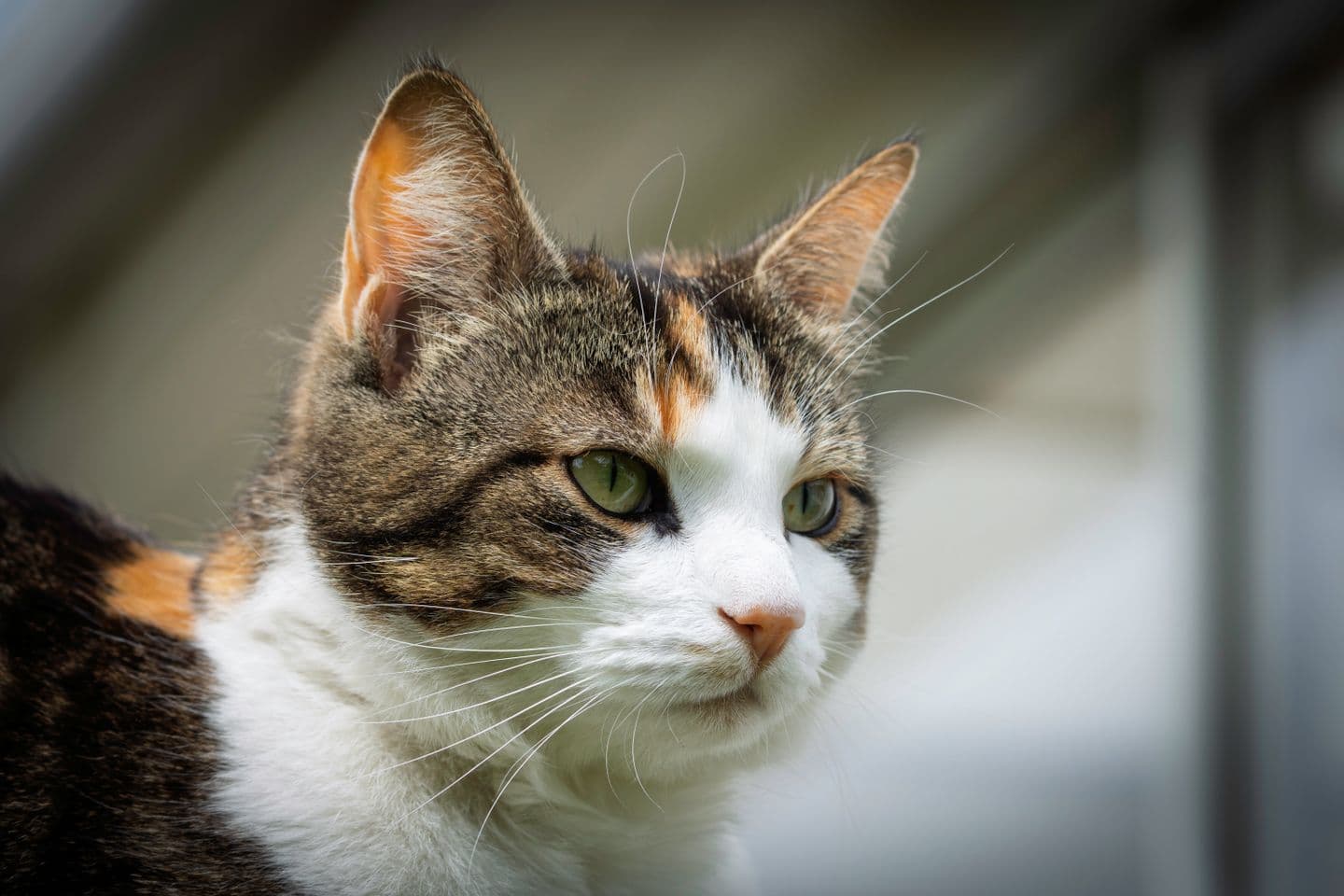
Cat Bunting Behaviour: What It Means When Your Cat Headbutts You
A gentle bump of the head or a firm push of the forehead against your leg, hand or face is one of the clearest, most direct compliments a cat can pay a person. This gesture, known as bunting, is worth
A gentle bump of the head or a firm push of the forehead against your leg, hand or face is one of the clearest, most direct compliments a cat can pay a person. This gesture, known as bunting, is worth understanding on its own, separate from the general idea of feline affection.
The mechanics behind it
Cats have scent glands concentrated around the forehead, cheeks and chin. Bunting deposits a light layer of that scent onto the person, object or surface being headbutted, mixing it with the cat's own scent profile. In multi-cat households, this creates a shared group scent among cats and people the cat trusts, which is part of why bunting tends to be reserved for family members rather than strangers.
Why it feels different from general affection
Slow blinking and lap sitting are more passive signs of comfort, while bunting is an active, deliberate gesture, usually initiated by the cat approaching you rather than the other way round. Some behaviourists have also noted that in multi-cat households, it tends to be the more confident cat who initiates bunting first, both with people and with other cats in the home.
How to respond
Leaning in gently to meet the headbutt, rather than pulling away, is usually well received. A light scratch at the base of the ears or under the chin immediately afterwards tends to extend the interaction in a way most cats enjoy. There is no need to bunt back, though some owners do gently touch foreheads with their cat, which many cats seem to tolerate and even enjoy once they are used to it.
Almost every calico cat you meet, with that distinctive patchwork of orange, black and white, will be female. This is not folklore, it comes down to genetics, and it is one of the more elegant example
A swollen eye looks alarming, and it should get your attention quickly. The eyelid, the eyeball itself, or the tissue around the eye can all swell for very different reasons, so working out which one
Most cats never need their claws trimmed at all, and clipping can even work against them, since cats rely on their claws for both defence and climbing. As cats age and become less mobile, though, claw