How to Play With a Cat, and Why It Matters More Than You Think
Play looks like fun, and it is, but for a cat it is doing a lot more work than that. A well-played fifteen minutes a day keeps a cat physically fit, mentally sharp, and considerably less likely to shr
Play looks like fun, and it is, but for a cat it is doing a lot more work than that. A well-played fifteen minutes a day keeps a cat physically fit, mentally sharp, and considerably less likely to shred your curtains or ambush your ankles at 2 a.m. Indoor cats in particular, which is most cats in Indian apartments, do not get the daily hunting and patrolling that outdoor cats do by default. Play is how you give that back to them.
Think like prey, not like a person
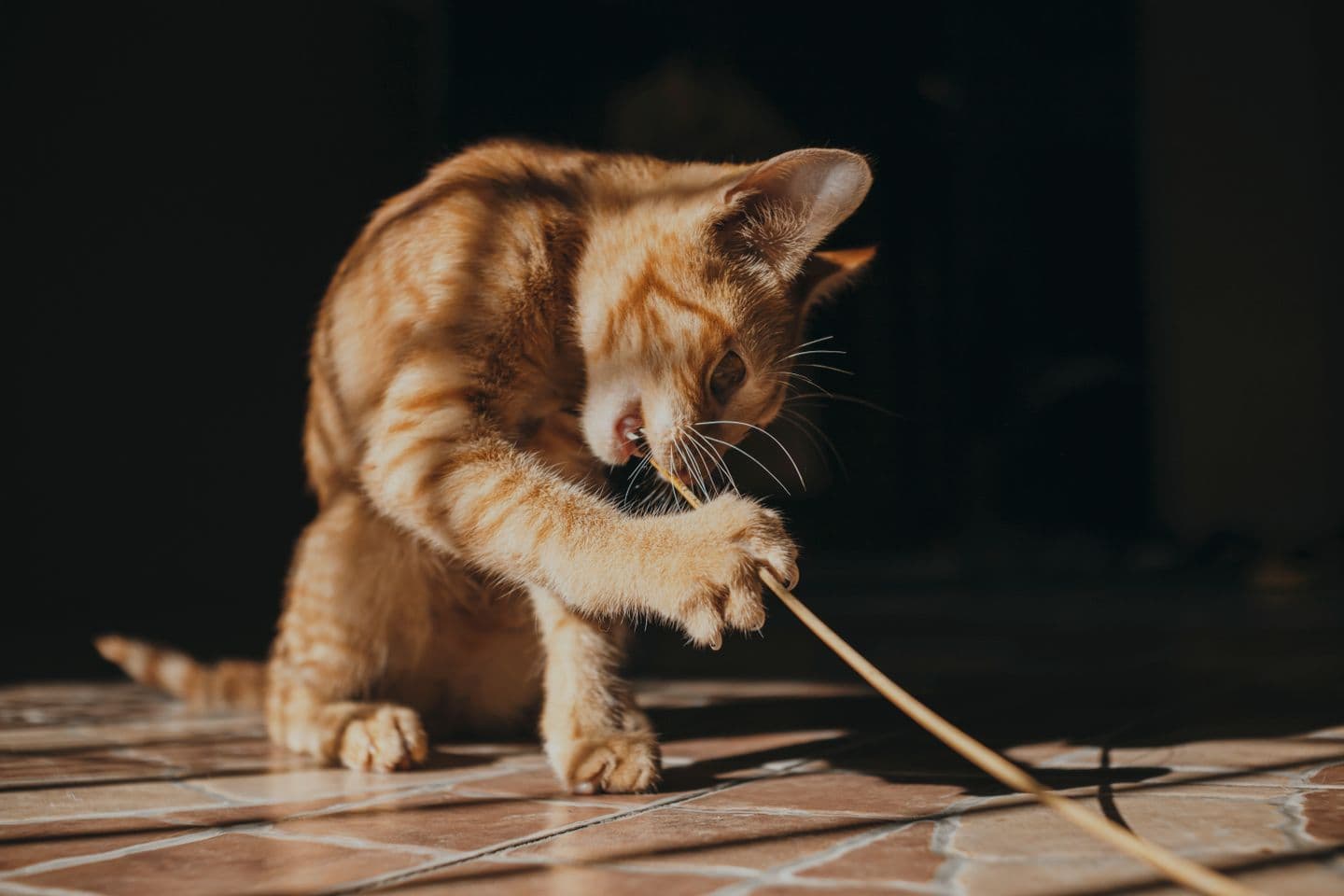
A cat's play drive is really a hunting sequence in disguise: stalk, chase, pounce, catch, and finally a satisfying kill-bite on something. Toys that move like prey work far better than toys that just sit there. A wand toy with feathers or a fabric strip dragged along the floor, paused, then flicked away, mimics a bird or a lizard far more convincingly than a toy waved directly at your cat's face.
Let your cat win sometimes. A hunt that never ends in a catch is frustrating rather than fun, so allow the toy to be caught and even shaken about every few rounds before starting the next chase.
A rotation that works in most Indian homes
Wand or fishing rod toys for supervised, high energy sessions morning and evening.
Small rolling balls or crinkle toys for solo play when you are busy, especially useful for cats left alone for long office hours.
A laser pointer used sparingly, always finished by letting the cat catch a physical toy or a treat, so the chase has a real ending rather than endless unresolved chasing.
Puzzle feeders or a few kibbles hidden in a rolled-up towel, which turns mealtime into a mini hunt.
Reading when your cat has had enough
Flattened ears, a thrashing tail, or a sudden bite that is harder than play biting usually means overstimulation, not aggression. End the session, let your cat walk away, and try shorter bursts next time. Two or three short sessions of five minutes each often work better than one long one, particularly for kittens with shorter attention spans and senior cats who tire faster.
You do not need expensive toys
Some of the most effective cat toys are things already lying around most Indian homes. A scrunched-up ball of newspaper skitters unpredictably across tile or marble floors in a way that mimics fleeing prey. An empty cardboard box, ideally with a couple of holes cut into the sides, becomes an instant ambush den. A cardboard toilet roll with a few holes punched in and some kibble dropped inside makes a serviceable homemade puzzle feeder. None of this needs to cost money to work well, which matters if you are furnishing a first cat home on a budget or simply do not want to keep replacing store-bought toys that get shredded within a week.
Adjusting play by age
Kittens have short bursts of extremely high energy and need frequent, brief sessions rather than one marathon; their coordination is still developing, so gentler, slower toy movements help them succeed rather than get frustrated. Adult cats in their prime can usually handle more vigorous chase games. Senior cats often still want to play but tire faster and may need lower jumps and softer targets. Watching for stiffness or reluctance to jump in an older cat is worth mentioning to your vet, since it can be an early sign of arthritis rather than simple disinterest in the toy.
Almost every calico cat you meet, with that distinctive patchwork of orange, black and white, will be female. This is not folklore, it comes down to genetics, and it is one of the more elegant example
A swollen eye looks alarming, and it should get your attention quickly. The eyelid, the eyeball itself, or the tissue around the eye can all swell for very different reasons, so working out which one
Most cats never need their claws trimmed at all, and clipping can even work against them, since cats rely on their claws for both defence and climbing. As cats age and become less mobile, though, claw