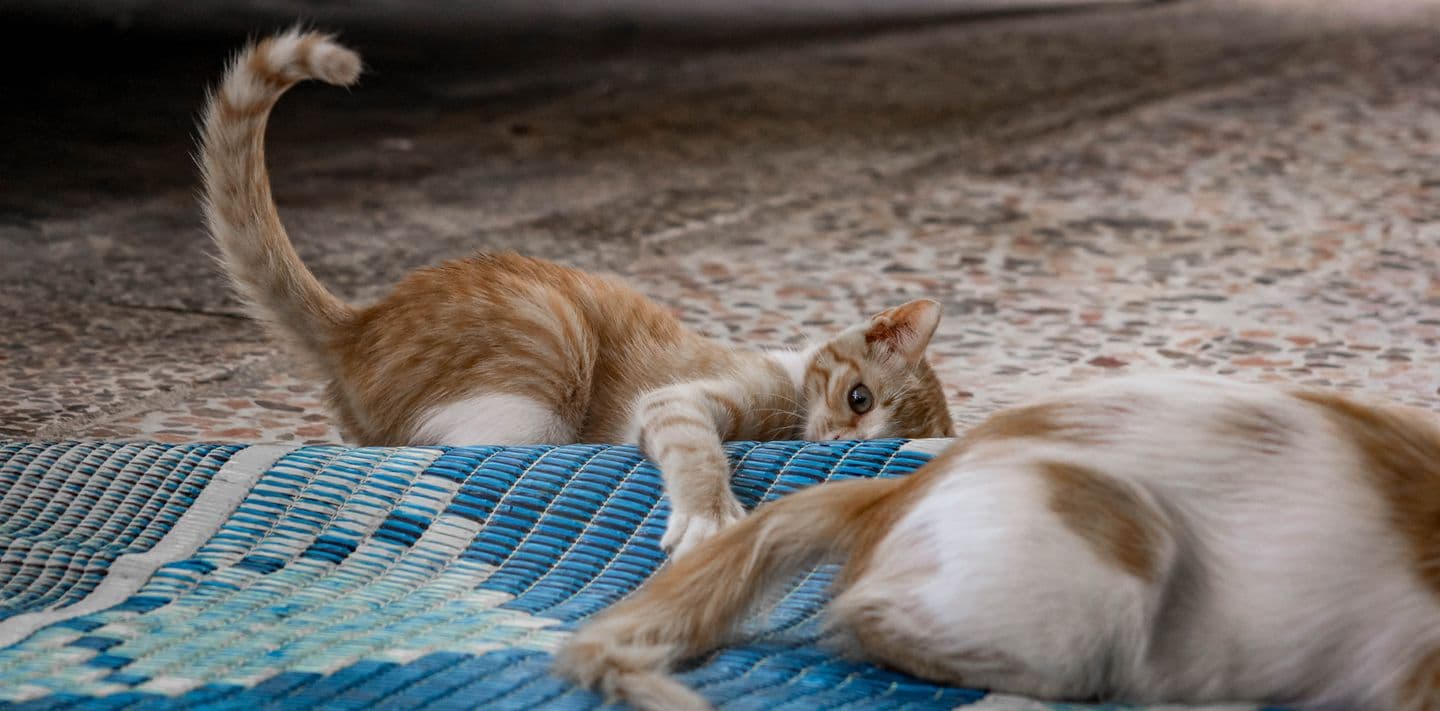
Two cats tumbling, chasing, and swatting at each other can look alarming to a new owner, but most of it is completely normal play.
Cat play often looks rougher than it actually is, involving stalking, pouncing, wrestling, and swatting that can resemble a real fight to an untrained eye. Learning to read the difference protects owners from unnecessarily breaking up healthy play, while still catching genuine conflict early.
Signs it is play
Claws mostly sheathed, and bites that are inhibited rather than hard
Relaxed, loose body movement, often with a bouncy, exaggerated quality
Roles swap back and forth, with both cats taking turns chasing and being chased
Brief pauses where both cats appear calm, sometimes followed by one initiating another round
Ears held in a neutral or forward position, tails loose rather than puffed
Silence, or only soft vocalising, rather than growling, yowling, or hissing
Signs it is genuine aggression
Claws extended, bites aimed to cause pain rather than simply make contact
Stiff, tense body posture, with a lowered stance or a puffed up tail and coat
Ears flattened or pinned back, pupils dilated
Growling, yowling, hissing, or screaming during the interaction
One cat consistently retreating, hiding, or trying to escape rather than re-engaging
The interaction escalates in intensity rather than settling
What to do in each case
Genuine play, even boisterous play, does not need to be interrupted, and doing so unnecessarily can actually reduce a young cat's opportunity to develop normal social and physical skills. If an interaction looks like real aggression, calmly interrupting with a loud noise or a tossed soft object, rather than physically separating the cats with your hands, is the safer approach, followed by giving both cats separate space to settle before considering why the conflict happened in the first place.
Kittens and young cats in particular often play in ways that look intense to an adult eye but are a completely normal, necessary part of how they learn bite pressure, coordination, and social boundaries with other cats.
Why solo kittens sometimes need extra support
A kitten raised without littermates or another young cat to play with misses out on a lot of this natural practice, and can sometimes play too roughly with a new feline companion later in life simply because nobody taught it where the line is. If you are introducing a solo-raised kitten to another cat, expect to supervise play more closely at first, and be ready to interrupt calmly and redirect to toys if the interaction consistently looks one-sided or too intense, rather than assuming the kitten will work it out entirely on its own.
Almost every calico cat you meet, with that distinctive patchwork of orange, black and white, will be female. This is not folklore, it comes down to genetics, and it is one of the more elegant example
A swollen eye looks alarming, and it should get your attention quickly. The eyelid, the eyeball itself, or the tissue around the eye can all swell for very different reasons, so working out which one
Most cats never need their claws trimmed at all, and clipping can even work against them, since cats rely on their claws for both defence and climbing. As cats age and become less mobile, though, claw