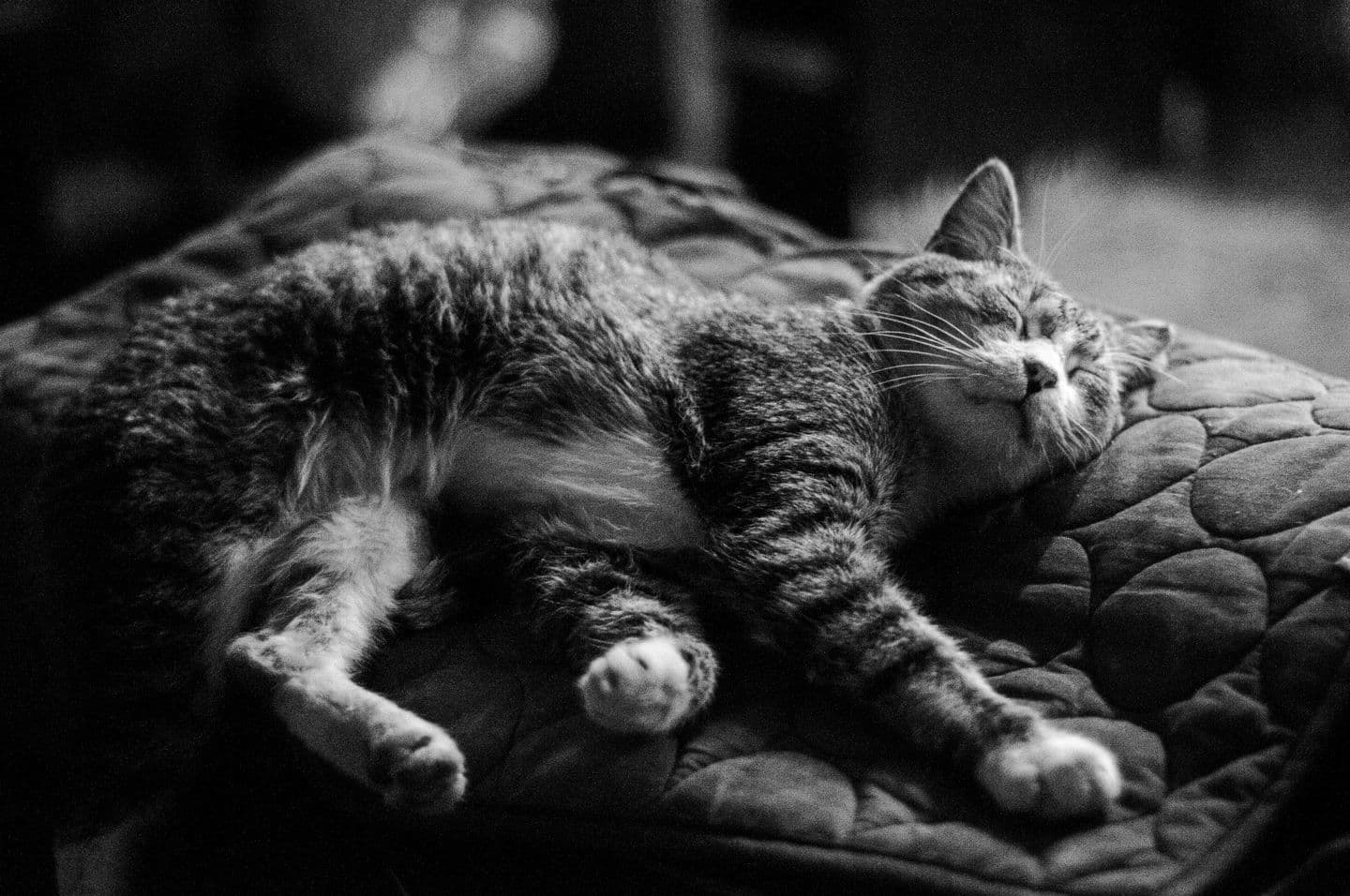
It is a familiar scene for many cat owners: settling into bed for the night, only for the cat to arrive and claim a spot, often directly on top of a face or chest, despite having a perfectly cosy bed,
It is a familiar scene for many cat owners: settling into bed for the night, only for the cat to arrive and claim a spot, often directly on top of a face or chest, despite having a perfectly cosy bed, various perches, and the rest of the house to choose from. So why does a cat still choose to sleep on its owner?
Cat Sleep Works Differently to Human Sleep
Understanding this habit starts with how feline sleep differs from ours. Cats recharge through several naps spread across the day rather than one long block of sleep, and these catnaps mostly stay in light sleep, rarely dipping into deep sleep. This comes down to a cat's role as a natural hunter. Unlike humans, cats stay ready to defend themselves or pursue prey at any moment, and even when they appear to be out cold, their hearing and sense of smell remain sharp enough to spring into action. Since cats are always poised for action, curling up next to an owner offers extra protection during sleep, a time when they are otherwise at their most vulnerable.
Why Your Cat Sleeps On You
Seeking Warmth
Cats seek out heat sources whenever they settle down to rest, whether that is a spot by the radiator or a pile of laundry. A cat's normal body temperature sits around 102 degrees Fahrenheit, roughly 38.9 degrees Celsius. Snuggling against an owner helps maintain that temperature with little effort, which also explains a fondness for sunny windowsills and cramped boxes. For a cat, warmth outweighs comfort when choosing where to sleep.
Marking Territory
Cats are territorial animals that mark what belongs to them with scent. Sleeping on top of a person, and their bed, is effectively a way of marking both as their own.
Looking for Security
In the wild, a cat seeks out the safest spot to rest between hunts. At home, that place is with its owner. Even though cats sit near the top of the food chain, they still stay alert to danger, explains Dr Zay Satchu, Chief Veterinary Officer at Bond Vet in New York, and being close to their humans lets them rest more easily, knowing there is some safety there. Since sleep leaves a cat vulnerable, choosing to sleep on an owner is a sign of trust, contentment, and security, a pattern that starts in kittenhood. Kittens raised in a litter typically pile onto one another near their mother until around twelve weeks of age, and habits formed during this key socialisation period tend to last a lifetime.
A Bonding Exercise
Cats carry an unfair reputation for being aloof, when in reality they are affectionate, social animals that want to bond with their owners. Cat behaviour consultant Dr Mikel Delgado has noted that cats often engage in what is known as pillowing at bedtime, using another cat as a pillow. A cat that is the only pet in the household may use its owner the same way. This physical closeness is essentially a cat's way of saying it wants to be near its favourite person and spend time with them.
A Possible Hormonal Element
Research shows that dogs release oxytocin, the so-called feel-good hormone, through contact with their owners. Whether the same applies to cats is not yet clear, though it is not an unreasonable theory.
Why Your Cat Prefers a Particular Spot
Sleeping on Your Head
A few things make the head an appealing spot. It releases steady heat throughout the night, making a pillow an attractive destination. It also stays relatively still compared with restless arms and legs, which helps a cat avoid being jostled during the night. It also carries a familiar, comforting scent from hair and shampoo, and cats, with their much stronger sense of smell, are drawn to that familiarity.
Sleeping on Your Chest
Some cats seem drawn to the sounds of the body, comforted by a steady heartbeat and rhythmic breathing. Dr Satchu confirms cats likely find some benefit in a person's very slow and calm respiratory pattern during sleep, a state that mirrors the calm most cats themselves experience during the roughly eighteen hours a day they spend asleep.
Sleeping in Your Lap
Even outside of bedtime, most cats enjoy curling up in an owner's lap for a nap, since it is warm and offers the chance of some extra fuss.
Sleeping With Their Back Toward You
Some owners find it odd when a cat sleeps facing away from them, but this is not rudeness, it is trust. As feline behaviour expert and best-selling author Pam Johnson-Bennett explains, a cat is both predator and prey, so it positions itself where it feels safest. Turning its back while settling down shows it trusts its owner, and may even mean the cat is keeping watch over the surrounding environment for both of them.
Should You Let Your Cat Sleep With You?
This really comes down to personal choice, and there are pros and cons worth weighing.
Pros
Stress relief: studies show petting a cat or dog releases oxytocin and lowers cortisol, the stress hormone, which sounds like a recipe for good sleep.
Bonding: for owners out of the house most of the day, bedtime can be the best chance to catch up on affection.
Cosiness: there is no denying the comfort of sharing a bed with a warm cat.
Cons
Disturbed sleep: cats tend to be more active in the evening, though many adjust to an owner's schedule over time.
Hygiene: indoor cats can track litter into the bed, and outdoor cats may carry disease.
Discomfort: a cat sleeping on the chest or head can become bothersome, particularly if it is overweight, and there is also the risk of inhaling a fair amount of fur.
One important note: cats should never be allowed to sleep with children under the age of five, and never with a baby, because of the risk of suffocation. A cat that is startled or easily frightened during sleep may also lash out and scratch a child.
What to Do If Your Cat Is Ruining Your Sleep
A cat's internal clock does not always match human sleep patterns, and cats can be restless in the early evening and early morning hours, even though most adapt reasonably well to a household routine over time. Negative bedtime habits, such as toe-biting, howling for attention, or kneading a chest, are common complaints.
Active play right before bed, mimicking a hunt with a cat toy, helps burn off extra energy, followed by a meal, according to WebMD.
An automatic feeder set to dispense small amounts every one to two hours overnight can keep a food-motivated cat occupied, a tip recommended by Dr Satchu.
A bird feeder positioned outside a window a cat can watch helps occupy the early morning hours, roughly four to six a.m., generally prime time for bird activity.
Leaving the bedroom door slightly open lets a cat come and go without waking its owner, alongside a few quiet toys for restless moments.
A heated pet bed can be a useful alternative to sharing the bed.
Some cats need to be taught that nighttime means separation from their owners, and may protest loudly at first. A vet can advise on calming options if this becomes a real struggle.
Avoid rewarding a cat that wakes its owner up, since this can encourage the behaviour to continue.
Whatever approach is taken, changing a cat's sleep habits calls for patience above all else.
Almost every calico cat you meet, with that distinctive patchwork of orange, black and white, will be female. This is not folklore, it comes down to genetics, and it is one of the more elegant example
A swollen eye looks alarming, and it should get your attention quickly. The eyelid, the eyeball itself, or the tissue around the eye can all swell for very different reasons, so working out which one
Most cats never need their claws trimmed at all, and clipping can even work against them, since cats rely on their claws for both defence and climbing. As cats age and become less mobile, though, claw