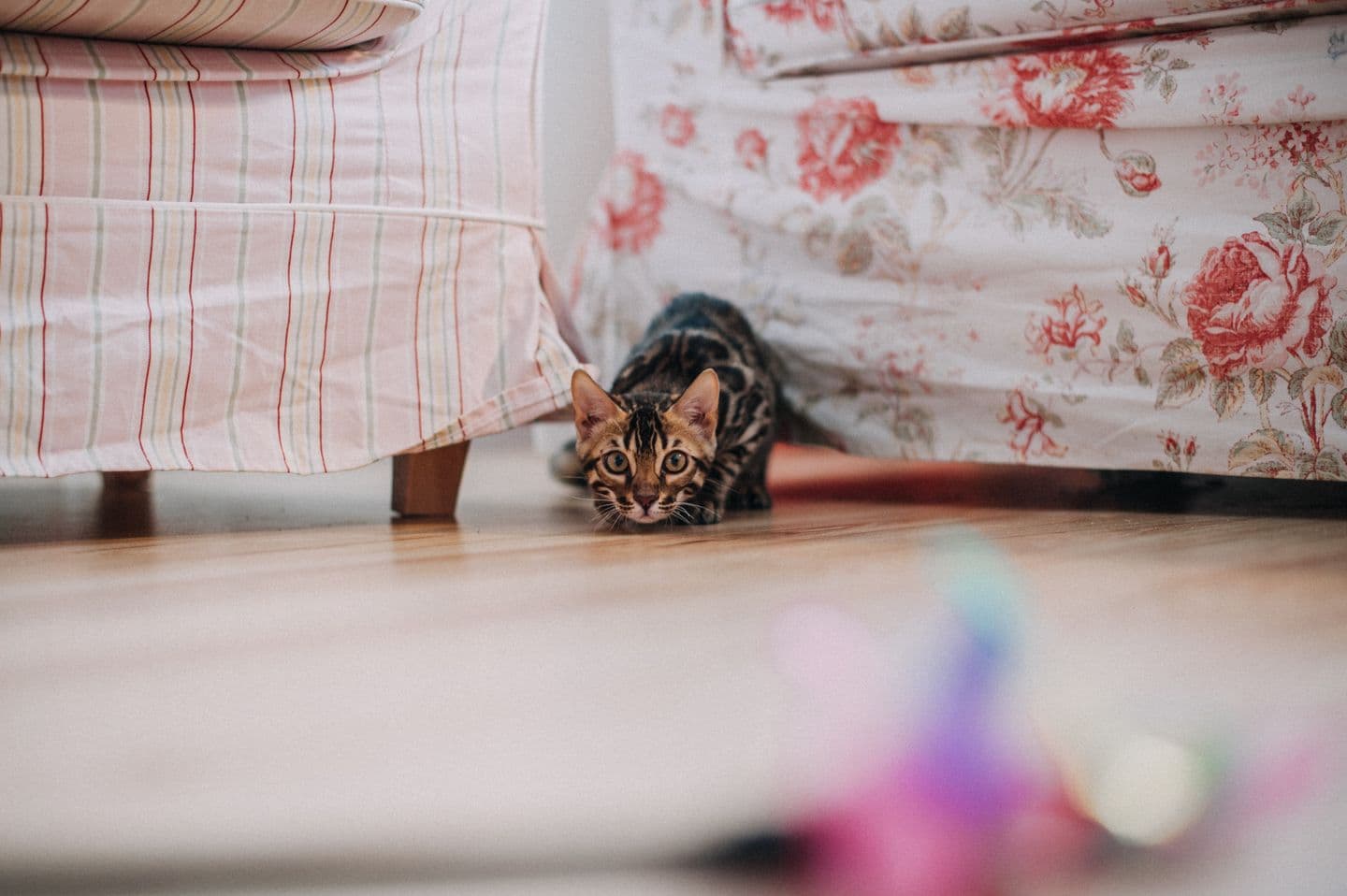
Bengal Cats, Explained: Temperament, Size, Cost, and Curious Facts
If you like the idea of a cat that looks like it wandered out of the jungle but behaves like the household companion you already know, the Bengal is worth a closer look. Developed in the United States
Adapted from a Pet Sitters Ireland feature on the Bengal cat breed.
If you like the idea of a cat that looks like it wandered out of the jungle but behaves like the household companion you already know, the Bengal is worth a closer look. Developed in the United States by crossing an Asian leopard cat with a domestic cat, the breed blends a genuinely wild appearance with a temperament that's meant to stay firmly domestic. Here's a rundown of the questions people ask most often about them.
Temperament: friendly or feral?
Research suggests early-generation Bengals — the first, second, and sometimes third generations removed from their wild ancestor — can carry a genuinely wild disposition. Breeders and enthusiasts tend to push back on that, arguing that Bengals tame easily and bond affectionately with their families. In practice, most mix well with children, dogs, and other cats, though their strong prey drive means caution is warranted in homes with small pets like rabbits or hamsters.
Despite the exotic look, Bengals aren't inherently more aggressive than any other breed. The whole point of the breeding program was to combine wildcat looks with a domestic-cat temperament — playful, curious, and affectionate.
Size and growth
Bengals run on the large side: males typically weigh 10–15 lbs, females 8–12 lbs, and they reach full size around two years old.
Spotting a genuine Bengal
One of the most searched Bengal-related questions online is simply how to tell if a cat actually is one — largely because Bengals and tabbies look so similar. The distinction comes down to this: all Bengals are technically tabbies (tabby describes a fur pattern — stripes, dots, or swirls, often with a telltale 'M' on the forehead — not a breed), but not all tabbies are Bengals.
Bengals display one of two coat patterns, spotted (the more common of the two) or a swirling marbled pattern, both rendered in three colours and echoing the coats of larger wild cats like jaguars. The key giveaway is symmetry: ordinary tabbies have matching markings on both sides of their body, while Bengal markings are deliberately asymmetrical.
Physical features
A Bengal's head is proportionally small relative to its body, with correspondingly small ears — both throwbacks to its wild ancestry. Many Bengals also carry a distinctive 'thumbprint' marking, a patch of unusually short fur (a trait some tabbies share too). Their back legs run slightly longer than their front ones, giving their spine a subtle arched appearance.
Colours and coat
Brown and black are the most common Bengal colourings, though the breed also comes in black-and-silver, seal-brown-and-silver, charcoal, and blue, with eye colours ranging across green, gold/yellow, and aqua/blue.
Their short, dense coat sheds very little, which puts them well behind higher-maintenance longhaired breeds like Persians or Maine Coons in terms of grooming demands. Bengals also tend to genuinely enjoy water, so the occasional bath is usually welcomed rather than resisted. They're sometimes described as hypoallergenic, though it's worth noting no cat breed is completely free of allergens, and sensitive individuals may still react. Daily dental care remains important regardless.
Intelligence and lifespan
Bengals are a genuinely intelligent breed — many enjoy fetch and puzzle toys, and their intelligence makes them relatively easy to train, including leash-walking. Average lifespan runs 14–16 years, though as with most pedigree breeds, they can be prone to specific conditions such as hypertrophic cardiomyopathy (a heart condition) and pyruvate kinase deficiency (a form of chronic anaemia); a responsible breeder should screen for both. Keeping a Bengal indoors — or providing a secure, climbable outdoor enclosure, since climbing is a favourite Bengal pastime — tends to extend their lifespan by limiting exposure to traffic, disease, and other animals.
Do Bengals meow?
Enthusiastically — Bengals are known for being quite chatty.
Cost
In Ireland, Bengal kittens tend to run roughly €400–€700, though checking local rescues and pounds first is always worth doing, given how many cats are waiting for homes.
A few fun facts
Despite the name, Bengal cats aren't named after Bengal tigers — the breed takes its name from the Latin name of the Asian leopard cat, Prionailurus bengalensis.
Bengals genuinely love water and have been known to drink straight from the tap or follow their owners into the shower.
They can hold a single meow for several minutes.
US cat shows were initially wary of the breed over concerns about its wild ancestry — in 1997, a rule was introduced requiring show Bengals to be at least five generations removed from their wildcat lineage.
In 2010, Bengals were the most-registered breed with The International Cat Association, with 6,369 cats recorded.
Their coat has a distinctive shimmer in the light.
One British owner reportedly paid £50,000 for a single Bengal cat.
Almost every calico cat you meet, with that distinctive patchwork of orange, black and white, will be female. This is not folklore, it comes down to genetics, and it is one of the more elegant example
A swollen eye looks alarming, and it should get your attention quickly. The eyelid, the eyeball itself, or the tissue around the eye can all swell for very different reasons, so working out which one
Most cats never need their claws trimmed at all, and clipping can even work against them, since cats rely on their claws for both defence and climbing. As cats age and become less mobile, though, claw