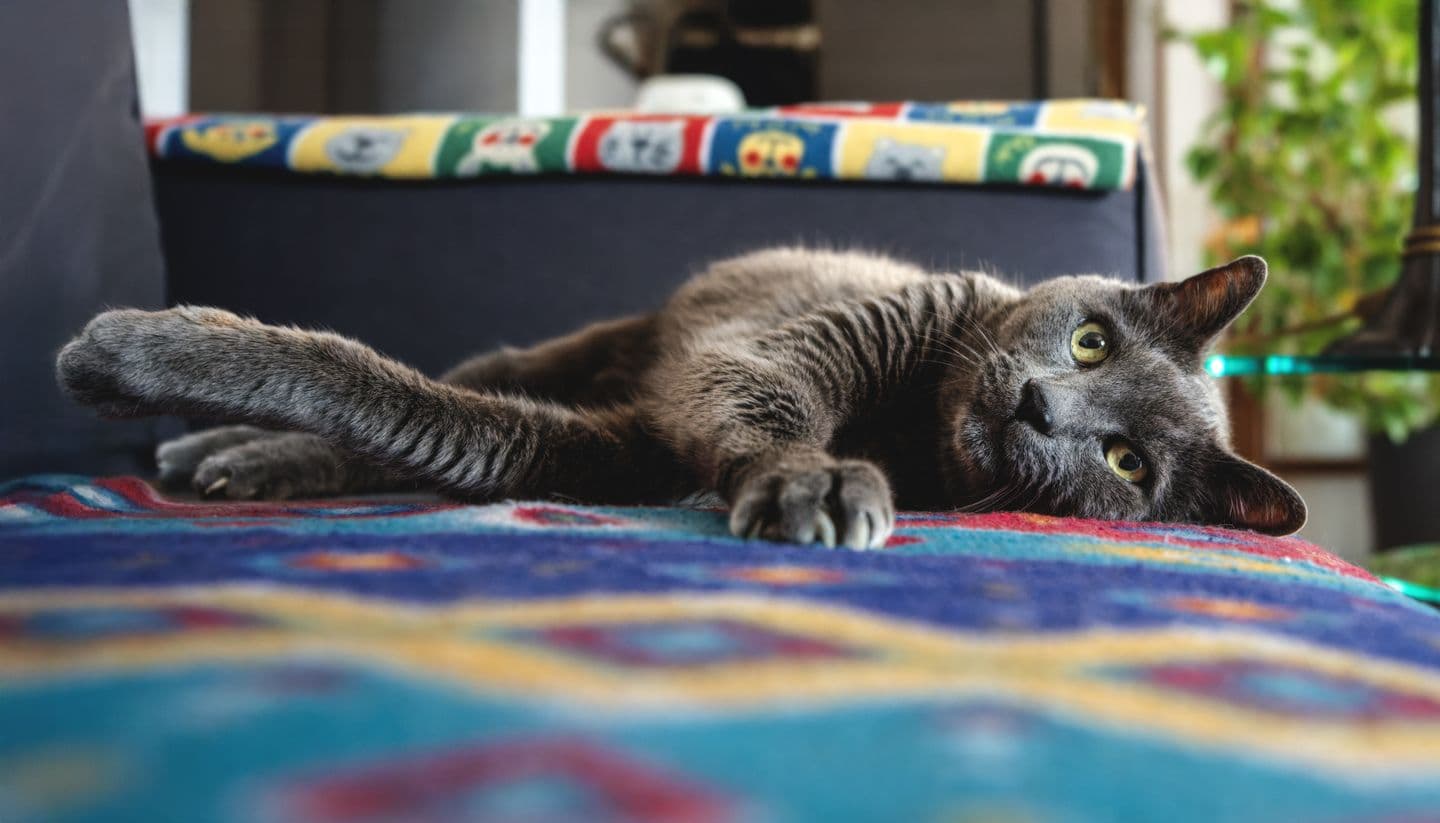
Cats living with a disability generally need more thoughtful care than other cats, so if you are adopting or fostering one, it helps to understand what that involves.
Cats living with a disability generally need more thoughtful care than other cats, so if you are adopting or fostering one, it helps to understand what that involves.
Some cats are born with a disability, while others become disabled later in life through an accident, illness, or simply old age. Whatever the cause, every one of these cats deserves a warm, comfortable home just as much as any other. Researchers estimate that around 3 million disabled cats are put down each year simply because nobody comes forward to adopt them, despite the fact that disabled cats are, in most respects, no different from able-bodied ones: they are just as playful and full of life.
The kind of care a disabled cat needs depends heavily on the nature of its disability, since amputees, deaf cats and blind cats each face very different everyday challenges.
Amputee cats
Cats that have lost one or more limbs, whether through injury or disease, fall into this category. A cat missing a single limb usually adapts far more readily than one who has lost more than one, who may need a wheelchair to get around.
If you care for an amputee cat, position its bed, food and water bowls at a height it can reach comfortably, and consider adding a small step so it can access the litter tray with ease. Kitten-style nappies can be useful too, particularly in the period right after amputation surgery, or if the cat is struggling to move around. It may also need help grooming any areas of its body it can no longer reach itself.
Bear in mind that the period following surgery can be genuinely difficult for the cat, both physically and emotionally. It is best to keep the cat indoors, ideally confined to one room, to prevent excessive running or jumping until all wounds have fully healed. Once healed and confident again, the cat can gradually be allowed outside, ideally under supervision at first, to make sure it manages safely.
It is also worth keeping a close eye on an amputee cat's body weight, since carrying too much weight on the remaining limbs can alter how the cat moves and increase the risk of arthritis over time. Some cats become stressed after amputation and start overeating, so it is worth discussing an ideal weight and diet plan with your vet.
Deaf cats
Deafness can be present from birth or can develop later, whether through age or illness. Deaf cats generally adapt to their surroundings better than most people expect, learning to rely more heavily on their other senses to compensate.
The degree and cause of deafness varies, and in some cases it can be reversed. Reversible causes include tumours, ear infections, wax build-up and ear mites, while permanent deafness can stem from inner ear infections, drug toxicity, old age, genetic conditions or noise trauma. A vet can help identify the cause and, where possible, treat it.
When caring for a deaf cat, try to make sure it can always see you approaching, since deaf cats startle easily, unable to hear you coming. Stamping a foot or clapping your hands can help get their attention. It is strongly advisable to keep deaf cats indoors, since they cannot hear approaching dangers outside. You can also teach a deaf cat to recognise hand signals as a way of calling it. If you need to wake a sleeping deaf cat, avoid touching it directly; tap the surface it is lying on instead, to avoid startling it.
Blind cats
Whether blind from birth or through gradual vision loss later in life, blind cats need extra consideration to live happily. Where sight is lost gradually with age, many owners do not even notice at first, since cats generally adapt very well to progressive vision loss by leaning on their other senses.
If you suspect your cat is losing its sight, watch for signs such as a change in behaviour, disorientation, discharge or swelling around the eye, a change in the eye's appearance, or bumping into furniture and walls. If you notice any of these, see a vet as soon as possible.
When looking after a blind cat, keep food and water bowls, the litter tray and its bed in the same place at all times. Keep it indoors permanently, since it cannot see outdoor hazards; if you have a garden, fencing it off can offer a safer alternative. Let the cat walk under its own steam rather than carrying it everywhere, avoid leaving objects lying around that it could bump into, and approach it calmly so as not to startle it.
Whether you are adopting or fostering, it is worth remembering that disabled cats are not the burden some assume them to be. With a little extra thought, they can live full, contented lives, and they deserve a loving home just as much as any other cat.
Almost every calico cat you meet, with that distinctive patchwork of orange, black and white, will be female. This is not folklore, it comes down to genetics, and it is one of the more elegant example
A swollen eye looks alarming, and it should get your attention quickly. The eyelid, the eyeball itself, or the tissue around the eye can all swell for very different reasons, so working out which one
Most cats never need their claws trimmed at all, and clipping can even work against them, since cats rely on their claws for both defence and climbing. As cats age and become less mobile, though, claw