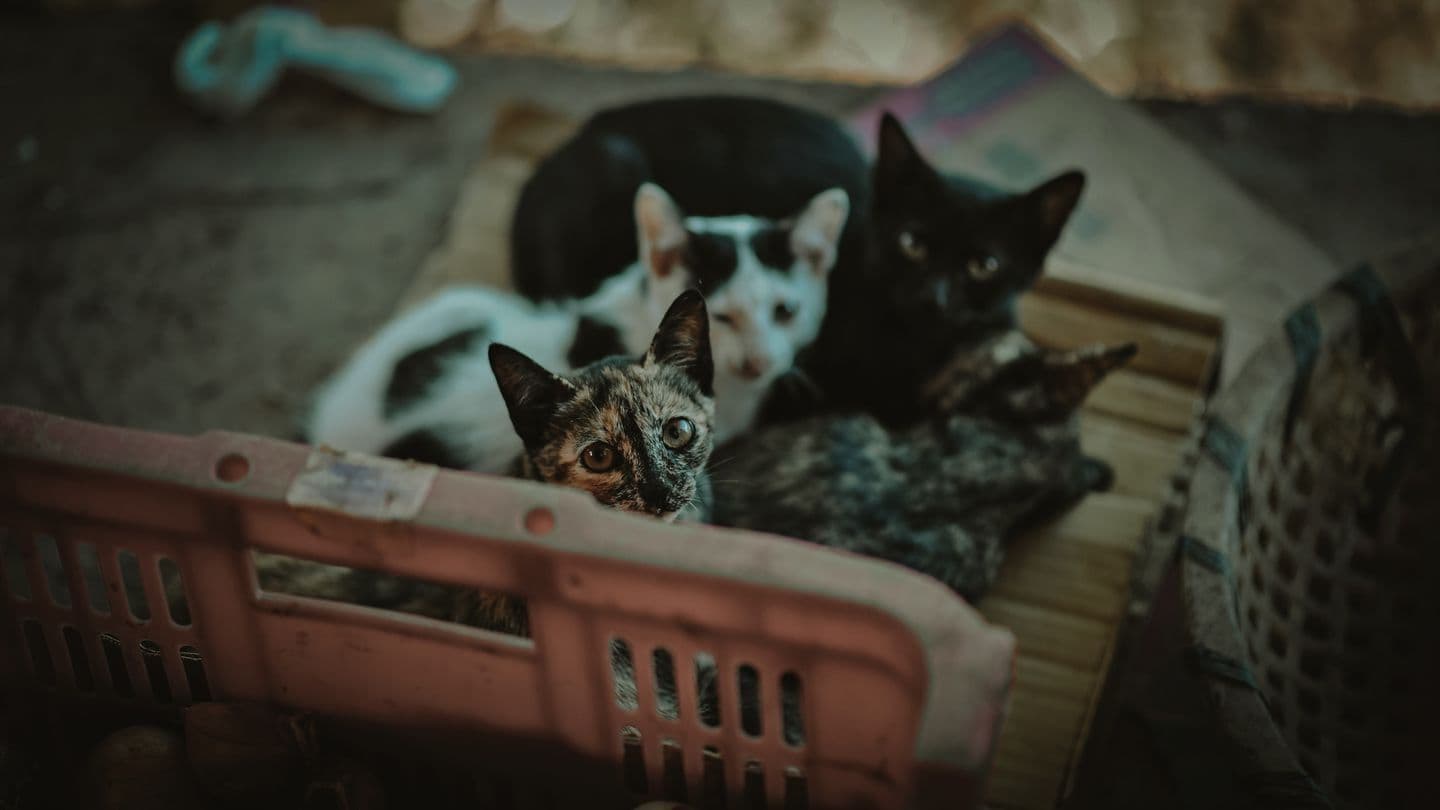
Play is essential for a kitten's physical and mental development, but a kitten's hunting instinct does not distinguish between a safe toy and a genuinely dangerous household object. A little awareness
Play is essential for a kitten's physical and mental development, but a kitten's hunting instinct does not distinguish between a safe toy and a genuinely dangerous household object. A little awareness of what to avoid keeps playtime fun without a trip to the emergency vet.
The single biggest hazard: string and anything like it
String, ribbon, wool, thread, dental floss, tinsel, and even the thin threads a fraying toy sheds are collectively the most dangerous category of plaything for a cat. A cat's barbed tongue makes it very difficult for them to spit out a string once it catches, so a swallowed piece often gets pulled further in rather than out. If it lodges partway, one end can anchor in the stomach or under the tongue while the intestines try to move the rest along, bunching the gut like a drawstring, a genuine surgical emergency called a linear foreign body.
What this means in practice
Never leave string, wool, ribbon, or a wand toy with a string attachment out and accessible when you are not directly supervising play.
Put wand toys away after each session, in a drawer or box your kitten cannot reach, rather than leaving them on the floor.
Regularly inspect toys for fraying or loose threads, and retire anything showing wear rather than letting your kitten pull it apart further.
Be extra vigilant around festivals and celebrations involving decorative string, tinsel, or ribbon, since emergency vets see a genuine spike in these cases during such periods.
Everyday religious and festive threads common in Indian homes, kalava or mauli tied around the wrist, rakhi threads, or decorative thread used in poojas, are exactly the kind of thin, dangling string a kitten finds irresistible. Keep worn threads out of reach where possible, and dispose of removed ones immediately rather than leaving them within a kitten's reach.
Other play hazards worth knowing
Small detachable parts, bells, plastic eyes, feathers, beads, can be chewed off and swallowed. Choose toys without these where possible, or supervise closely if they are present.
Rope toys can be pulled apart into loose strings by a determined chewer, carrying the same linear foreign body risk as string itself.
Rubber bands, hair ties, and bottle caps are common household items kittens mistake for toys and are just as capable of causing an obstruction as an actual toy.
Small, hard toys can occasionally cause choking if swallowed whole, so choose toys sized clearly larger than your kitten's mouth.
Signs your kitten may have swallowed something they should not have
Repeated vomiting, poor appetite, lethargy, straining without producing stool, or a visible string trailing from the mouth or anus, which should never be pulled on, are all reasons for an urgent vet visit. Linear foreign bodies do not always cause obvious symptoms immediately, so any known or strongly suspected ingestion of string or similar material should be treated as an emergency even before symptoms appear.
Safer ways to play
Wand toys used only during supervised play, solid toys without small detachable parts, and puzzle feeders that engage hunting instinct through food rather than string are all safer everyday choices. Rotating a small selection of toys, rather than leaving everything out permanently, also keeps play more engaging while limiting the amount of unsupervised risk in the room at any given time.
How much play is enough
Two or three short, focused play sessions a day, around ten to fifteen minutes each, is a reasonable target for most kittens, more than enough to satisfy hunting instinct and burn off excess energy without exhausting a young kitten who still needs plenty of sleep. Ending each session by letting your kitten "catch" the toy, rather than stopping mid-chase, closes out the hunting sequence properly and tends to leave a kitten calmer afterwards.
Almost every calico cat you meet, with that distinctive patchwork of orange, black and white, will be female. This is not folklore, it comes down to genetics, and it is one of the more elegant example
A swollen eye looks alarming, and it should get your attention quickly. The eyelid, the eyeball itself, or the tissue around the eye can all swell for very different reasons, so working out which one
Most cats never need their claws trimmed at all, and clipping can even work against them, since cats rely on their claws for both defence and climbing. As cats age and become less mobile, though, claw