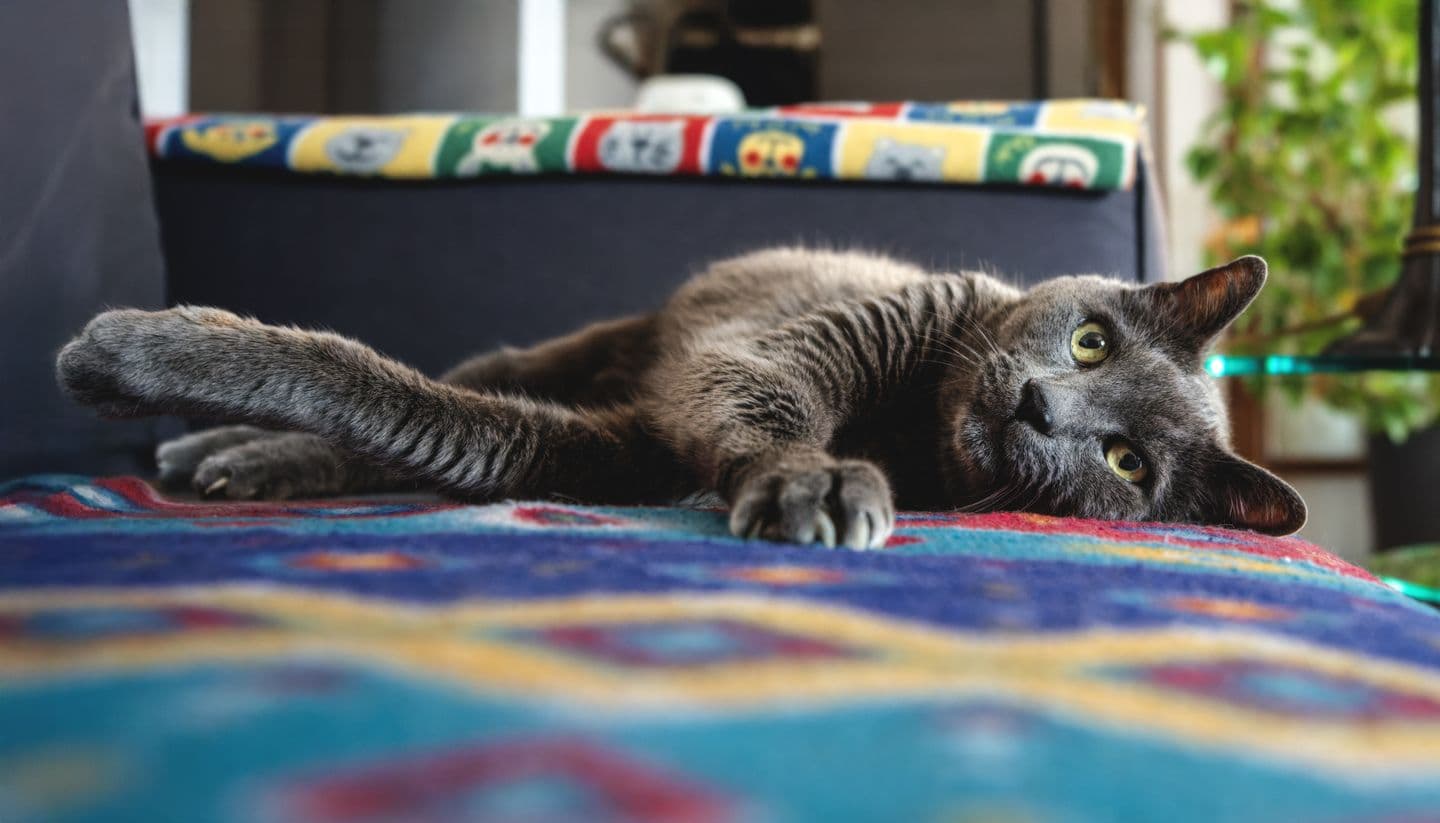
How happy your cat is depends heavily on the lifestyle and environment you provide, cats are a territorial species, so their surroundings matter enormously. This is especially true if your cat lives e
How happy your cat is depends heavily on the lifestyle and environment you provide, cats are a territorial species, so their surroundings matter enormously. This is especially true if your cat lives exclusively indoors or has only limited access outside. Even owners who never intended to keep a housebound cat may end up doing so, whether because of illness, old age, or a nervous temperament that keeps the cat close to home. That said, everything below is worth considering even for cats that come and go as they please.
When you make all the decisions about where your cat eats or toilets, based purely on what suits you, or what you assume suits your cat, you risk making its world a little less comfortable than it could be.
Meeting specific needs
Food, shelter and affection matter, but quality and quantity count for just as much as simply providing them. Practical questions arise everywhere: what kind of bed does your cat need? Where should scratching posts go? What litter arrangement will actually get used?
A genuinely cat friendly home recognises that cats experience the world very differently from us, and aims to be both safe and stimulating.
Most houses were never designed with a cat’s needs in mind, so some adaptation is usually necessary. You may have come across the phrase “environmental enrichment” in relation to indoor cats. It essentially means building in opportunities within a confined space for a cat to behave naturally, to be challenged and stimulated. Living indoors can strip away much of that natural challenge and frustration a cat would experience outside. Indoor cats adjust, but boredom and inactivity can bring on physical or emotional problems. Without hunting, exploring or socialising to fill the time, cats default to sleeping, grooming and eating, which is why indoor cats are more prone to issues like urinary tract disease, over-grooming, and eating disorders linked to a sedentary life.
What a cat friendly home looks like
Creating a cat friendly home is a matter of compromise. If your taste runs to sleek, minimalist interiors, you’ll likely have to adapt more than most, because open-plan, clutter-free spaces are about as far removed from a natural cat habitat as it gets. Cats are adaptable to many environments, but they still want some cover to move around without feeling exposed, and that’s hard to find in an empty, minimalist room. A slightly more cluttered home actually offers more possibilities: higher vantage points and more places to vanish from sight.
Staying safe
Stimulation matters, but so does safety. Many everyday household items and appliances carry some risk, so it’s worth periodically reviewing your home for hazards. There’s a balance to strike between constant anxiety about every possible danger and simple carelessness. An owner who worries excessively can inadvertently teach a cat to feel helpless without them nearby, while an owner who is careless about safety risks a genuine accident.
The cat flap dilemma
One particular challenge to a cat’s sense of security is the cat flap. Many cats view it as a weak point where any intruder might get in, which can create constant low-level unease. If your cat only goes outside under supervision or with restricted access, it may be worth doing away with the cat flap altogether. Otherwise, keep your cat’s important resources well away from this potential danger zone.
Understanding what your cat considers valuable within the home, its “resources”, and providing enough of each, in the right places, is central to getting this right.
Food
Even something as basic as food can be offered in a more cat friendly way. Ceramic or glass bowls tend to work best: plastic scratches easily and can hold odours cats dislike, while stainless steel, though hygienic, can clink unpleasantly against a collar tag or bell. Bowl shape is largely down to preference, though many cats find a bowl easier to eat from than a flat plate, since flat plates can be messy. The exception is flat-faced breeds like Persians, which often prefer a shallow dish.
In the wild, a cat might spend up to six hours a day hunting, catching perhaps ten mice through around thirty attempts. Compare that to a bowl filled twice a day in the kitchen, which offers no challenge at all and leaves several hours unaccounted for.
Water
Most owners place the water bowl right next to the food bowl, but cats naturally hunt and drink at separate times to satisfy hunger and thirst independently. Water positioned too close to food can actually put some cats off drinking enough, particularly those on a dry diet. As a rule of thumb, provide one water source per cat in the household plus one extra, spread across different locations away from food. Some cats dislike the chemical smell of tap water, so filtered or boiled water can help. Pet fountains and even glass tumblers often go down well, though a regular bowl works fine too, provided it’s large enough that whiskers don’t brush the sides, and filled to the brim so your cat doesn’t need to lower its head too far.
High places to rest
Cats are natural climbers, and being able to survey their surroundings from height matters to them. A staircase does this job well in a multi-storey home. In a single-storey property, shelving, cupboards or other platforms can serve the same purpose. Wherever you place a high resting spot, make sure your cat can get down as easily as it got up, climbing up is always the easier direction.
Some ideas for high places include:
Tall, modular scratching posts, often built floor to ceiling, some with platforms and enclosures built in for both climbing and resting.
Freestanding wardrobes and cupboards, which offer large elevated surfaces, sometimes with a piece of furniture positioned nearby as a stepping stone.
Purpose-built shelving, ideally with a non-slip surface, since bare wood can be slippery. Bookshelves with a small cleared space can work too, just keep breakables out of reach.
Private hideaways
Every cat needs somewhere to retreat from the world entirely. Space under a bed, inside a wardrobe, or behind the sofa all work well. A cat using its private space shouldn’t be disturbed unless there’s reason to think it might be unwell.
Making that hideaway warm too, the bottom of an airing cupboard is a classic example, turns it into something close to five-star accommodation.
Beds
Cats sleep for most of the day, so their sleeping arrangements deserve real thought. Warmth matters, and many cats like a spot that carries their owner’s scent for reassurance, though not every cat needs this and some rotate between several favourite spots depending on where the sun happens to be. A mix of beds in warm, sunny, quiet and communal spots covers most bases. These needn’t be purpose-built cat beds, plenty of cats are perfectly happy on a chair, sofa, or a blanket placed in a favourite corner. Wash bedding when needed, but not obsessively, cats are drawn to familiar scent. Radiator hammocks suit heat-loving breeds such as Siamese and Burmese particularly well, just keep the radiator on a moderate setting.
If buying a bed, placement matters as much as the bed itself. A raised position near warmth or sunlight tends to appeal, since many cats feel exposed sleeping at floor level. Quiet corners away from foot traffic suit cats that value solitude, and beds with three raised sides offer both shelter from draughts and a sense of concealment, even a cardboard box with soft bedding can achieve the same effect.
Your own bed might be the single most appealing spot in the house, warm, soft, and carrying your scent. This can make your bedroom a source of real security for your cat, but also a point of tension in multi-cat households as individuals compete for the best spot. Heated pads or raised beds elsewhere, or setting aside a little of your own bedroom space, can help ease that competition.
Litter trays
Litter trays are unavoidable if your cat is kept indoors or has limited outdoor access, and they’re worth having even for cats that roam freely.
Positioning is important. Choose a discreet spot, away from food, water, large windows and busy walkways. Cats can find external doors and cat flaps unsettling, so keeping trays well away from those areas helps.
The general guideline is one tray per cat plus one spare, spread across different quiet locations away from food. This doesn’t mean each cat claims its own tray, but it does create a sense of ample choice. Trays can be open or covered, but wherever they’re placed should feel safe rather than exposed. Clean daily, removing waste and soiled litter, and give the whole tray a proper wash weekly. Some cats dislike the feel of plastic liners catching on their claws while scratching, and strongly scented litter deodorants can be off-putting too, an unscented, well-maintained tray is often the safest bet.
Scratching posts and areas
Scratching helps cats maintain their claws and mark territory, and without a proper outlet, furniture becomes the target instead. Posts should be as tall as possible to allow a full vertical stretch, and wall-mounted panels are a good option where space is limited. Some cats prefer scratching horizontal surfaces, so offering a mix is worthwhile.
Social contact
Many cats enjoy the company of other cats under the right circumstances, and some advice even encourages multiple cats in an indoor household. Trouble tends to surface once cats reach social maturity, generally between eighteen months and four years, when competition over limited resources in a confined territory can cause friction. Providing generous resources and keeping cat numbers appropriate to the size of the home both help. There’s no strict formula for cats per square metre, but common sense goes a long way, seven cats in a two-bedroom flat is a recipe for conflict. Narrow staircases in townhouses can also become flashpoints between cats sharing a home.
Human contact matters too, though how much varies enormously by personality. It’s usually best to let your cat set the pace and initiate contact itself. Constantly seeking out a cat for petting can cause irritation or even distress in some individuals. Play, grooming and vocal interaction often go down better than cuddling. Some cats are also happy in the company of dogs, so companionship doesn’t have to come from another cat.
Predatory play
Most cats gravitate toward toys and games that mimic real hunting. Toys with random movement hold attention far longer than anything static and predictable. Fur or feather toys sized like real prey tend to be popular, as are those infused with catnip. Rotating toys in and out of storage keeps them feeling novel. Retrieval games are a bonus, offering both play and social interaction with you.
Vegetation
Grass is important for house cats, helping to clear ingested hair from the gut, and some vomiting after eating it is entirely normal. Commercial “kitty grass” or homegrown pots of grass and herbs both work well.
Scent stimulation
Roughly two-thirds of cats respond to catnip (dried catmint), which produces a short-lived euphoric effect. Used sparingly, it’s a fun distraction, homemade catnip toys used for ten minutes every day or two work well, and dry catnip tends to be more potent than sprays or treats.
New and challenging items
Occasional novelty keeps an indoor environment from becoming too predictable, and predictability, oddly enough, can make new experiences feel more stressful rather than less. Introducing new objects, wood, stone, plants, cardboard boxes, paper bags, gives your cat something new to investigate on its own terms. Even cats that never go outside should stay up to date on vaccinations and parasite treatment, since novel items may have been in contact with other animals. Sound matters too, but keep volume in mind, a cat’s hearing is far more sensitive than ours, and loud music can cause real distress.
Windows on the world
Windows offer a view of the outside world, but contrary to what most people assume, cats often prefer smaller windows in dimmer rooms. Large expanses of glass can be confusing and unsettling, a cat can see every potential danger in the garden or street without grasping that it’s actually safe indoors. It comes down to camouflage: glass offers none, and a full-length window may bring your cat face to face with next door’s tomcat with no barrier at all.
If this seems to be an issue, decorative static film on the lower portion of a full-length window can obscure the view without blocking light, giving the impression of a more solid boundary. Pairing this with a high perch near the window lets your cat observe from relative safety. Potted plants positioned near the glass can achieve something similar without film.
Fresh air
Fresh air matters, particularly in a household with a smoker. Window grilles, whether bought or homemade, let air in while carrying interesting outdoor scents that can occupy a bored indoor cat.
Synthetic pheromones
Cats naturally secrete facial pheromones that signal familiarity and security. A synthetic version, sold as Feliway® by Ceva Animal Health Ltd, is available as a spray or plug-in diffuser. It can help calm a cat through house moves, redecorating, new furniture, vet visits, or the introduction of another cat, and may relax multi-cat households enough to encourage play. It shouldn’t be relied on as a fix on its own though; persistent anxiety warrants a vet’s attention to rule out an underlying cause.
Television for cats
Some programmes catch a cat’s interest, though not indiscriminately. Studies suggest cats respond most to footage of small prey animals or other cats interacting amicably. Wildlife documentaries with squeaks and rustling can fascinate a cat, though the inability to actually catch anything may cause frustration. Cat-specific DVDs exist, compiling sights and sounds cats respond to, but the evidence for their enrichment value is still limited, so they shouldn’t be your only source of stimulation.
There’s no single formula for enriching a cat’s environment, only the principles above and your own imagination. Get the fundamentals right, and your cat stands the best chance of a genuinely happy, healthy life indoors.
Almost every calico cat you meet, with that distinctive patchwork of orange, black and white, will be female. This is not folklore, it comes down to genetics, and it is one of the more elegant example
A swollen eye looks alarming, and it should get your attention quickly. The eyelid, the eyeball itself, or the tissue around the eye can all swell for very different reasons, so working out which one
Most cats never need their claws trimmed at all, and clipping can even work against them, since cats rely on their claws for both defence and climbing. As cats age and become less mobile, though, claw