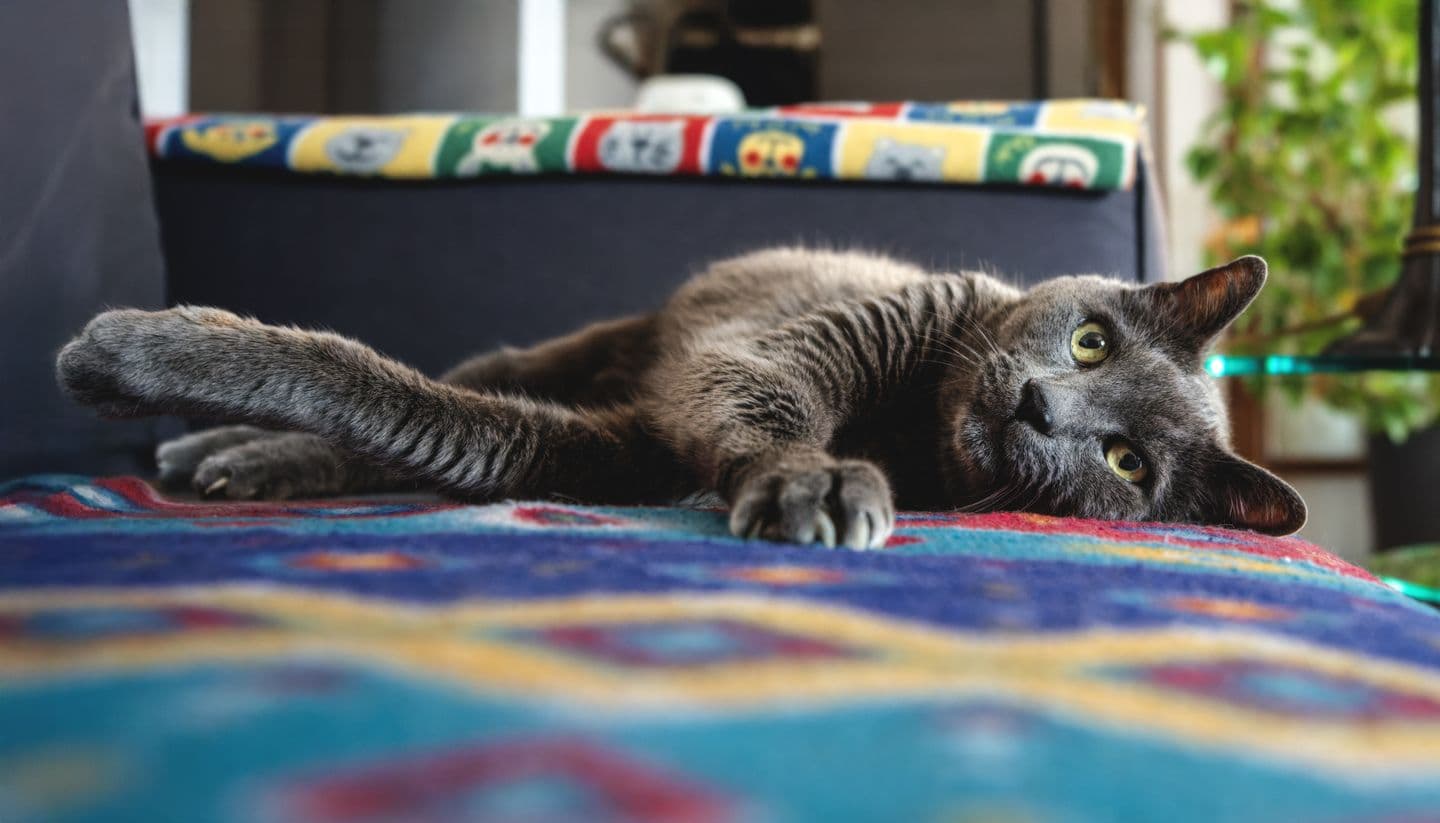
Stress lies behind many of the behaviour problems seen in pet cats and is also linked to a number of common feline illnesses. Because cats tend not to display emotion as openly as some other animals,
Stress lies behind many of the behaviour problems seen in pet cats and is also linked to a number of common feline illnesses. Because cats tend not to display emotion as openly as some other animals, preferring to withdraw and go quiet rather than act out, owners need to learn to read the subtler signals of stress in order to look after their cats properly.
Is all stress harmful?
A cat's body has several physiological systems dedicated to managing stress, chiefly the hypothalamus-pituitary-adrenal (HPA) axis and the sympathetic nervous system. Both evolved to cope with the short bursts of stress that are a natural part of a cat's lifestyle, triggering the release of hormones that prepare the animal to meet a challenge, commonly known as the fight-or-flight response. These systems, however, are far less well suited to prolonged or chronic stress, and it is this long-term form of stress that drives many behavioural problems and stress-related illnesses in cats.
Why are some cats more susceptible to chronic stress?
How well an individual copes with life's challenges depends on a mix of genetics and environment. The stress-response systems actually begin developing before a kitten is even born, so a mother cat who is stressed during pregnancy, or who is poorly fed, may produce a litter that is more prone to stress and to the unhelpful coping strategies that underlie many common behaviour problems. A kitten that misses out on early socialisation, and on exposure to the everyday sights, sounds and smells of a typical home, may also find life considerably harder later on.
How can you tell your cat is stressed?
Acute stress
Acute stress usually follows a sudden incident or perceived threat and is relatively straightforward to spot. Look out for signs such as:
Staying completely still
A crouched posture directly on all fours, with shaking
The belly kept hidden, with fast breathing
Bent legs
The tail held close to the body
The head lower than the body and motionless
Eyes wide open
Fully dilated pupils
Ears flattened right back
Whiskers pulled back
Vocalising, from a plaintive miaow to yowling, growling, or complete silence
Hissing, growling, shaking or drooling
Accidental urination or defecation
Aggression if approached
Chronic stress
Chronic stress is harder to spot because it builds gradually and shows up as changes to normal patterns and routines rather than one obvious moment of distress. Signs to watch for include:
Eating, grooming, or toileting less, or the opposite, overeating, depending on the individual
Sleeping more, or appearing to sleep more than it actually is
Hiding
Becoming either more clingy or more withdrawn, again depending on personality
Defensive aggression towards people or other cats
Being unusually watchful and startling at the smallest noise
Playing less than usual
General shifts in behaviour, such as spending far more time indoors regardless of the season
Toileting in inappropriate places
Spraying urine indoors
Over-grooming or eating unsuitable items such as wool
Rubbing the face against surfaces more, or scratching more
Repetitive behaviour that seems out of context
Redirecting aggression onto something or someone that was not the original source of the threat
Contradictory behaviour, such as approaching and retreating almost in the same movement
What causes stress in cats?
Stress can arise from a cat's dealings with people, with its environment, or, very often, with other cats. Sharing space with cats it does not get along with can make life a constant trial, as can living somewhere with a high local cat population.
Owners can unwittingly add to the problem too. Some are more physically intrusive than their cat would like, seeking more contact than the cat wants to give, while others are inconsistent, leaving the cat unsure what to expect from one moment to the next.
The physical environment is often the last thing owners think about when weighing up their cat's welfare, since we tend to assume safety and affection are what matter most. But being shut indoors, being bored, or having poor access to hiding spots or litter trays can all be genuinely stressful for a cat.
What can you do to prevent or ease stress?
Caring for your cat in a way that respects both its species-typical needs and its individual personality gives you the best chance of preventing, or reducing, chronic stress. It is worth remembering that things which do not bother you at all might be genuinely stressful for your cat.
Because cats are constantly assessing risk in order to survive, they take great reassurance from predictable routines, since familiarity signals safety. Sticking to consistent habits and daily patterns is therefore one of the best ways to reduce stress.
Think carefully about how many cats you keep, particularly if the local area already has plenty of resident cats, since this adds further pressure. Within the home, make sure resources such as food and water bowls, litter trays, beds, hiding places, high perches, scratching posts and toys are always plentiful. A useful rule of thumb is one item per cat, plus one extra, spread across different spots in the home.
Getting the relationship right with your cat is an ongoing challenge, and being attuned to its individual emotional needs is central to a low-stress life together. A confident, sociable cat will typically want more interaction than a nervous one, or one that missed out on proper socialisation as a kitten. Letting your cat initiate contact is usually the simplest way to find the right level of affection.
For cats allowed outdoors, it helps to let the cat choose when to go out rather than dictating the timing yourself, particularly where territory is shared with other local cats, since there may be specific times of day that feel safe and others that feel far riskier. Cats rely on an intricate scent-based communication system to work out when it is their turn in a shared space, so your cat is usually the best judge of when conditions are right.
For cats kept entirely indoors, an environment that offers variety and mental challenge will provide much-needed exercise and stimulation, helping to ward off boredom and frustration. Cats need the opportunity to behave like cats, both for their physical and their emotional health, so features such as climbing structures that recreate a more natural habitat are well worth providing.
No cat's life can be entirely free of potential stress triggers, but understanding what those triggers are likely to be, and keeping them to a minimum, will substantially cut the risk of chronic stress causing problems down the line.
Almost every calico cat you meet, with that distinctive patchwork of orange, black and white, will be female. This is not folklore, it comes down to genetics, and it is one of the more elegant example
A swollen eye looks alarming, and it should get your attention quickly. The eyelid, the eyeball itself, or the tissue around the eye can all swell for very different reasons, so working out which one
Most cats never need their claws trimmed at all, and clipping can even work against them, since cats rely on their claws for both defence and climbing. As cats age and become less mobile, though, claw