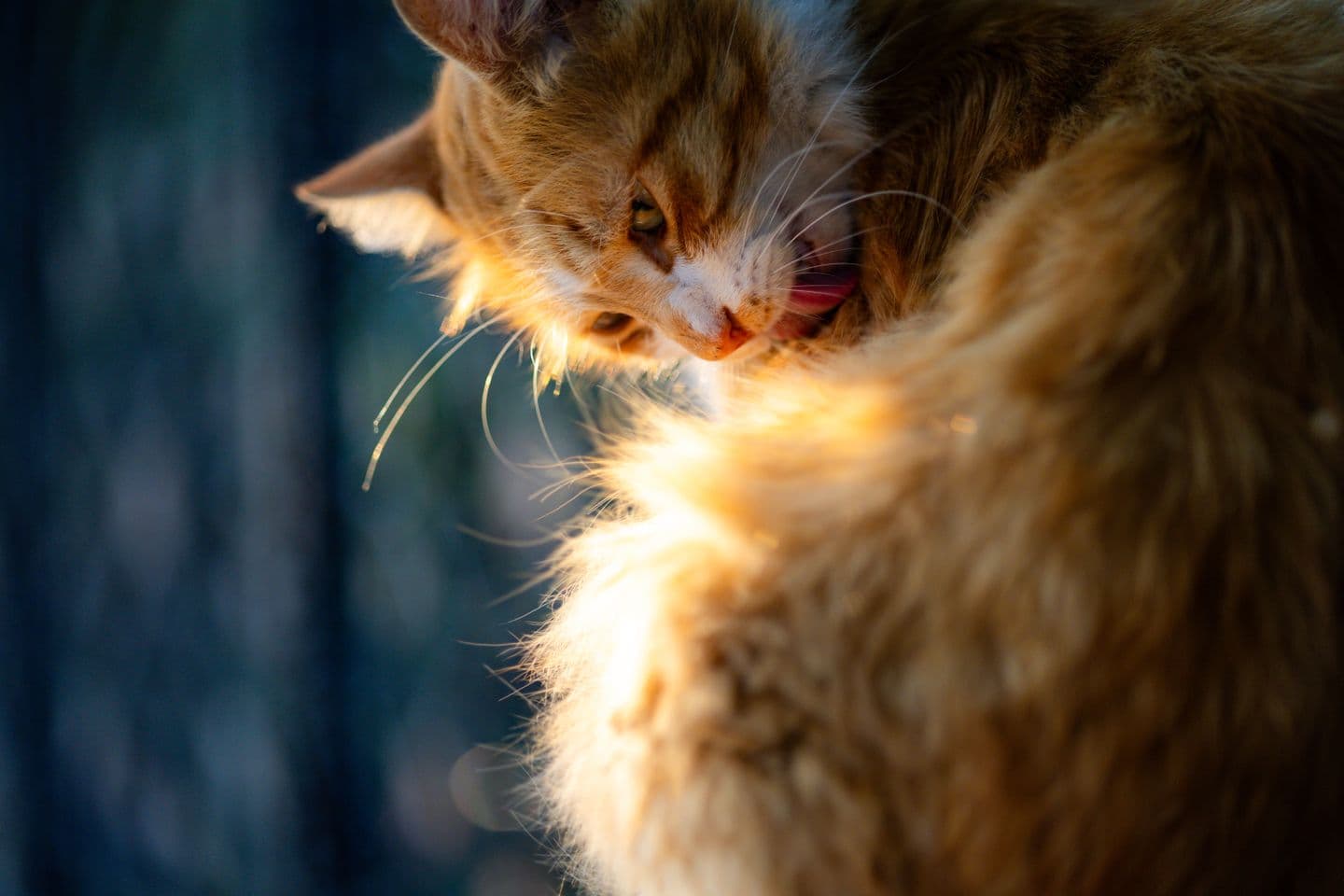
Grooming takes up a significant chunk of a cat's day, made possible by a body that bends and flexes with remarkable ease, and a tongue lined with tiny backward-pointing barbs designed specifically to
Grooming takes up a significant chunk of a cat's day, made possible by a body that bends and flexes with remarkable ease, and a tongue lined with tiny backward-pointing barbs designed specifically to strip loose hair and dirt from the coat.
Feline fur is typically a mix of three hair types, down, awn and guard hairs, and the ratio between them varies by pedigree, which is part of why different breeds have such distinctly different coats. Some degree of moulting happens year-round, and grooming keeps loose hair under control; much of what a cat swallows during self-grooming either passes through the gut or is brought back up as a hairball.
The functional benefits of grooming
Clears loose hair and keeps the coat smooth, aiding insulation.
Cools the cat in hot weather, as spread saliva evaporates off the coat.
Maintains coat waterproofing by triggering glands at the hair base.
Distributes sebum through the fur, which converts to vitamin D in sunlight and is later ingested.
Spreads the cat's individual scent across its body.
Helps remove parasites.
Reinforces social bonds when cats groom one another.
Why owner-led grooming still matters
Boosts muscle tone.
Encourages healthy oil production for a shinier coat.
Clears more loose hair than self-grooming alone can manage, particularly during moulting seasons, cutting down on hairballs.
Doubles as a hands-on health check of the ears, eyes, mouth, and skin, catching fleas, ticks, mites or lumps early.
Strengthens your relationship with your cat and can be a calm, positive ritual for both of you.
Starting early
Introduce grooming and general handling from kittenhood, building tolerance gradually rather than all at once. Some cats simply adapt to handling faster than others, so there is no fixed timeline, only the principle that it should never feel forced, and the cat should always be free to move away if uncomfortable. A cat comfortable with handling early on generally copes far better with veterinary exams later, since nothing about being touched and examined feels unfamiliar.
Reading discomfort
Stop grooming the moment you notice any of these signals:
Twitching or rippling skin
Tail swishing, thumping, or flicking at the tip
A quick head-turn toward your hand or brush
Sudden stillness or tension
Ears flicking or turning back
Lip-licking or swallowing
Shaking the head
A brief, rapid bout of self-grooming
Growling or hissing
Short-haired coats
Equip yourself with a fine flea comb, a bristle brush, and a rubber grooming mitt or pad. Groom when your cat is calm, aim for weekly sessions, and start with the flea comb, checking for the tell-tale black specks of flea dirt, which turn reddish when dampened. Loosen dead hair first with a gentle finger massage against the grain, then comb from head to tail in the direction of growth. A bristle brush against the grain, smoothed back afterwards, helps surface loose hair, though not every cat enjoys this step at first. Follow with the rubber mitt from head to tail to lift dead hair and stimulate circulation, then a damp cloth for a glossy finish. Keep sessions matched to your cat's comfort level, stop before any sign of irritation appears, and end with a treat.
Long-haired coats
A wide-toothed comb and rubber mitt are the essentials, and daily grooming is ideal, adjusted to what the individual cat can handle. Begin only when your cat is settled, massage the skin from tail to head first, and check for flea dirt as you go. Comb head to tail, taking special care around the armpits and inner hind legs, where skin is thin, sensitive, and prone to matting from friction. Work any mats apart gently and patiently from the root outward; avoid scissors entirely, since it is nearly impossible to tell skin from densely matted hair, and cuts happen easily. Check between the toes and pads too. Finish with the rubber mitt, then a damp cloth, and a final comb if your cat remains patient. If grooming becomes difficult, pause and resume later with smaller, achievable goals, rewarding calm behaviour throughout. Various tools, rakes, slickers, detangling sprays, are worth trying to find what suits your particular cat with the least stress.
Preventing and managing mats
Consistent grooming should stop mats forming in the first place. If they do appear, remember how uncomfortable they are, similar to a tight elastic band pulling constantly at a clump of your own hair. A professional groomer may manage milder mats by hand, but severe matting generally needs a vet to shave it off, usually under sedation or general anaesthetic, leaving fur only on the tail, head and lower legs until it grows back.
On bathing
If your cat is healthy, there is genuinely no need to bathe it, and most cats find the experience unpleasant regardless.
Almost every calico cat you meet, with that distinctive patchwork of orange, black and white, will be female. This is not folklore, it comes down to genetics, and it is one of the more elegant example
A swollen eye looks alarming, and it should get your attention quickly. The eyelid, the eyeball itself, or the tissue around the eye can all swell for very different reasons, so working out which one
Most cats never need their claws trimmed at all, and clipping can even work against them, since cats rely on their claws for both defence and climbing. As cats age and become less mobile, though, claw