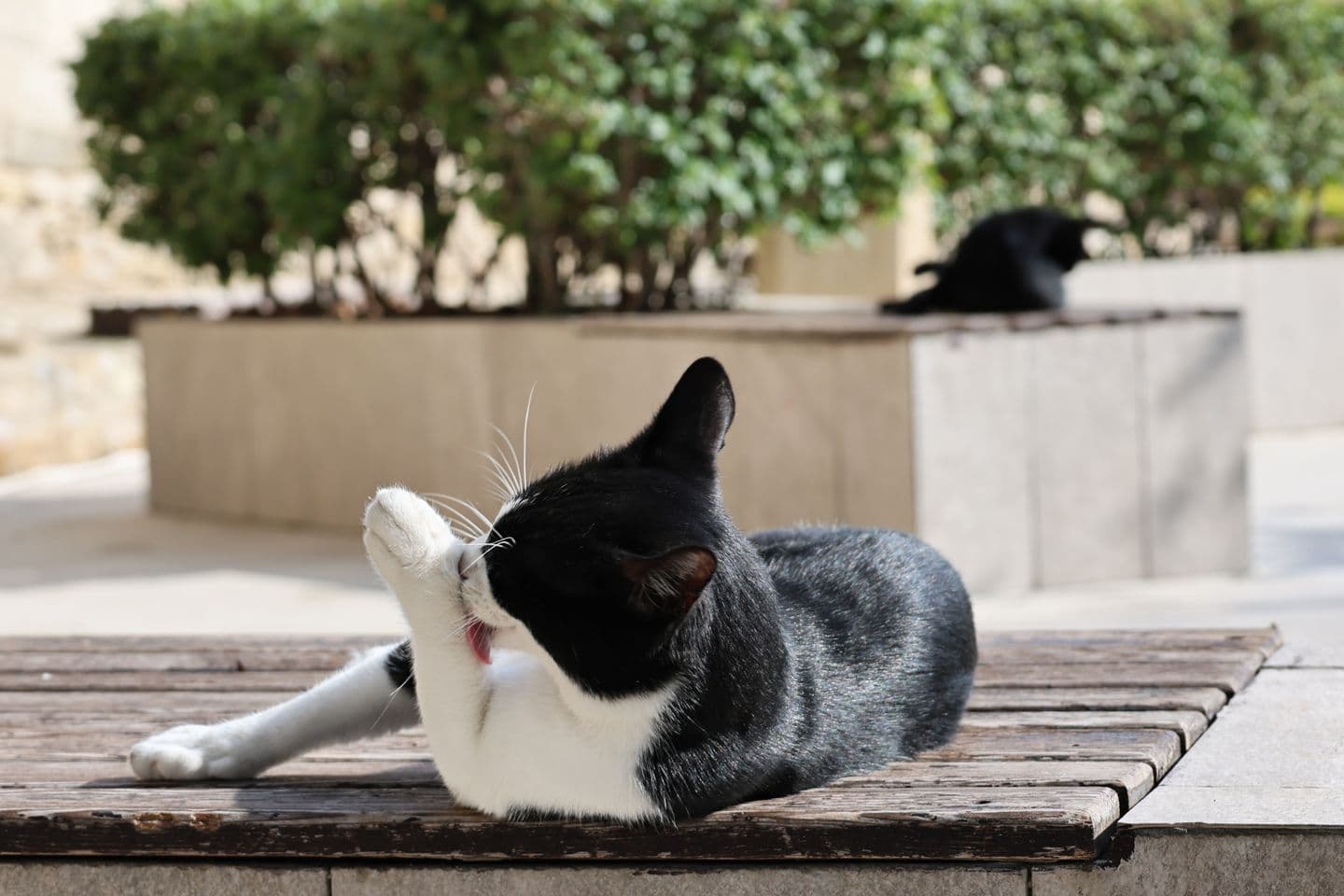
A little extra licking is normal. Bald patches and raw skin are not. Here is how to tell the difference and what to do about it.
Grooming is one of the most normal things a cat does, taking up a meaningful part of every day. Overgrooming, sometimes called psychogenic alopecia, is different: it involves licking, chewing, or pulling at fur to the point of visible thinning, bald patches, or broken skin, usually concentrated on the belly, inner thighs, or flanks.
Medical causes come first
Before assuming overgrooming is behavioural, a vet visit is essential, since the single most common cause is not stress at all but a physical irritation. Fleas, food or environmental allergies, skin infections, and pain in an underlying joint or organ can all cause a cat to lick obsessively at a specific area. Ruling these out with a proper examination, and sometimes basic tests, is the necessary first step, since treating a medical cause as if it were purely behavioural rarely works.
When the cause is stress
A change in the household, such as a new pet, a house move, or renovation work
Conflict with another cat in a multi-cat home
Boredom and insufficient mental or physical stimulation, particularly in indoor only cats with limited space
A disruption to routine, such as an owner's changed work hours or travel
What helps once medical causes are ruled out
Identify and, where possible, reduce the specific source of stress, whether that is a new pet's access to a shared space or a change in the daily routine
Increase enrichment through daily play sessions, scratching posts, window perches, and rotating toys
Add vertical space and separate resources such as food, water, and litter boxes in multi-cat homes, since competition over shared resources is a common hidden stressor
Consider a feline pheromone diffuser as a supporting measure alongside the changes above
In persistent cases, a vet may recommend a formal behavioural consultation or, in select cases, medication to help break the cycle, since compulsive licking can become self-reinforcing over time regardless of the original trigger
Overgrooming rarely resolves on its own without addressing the root cause, so a methodical approach, starting with the vet visit rather than skipping straight to stress management, gives the best chance of a lasting fix.
When a vet may suggest medication
For cats where overgrooming has become a genuinely compulsive, self-reinforcing habit despite environmental changes, a vet may prescribe an anti-anxiety or anti-compulsive medication for a period, always alongside behavioural changes rather than instead of them. This is a vet-led decision based on the individual cat, never something to start without a proper diagnosis, since the same medications can be harmful if the underlying cause turns out to be medical rather than behavioural.
Almost every calico cat you meet, with that distinctive patchwork of orange, black and white, will be female. This is not folklore, it comes down to genetics, and it is one of the more elegant example
A swollen eye looks alarming, and it should get your attention quickly. The eyelid, the eyeball itself, or the tissue around the eye can all swell for very different reasons, so working out which one
Most cats never need their claws trimmed at all, and clipping can even work against them, since cats rely on their claws for both defence and climbing. As cats age and become less mobile, though, claw