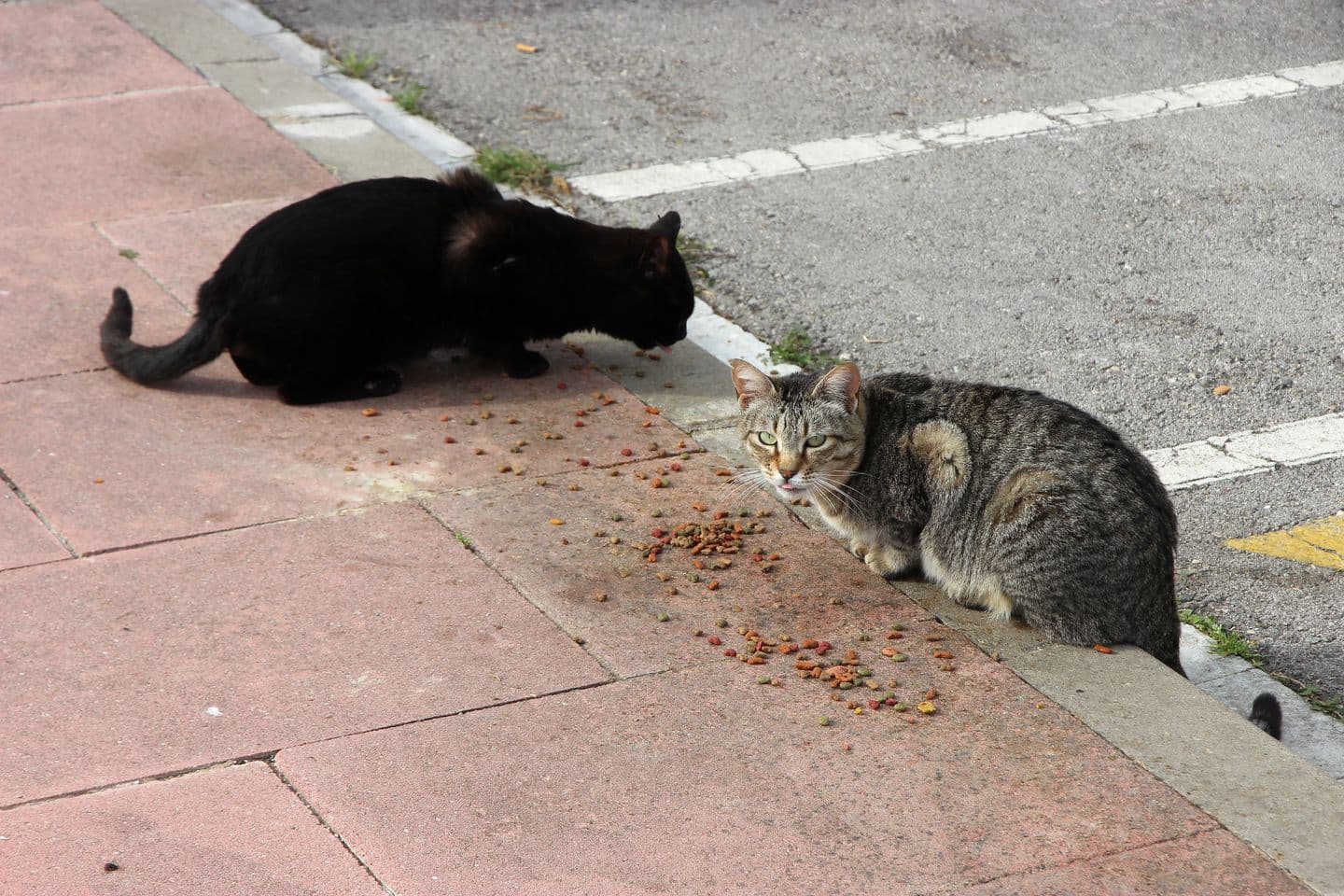
There are usually only two reasons anyone lands on this question: either the cat has just been caught raiding the dog's bowl, or the cat food has run out and dog food is all that's left in the cupboar
Rewritten from source material originally published at: rover.com/blog/can-cats-eat-dog-food/
There are usually only two reasons anyone lands on this question: either the cat has just been caught raiding the dog's bowl, or the cat food has run out and dog food is all that's left in the cupboard. The short answer either way is yes, but only briefly and only in a pinch. Cats and dogs simply do not share the same dietary needs. Dog food is missing nutrition that is essential for cats, because cats are strict carnivores, meat and only meat, while dogs are omnivores that also need grains and vegetables to round out their diet.
What do cats actually need to eat?
As obligate carnivores, cats require protein, fat, and taurine at levels dog food simply is not built to provide. Their nutritional needs generally include:
Protein from meat or fish
Amino acids such as taurine and arginine, from meat or fish
Fatty acids
Vitamins
Minerals
Water
Many vets consider roughly 35 to 45 percent of a cat's diet should come from protein.
What goes into a good cat food?
Taurine is non-negotiable for cats: it supports normal heart function, vision, and reproduction, and since it is found only in animal-based protein, cats need meat-based diets to get it. Beyond taurine, quality cat food tends to be defined by:
Natural, whole-food ingredients
High-quality animal protein, at least 30 percent
Healthy, animal-based fat, roughly 15 to 20 percent
Digestible carbohydrates and fibre
Essential vitamins, minerals, enzymes, and fatty acids
No by-products, fillers, or artificial additives
How does dog food differ?
Dog food includes protein but also grains and vegetables to suit an omnivore's needs. Cat food, by contrast, is built almost entirely around protein, without a real need for grains or vegetables. Small amounts of carbohydrate, rice or corn, are harmless for cats but not essential, whereas they play a much larger role in dog food formulation.
My cat just ate some dog food, should I worry?
Not really. It is not dangerous, just nutritionally incomplete on a regular basis. A cat can eat dog food occasionally without getting sick, even though it is not ideal nutrition. If you are genuinely stuck without cat food, feeding dog food for a single emergency meal is fine, and a few stolen bites from the dog's bowl are nothing to worry about either.
What cats cannot do is live on dog food long-term. Without adequate protein, they lose muscle mass and become lethargic, and without taurine specifically, they risk problems affecting vision, digestion, heart function, fetal development, and immune health.
What if the dog eats the cat's food instead?
Mealtimes in a multi-pet household can get chaotic, and it is common for everyone to sample everyone else's bowl given the chance. A dog could technically survive on cat food alone, but it is not advisable: the higher caloric density, protein, and fat levels are not well suited to a dog's digestive system and can contribute to obesity or even pancreatitis. An occasional taste is fine, but cat food should not become a dog's regular diet.
Feeding a household with both cats and dogs
The simplest fix is separate feeding areas and dishes for each animal. Cats are natural solitary hunters that do not instinctively share prey, so while eating together is a comfortable ritual for us, it is not one that comes naturally to cats. Cats generally prefer privacy and space while eating, and are not always keen to take turns at a shared bowl.
A few extra notes
Chocolate and onions are both toxic to cats and should never be given to them. Cow's milk, despite the classic image of a kitten lapping up a saucer of it, tends to cause stomach upset in cats that cannot digest it well. And while an occasional dog-food meal will not do lasting harm, it should never replace a cat's normal, species-appropriate diet over the long term.
Almost every calico cat you meet, with that distinctive patchwork of orange, black and white, will be female. This is not folklore, it comes down to genetics, and it is one of the more elegant example
A swollen eye looks alarming, and it should get your attention quickly. The eyelid, the eyeball itself, or the tissue around the eye can all swell for very different reasons, so working out which one
Most cats never need their claws trimmed at all, and clipping can even work against them, since cats rely on their claws for both defence and climbing. As cats age and become less mobile, though, claw