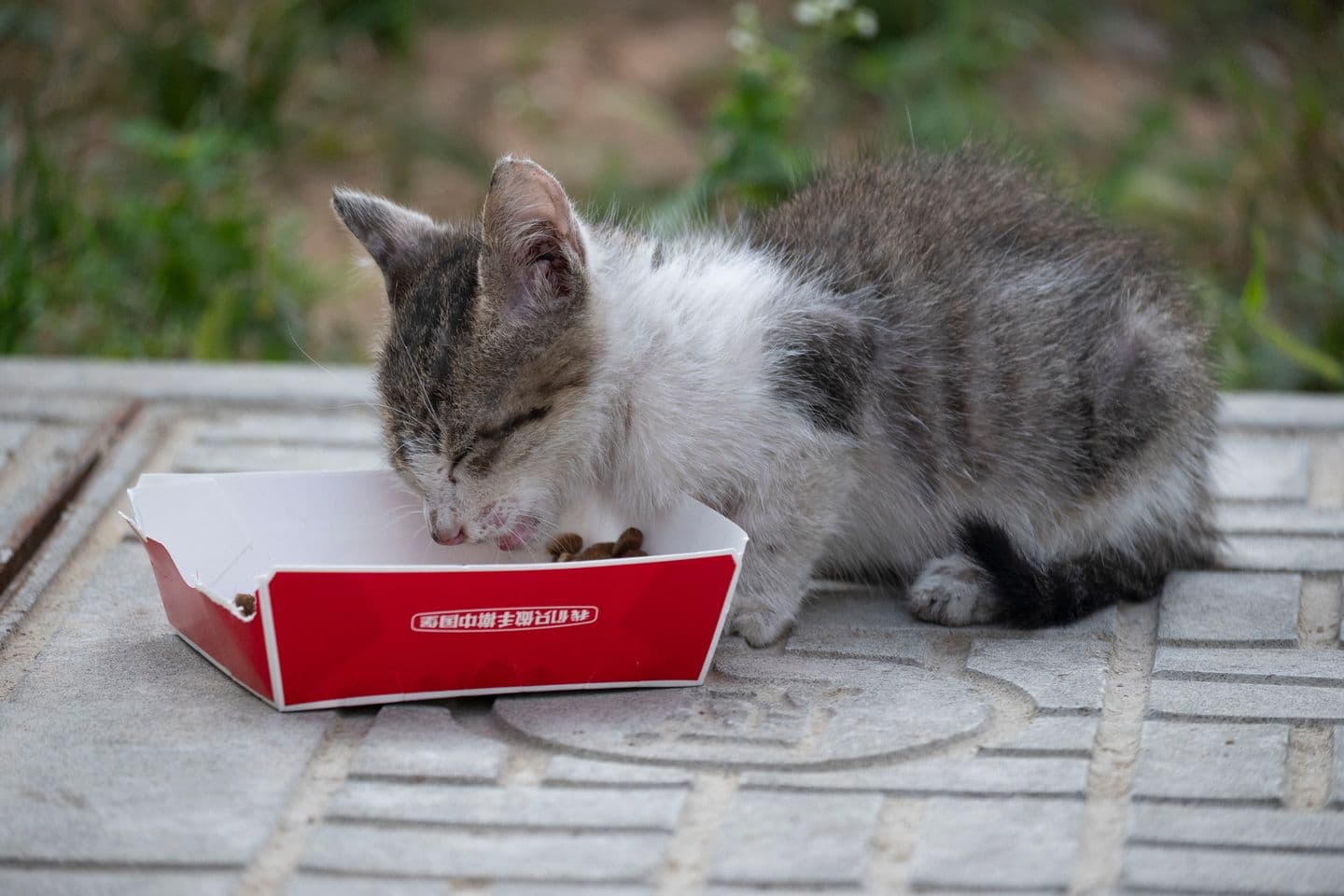
Bottle feeding an orphaned or rejected kitten is one of the more demanding tasks a caregiver can take on, precisely because small mistakes in technique carry real risk. Getting the basics right from t
Bottle feeding an orphaned or rejected kitten is one of the more demanding tasks a caregiver can take on, precisely because small mistakes in technique carry real risk. Getting the basics right from the first feed makes a genuine difference.
What you will need
A proper kitten nursing bottle with a small, soft teat, sized for a kitten rather than a puppy or improvised substitute.
Commercial kitten milk replacer, mixed exactly to the instructions on the packet, never diluted or concentrated by guesswork.
A kitchen scale for daily weighing.
Clean, sterilised equipment for every single feed.
The correct feeding position
Always feed a kitten belly-down on a flat, stable surface, in a position close to how they would naturally nurse from their mother, ideally with all four paws on the surface or gently supported in an upright, head-level posture. Never feed a kitten on their back, since this dramatically increases the risk of formula entering the lungs instead of the stomach, a genuinely life-threatening complication called aspiration pneumonia.
Getting the kitten to latch
Warm the formula to body temperature and test a drop on your wrist, it should feel neither hot nor cold. Gently open the kitten's mouth with a fingertip and slide the teat in, letting them find the sucking rhythm themselves. If a kitten is reluctant, stroking gently or letting them smell the formula first sometimes helps. Never force the teat in or squeeze formula into a kitten who is not actively sucking.
Controlling the flow
Hold the bottle at a gentle angle rather than straight up and never squeeze it. Let the kitten set the pace, and watch for steady, rhythmic swallowing with the ears moving slightly with each gulp, a good sign the latch and flow are correct. If formula is dribbling from the mouth or the kitten is coughing or spluttering, stop immediately and reassess the position and flow rate before continuing.
How much and how often
A newborn kitten's stomach holds roughly 4 millilitres per 100 grams of body weight, so most very young kittens take somewhere between 2 and 6 millilitres per feed, offered every two to three hours around the clock for the first week or two, gradually extending the interval and increasing the volume as the kitten grows. Stop the moment the belly looks comfortably round rather than pushing for a fixed amount, since overfeeding brings its own risks of vomiting and diarrhoea.
A rough guide by age
Newborn to 1 week: every 2 to 3 hours, including overnight, roughly 2 to 6 ml per feed.
1 to 2 weeks: every 3 hours, roughly 6 to 10 ml per feed.
2 to 3 weeks: every 3 to 4 hours, roughly 10 to 14 ml per feed.
3 to 4 weeks: every 4 to 5 hours, roughly 14 to 18 ml per feed, alongside the start of weaning onto solid gruel.
These figures are a starting point, not a rule. Individual kittens vary, and daily weight gain, roughly 10 to 15 grams a day, is a far more reliable guide than sticking rigidly to a chart if a specific kitten needs more or less.
After the feed
Gently pat or rub the kitten's back to help bring up any swallowed air, the same idea as burping a human infant. Then stimulate urination and defecation with a warm, damp cotton ball over the belly and genital area, since kittens under three to four weeks cannot toilet on their own. Keep the kitten warm throughout, since a chilled kitten cannot digest properly regardless of how well the feed itself went.
Signs you need help
A kitten who consistently refuses to latch, seems to be losing rather than gaining weight, or shows any of the emergency signs of fading kitten syndrome, cold to the touch, weak, unresponsive, needs a vet call rather than continued attempts at home. Bottle feeding is genuinely difficult to get right on the first try, and reaching out to a vet or an experienced local rescuer for guidance early is a sign of good judgement, not failure.
Almost every calico cat you meet, with that distinctive patchwork of orange, black and white, will be female. This is not folklore, it comes down to genetics, and it is one of the more elegant example
A swollen eye looks alarming, and it should get your attention quickly. The eyelid, the eyeball itself, or the tissue around the eye can all swell for very different reasons, so working out which one
Most cats never need their claws trimmed at all, and clipping can even work against them, since cats rely on their claws for both defence and climbing. As cats age and become less mobile, though, claw