Kitten Feeding Schedule: From Birth to Eight Weeks
The feeding needs of a kitten change dramatically between birth and eight weeks old, more than at any other stage of their life. Whether you are caring for a nursing litter, hand-rearing an orphaned k
The feeding needs of a kitten change dramatically between birth and eight weeks old, more than at any other stage of their life. Whether you are caring for a nursing litter, hand-rearing an orphaned kitten, or simply want to understand what your new kitten has already been through, here is what each stage actually looks like.
Birth to 1 week
Kittens nurse from their mother every one to two hours, including through the night. They cannot regulate their own body temperature yet and rely on their mother and littermates for warmth, so a nursing kitten who becomes chilled will also struggle to feed properly. A healthy kitten in this stage should gain roughly 10 to 15 grams a day, and a kitchen scale is the most reliable way to track this. If you are hand-rearing, feeding is by bottle with a proper kitten milk replacer, never cow's milk, on the same roughly two-hourly schedule.
Weeks 2 to 3
Feeding frequency starts to stretch out slightly, to roughly every two to three hours for hand-reared kittens, while nursing kittens continue feeding on demand from their mother. Eyes and ears are opening during this stage, and kittens start becoming more mobile, though still entirely dependent on milk for nutrition.
Weeks 3 to 4
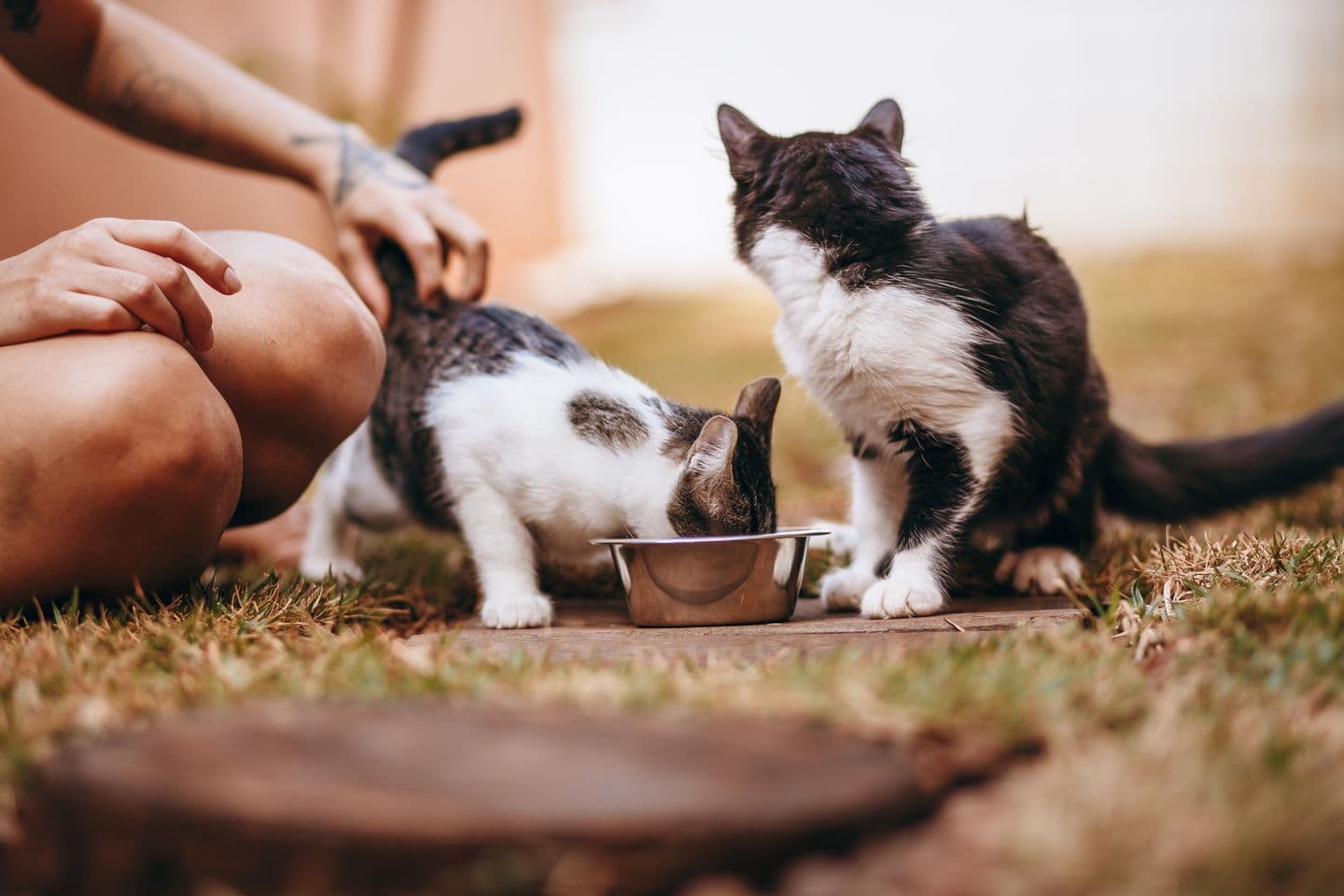
This is when weaning begins. Offer a gruel made from a high-quality wet kitten food mixed with warm water or kitten milk replacer, in a shallow saucer. Expect kittens to walk through it, sneeze in it, and generally make far more mess than they eat in the first few attempts. This is normal. Nursing or bottle feeds continue alongside these early solid food attempts, several times a day.
Weeks 5 to 6
The gruel can be made progressively thicker as kittens get better at eating it, and milk feeds continue to taper. By six weeks, most kittens are eating wet kitten food fairly well several times a day, with milk now a supplement rather than the main source of nutrition.
Weeks 6 to 8
Kittens should be eating solid kitten food, wet, dry, or a mix, around four times a day, with milk feeds stopped or nearly stopped. Fresh water should always be available from this point onward. By eight weeks, weaning is generally complete, and this is also the earliest age most vets and shelters in India consider appropriate for rehoming a kitten.
A quick reference table
Birth to 1 week: milk only, fed every 1 to 2 hours
2 to 3 weeks: milk only, fed every 2 to 3 hours
3 to 4 weeks: milk plus early gruel introduction, 4 to 6 times a day
5 to 6 weeks: mostly solid food, milk tapering, 4 to 5 times a day
6 to 8 weeks: fully solid kitten food, 4 times a day, fresh water always available
If a kitten in your care is falling noticeably behind these milestones, losing weight instead of gaining it, or refusing food entirely at any stage, treat it as urgent rather than something to monitor for a few more days. Very young kittens have little reserve to fall back on, and a vet visit sooner rather than later makes a real difference.
Two safety points for hand-rearing under three weeks
Never feed a cold kitten. A chilled kitten cannot digest milk properly, so warm them gradually against your body or with a covered heat source first, then feed once their body feels warm to the touch. Second, a kitten under about three weeks cannot toilet unassisted, so gently stimulate the belly and bottom with a warm, damp cotton ball after every feed until they start doing this on their own. Both of these are easy to overlook when you are focused on the feeding volume alone, but they matter as much as the milk itself.
Almost every calico cat you meet, with that distinctive patchwork of orange, black and white, will be female. This is not folklore, it comes down to genetics, and it is one of the more elegant example
A swollen eye looks alarming, and it should get your attention quickly. The eyelid, the eyeball itself, or the tissue around the eye can all swell for very different reasons, so working out which one
Most cats never need their claws trimmed at all, and clipping can even work against them, since cats rely on their claws for both defence and climbing. As cats age and become less mobile, though, claw