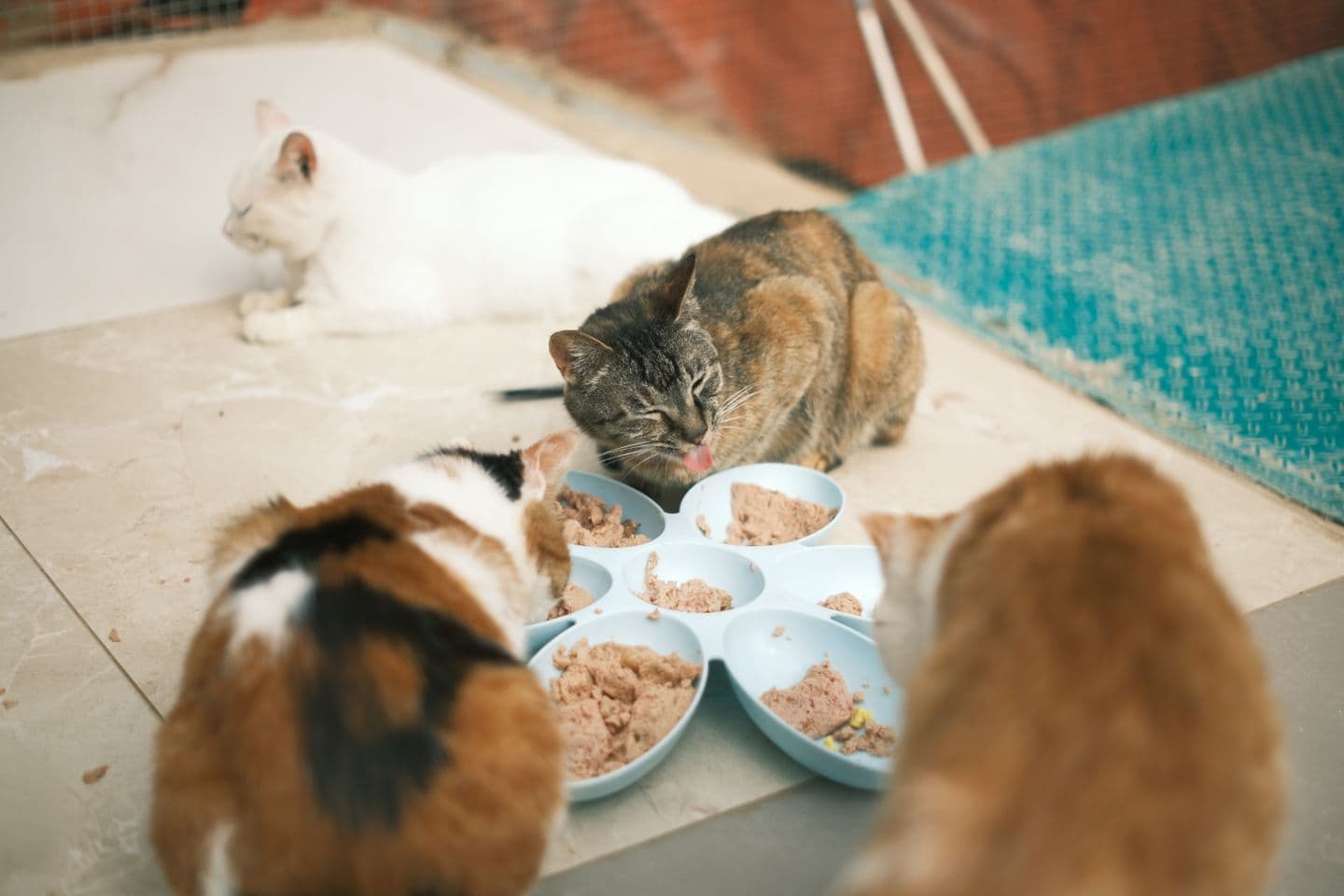
That odd scratching motion at an empty floor near the food bowl looks like burying, but the real explanation is a little more interesting.
Many cats, after eating or even before, will paw and scratch at the floor or the surface around their food bowl in a motion that closely resembles burying. It is a common and harmless behaviour, though the exact reason behind it is still debated among behaviourists.
The leading explanations
An instinct to hide the scent of food, a leftover survival behaviour from wild ancestors who covered leftovers to avoid attracting predators or rival scavengers to their location
A response to food the cat is not especially keen on, with the scratching resembling an attempt to bury or dismiss it, similar to how a cat might cover waste in a litter box
Simple redirected energy, particularly if the food bowl is placed on a surface that offers a satisfying texture to paw at, such as a rough mat or tiled floor
A learned habit, once a cat has scratched near the bowl a few times and found it a satisfying part of the mealtime routine
Is it ever a cause for concern
On its own, this behaviour is not something to worry about. It is worth paying a little more attention if a cat consistently refuses to actually eat the food it is scratching at, since this can indicate the food itself is unappealing, spoiled, or the wrong texture for that cat's preference, rather than simply a quirky mealtime ritual.
If the scratching itself is a nuisance
Place a washable mat under the food bowl to protect flooring from repeated scratching, particularly on wooden or laminate floors
Try a different bowl material or placement if the behaviour seems tied to the specific feeding surface
Avoid discouraging the behaviour directly, since it is a normal instinct rather than a problem to correct, and the practical fix is almost always about managing the surface underneath rather than the cat
This is one of those cat behaviours that looks stranger than it actually is. For most cats, it is simply an old instinct playing out at mealtime, with no deeper meaning beyond that.
Does the type of food make a difference
Anecdotally, many owners notice this behaviour more with wet food than dry, which fits the caching theory reasonably well, since wet food has a stronger smell and spoils faster than dry kibble, both of which would have made covering leftovers more worthwhile for a wild ancestor. This is not settled by rigorous research, but it lines up with the general pattern most vets and behaviourists observe in practice.
Almost every calico cat you meet, with that distinctive patchwork of orange, black and white, will be female. This is not folklore, it comes down to genetics, and it is one of the more elegant example
A swollen eye looks alarming, and it should get your attention quickly. The eyelid, the eyeball itself, or the tissue around the eye can all swell for very different reasons, so working out which one
Most cats never need their claws trimmed at all, and clipping can even work against them, since cats rely on their claws for both defence and climbing. As cats age and become less mobile, though, claw