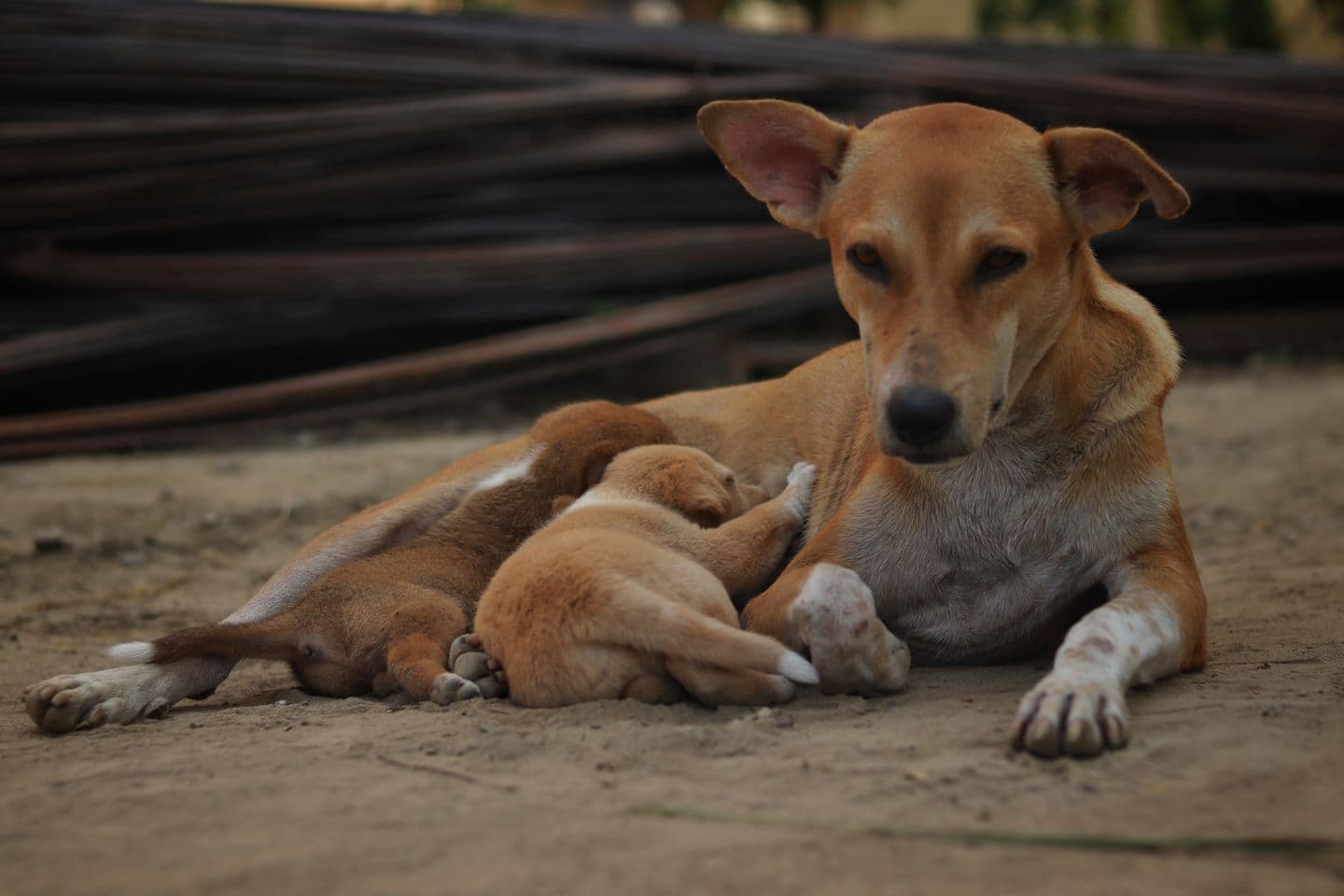
Other names: Vanjari Hound, Banjari Greyhound, Gipsy Dog | Native to: Maharashtra and the Deccan plains
Quick facts
A rough coated sighthound developed by the nomadic Banjara community for hunting and camp protection
Stands around 28 inches, resembling a large Saluki, with males typically weighing 27 to 31 kg
Coat colours range from fawn and cream to brindle, merle and black
Not recognised by any kennel club and increasingly rare due to interbreeding with local dogs
The story
The Banjara Hound carries the story of one of India's great trading and herding communities. The Banjara people travelled long distances across the Deccan with their livestock and goods, and this rough coated sighthound moved with them, tracking antelope and hare across open country and standing guard over the caravan at night.
It is often compared to a large Saluki, and the resemblance is not accidental. Many believe the breed shares distant ancestry with the sighthounds that moved along old trade routes into the subcontinent. What it developed on Indian soil, though, was its own blend of stamina, territorial instinct and quiet watchfulness, closer to a working collie in endurance than a pure racing hound.
Temperamentally, the Banjara Hound is intelligent but independent, and it takes time and patient repetition to train. It bonds strongly with its family and property, which made it invaluable to a community that could not afford to lose livestock or belongings on the road. That same wariness makes early socialisation important for anyone raising one today.
Build and appearance
This is a tall, rangy sighthound, standing around 28 inches at the shoulder with males typically weighing 27 to 31 kg and females a little lighter at 23 to 27 kg. Its coat is rougher and coarser than a typical racing sighthound's, offering some protection against thorn scrub and rough country, and it comes in a wide spread of colours including light brown, cream, black, brown and white, brindle, white and the occasionally striking merle pattern. The tail is left natural, long and tapering, adding to its rustic, unrefined look next to a show-bred European hound.
Some breed watchers also refer to it as the Indian Gipsy Dog, a nod to its close association with a travelling community rather than any settled kennel. Females are typically somewhat smaller and finer boned than males, but both sexes carry the same lean, deep chested build associated with a dog that has to run down fast, agile prey over open ground.
Where things stand today
As a companion, the Banjara Hound is gentle with its own family but genuinely territorial and protective of property, traits that once made it a valued camp guardian and still make it an alert watchdog today. It is not the easiest breed to train, needing patient repetition rather than quick obedience drills, and its strong prey drive means it does best with a secure space to run rather than being kept purely as a house pet.
As Banjara communities have settled into more conventional village and town life, the practical need for a hunting and guarding hound of this kind has faded, and pure bred numbers are shrinking through interbreeding with local dogs. Enthusiasts of India's native breeds see the Banjara Hound as one of the country's most overlooked sighthounds, deserving of the same documentation and conservation effort now going into breeds like the Mudhol Hound.
Beyond the familiar Great Dane and Saint Bernard, a number of large, calm breeds carry the same gentle-giant temperament without quite the same name recognition. Most remain genuinely rare in India, b
A once-bouncy dog that suddenly seems flat, uninterested in walks, and withdrawn from the family is unsettling to watch, and the question that naturally follows is whether dogs can actually feel somet
A healthy dog isn't just a contented one; they're more playful, more energetic and more emotionally settled. As their owner, you're the biggest factor in how well your dog thrives, day in and day out.