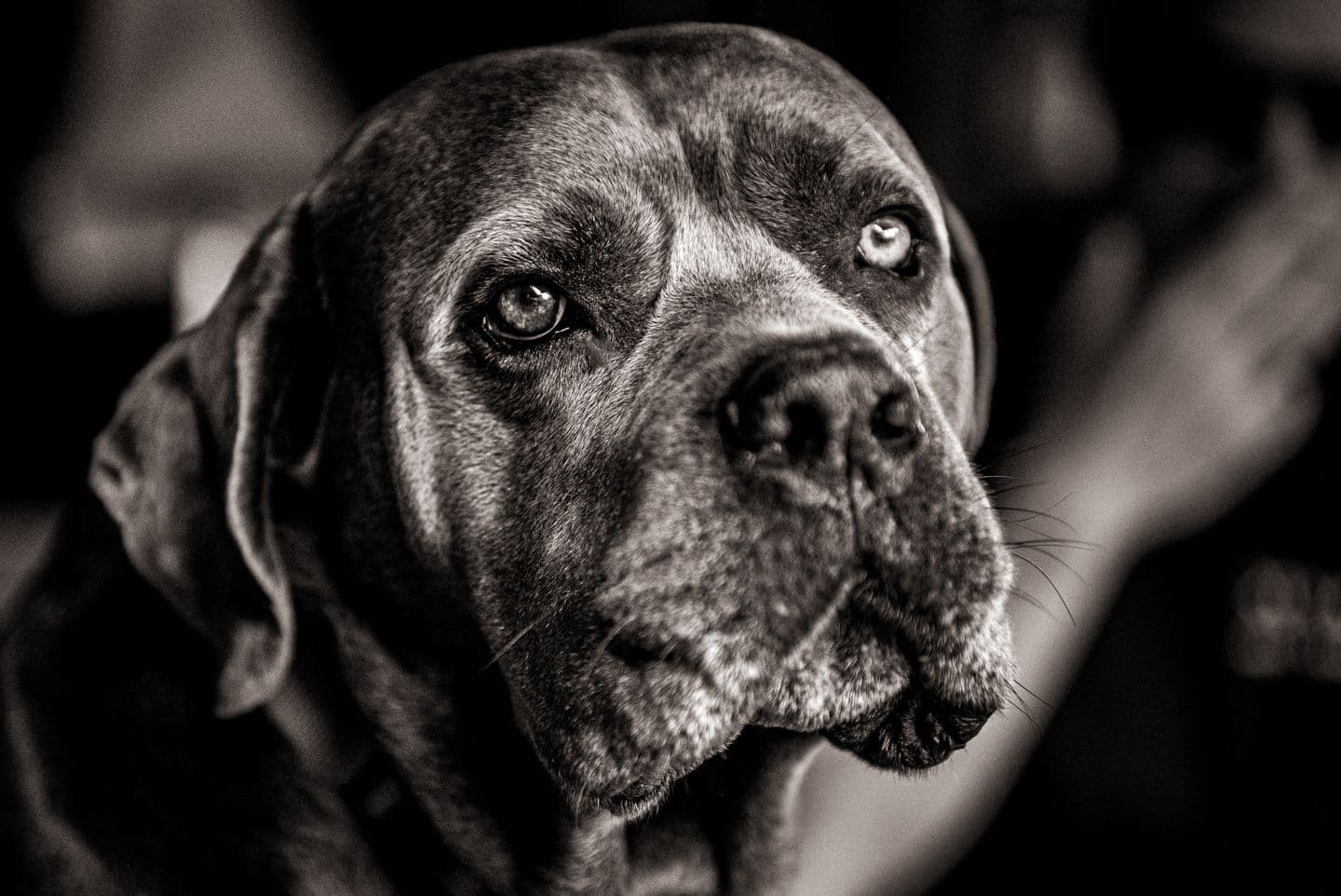
In human culture, eye contact signals attentiveness, honesty, and connection. In dog language, direct, sustained eye contact is a dominance signal — a challenge or a threat.
In human culture, eye contact signals attentiveness, honesty, and connection. In dog language, direct, sustained eye contact is a dominance signal — a challenge or a threat.
How it works in dog-to-dog communication:
A dog staring hard at another dog is communicating assertiveness or potential aggression
A submissive dog will naturally break gaze and look away to defuse tension
The human mistake: Staring directly into an unfamiliar or nervous dog's eyes — the dog may interpret this as confrontational, triggering fear, freezing, or defensive aggression.
Friendly eye contact looks different: Dogs that have a strong bond with their owner engage in eye contact that is soft, brief, and accompanied by relaxed body language.
Simple safety practice: Teach children and visitors to avoid prolonged direct staring at dogs they do not know well.
Compiled as an expanded reference guide. Each behaviour represents a genuine biological, neurological, or instinctual mechanism — not a quirk, not a defect, and almost never stubbornness.
Beyond the familiar Great Dane and Saint Bernard, a number of large, calm breeds carry the same gentle-giant temperament without quite the same name recognition. Most remain genuinely rare in India, b
A once-bouncy dog that suddenly seems flat, uninterested in walks, and withdrawn from the family is unsettling to watch, and the question that naturally follows is whether dogs can actually feel somet
A healthy dog isn't just a contented one; they're more playful, more energetic and more emotionally settled. As their owner, you're the biggest factor in how well your dog thrives, day in and day out.