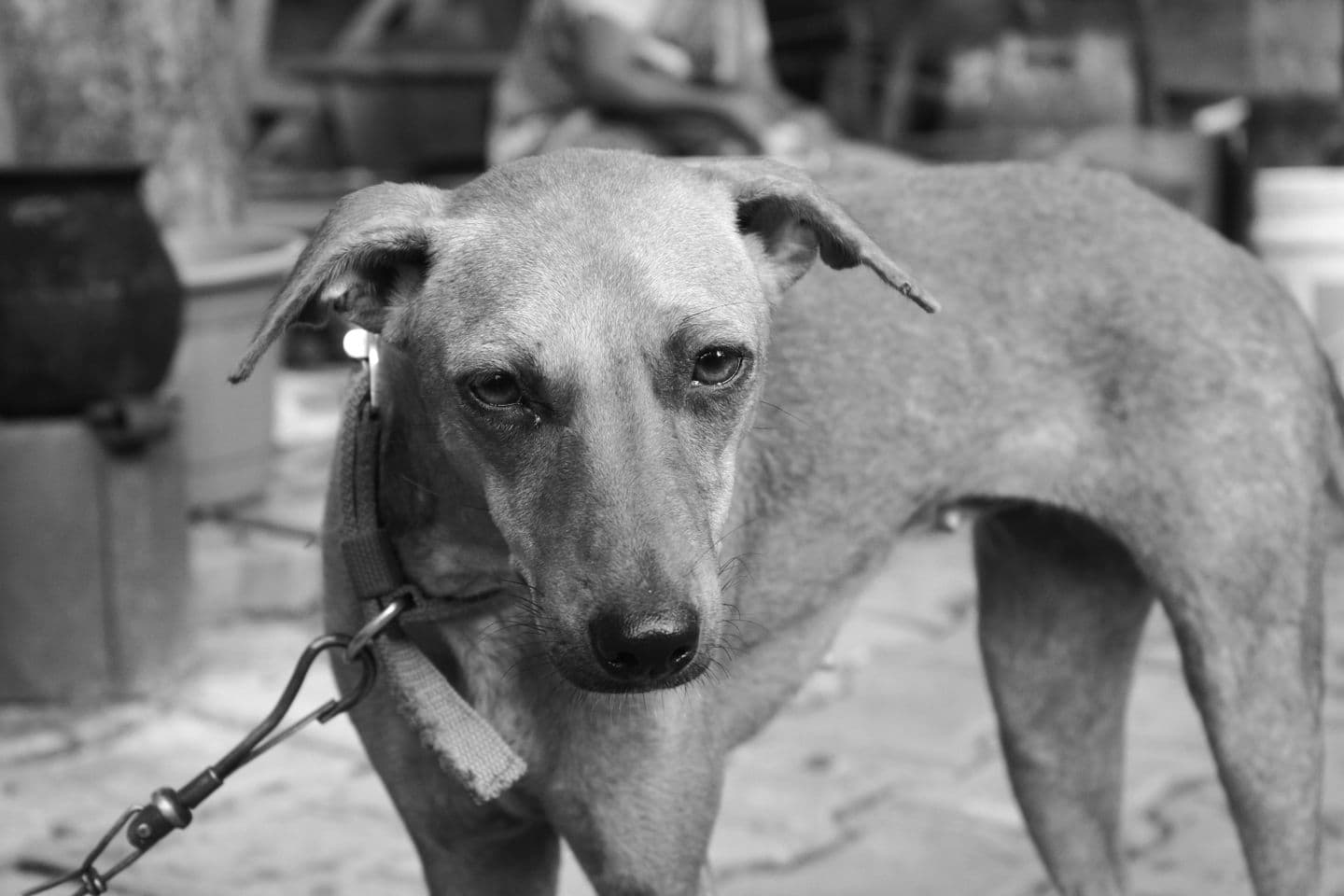
Named after the nomadic Kaikadi tribe of Maharashtra, this small sighthound was bred to do a very specific job: catch hare and vermin quickly and quietly while accompanying a community that moved ofte
Other names: Maratha Hound | Native to: Maharashtra and parts of Gujarat
Quick facts
A small to medium sighthound kept by the nomadic Kaikadi community
Stands between 38 and 46 cm, making it the smallest of India's native sighthounds
Coat is predominantly white, tan or black, short and requiring minimal grooming
Considered rare, with most remaining dogs found in pockets of Maharashtra
The story
Named after the nomadic Kaikadi tribe of Maharashtra, this small sighthound was bred to do a very specific job: catch hare and vermin quickly and quietly while accompanying a community that moved often and could not afford a dog that needed elaborate upkeep. What resulted is unusual among Indian sighthounds, a genuinely compact hunting dog, closer in scale to a Whippet than to its taller cousins like the Rampur Greyhound or Mudhol Hound.
That smaller size is precisely what makes the Kaikadi noteworthy today. Among India's native sighthounds, it is considered the only one genuinely suited to apartment living, provided it gets enough exercise to satisfy its considerable energy and prey drive. It barks only when necessary, needs comparatively little grooming, and its short single coat asks for very little maintenance.
Alert, athletic and independent, the Kaikadi carries the same watchful, one family loyalty typical of Indian sighthounds. It was never bred purely for looks, and its working instincts, particularly its drive to chase, remain strong, so secure outdoor space and regular exercise matter more than coat care.
Build and appearance
The Kaikadi is small to medium in size, standing between 38 and 46 cm, with a slender, sturdy frame carried on thin, long legs powered by surprisingly strong thighs and hocks. Its head is long and narrow, with prominent eyes and long ears that stand erect the moment the dog is alert, and its tail is long and tapering, held low when relaxed. The coat is short and single layered, coming in white, tan and black, and its overall proportions are closer to a Whippet's than to the taller, heavier built sighthounds found elsewhere in India.
Because the breed developed among a community that valued function over form, its build has always prioritised agility and stamina over any particular aesthetic, which is part of why individual Kaikadis can vary noticeably in size and colour even within the same litter.
Where things stand today
Kaikadis are considered naturally healthy and independent, needing less grooming and veterinary care than most companion breeds, and their smaller size translates into lower food and space requirements too, a practical advantage for anyone living in a compact urban home. Their strong hunting drive toward hare and small vermin does mean off leash exercise should always happen in a secure area.
Tracing a pure Kaikadi bloodline is genuinely difficult today, since the breed has mixed extensively with pariah dogs and strays over generations, and it has never received kennel club recognition. It survives largely through informal breeding within Maharashtra, making it one of India's more obscure native breeds despite its practical, city friendly build, and it remains listed among the country's endangered indigenous dogs.
Beyond the familiar Great Dane and Saint Bernard, a number of large, calm breeds carry the same gentle-giant temperament without quite the same name recognition. Most remain genuinely rare in India, b
A once-bouncy dog that suddenly seems flat, uninterested in walks, and withdrawn from the family is unsettling to watch, and the question that naturally follows is whether dogs can actually feel somet
A healthy dog isn't just a contented one; they're more playful, more energetic and more emotionally settled. As their owner, you're the biggest factor in how well your dog thrives, day in and day out.