A dog that cowers at the sight of an unfamiliar person, freezes around other dogs at the park, or seems perpetually on edge in any busy social setting may be dealing with social anxiety, a genuine and
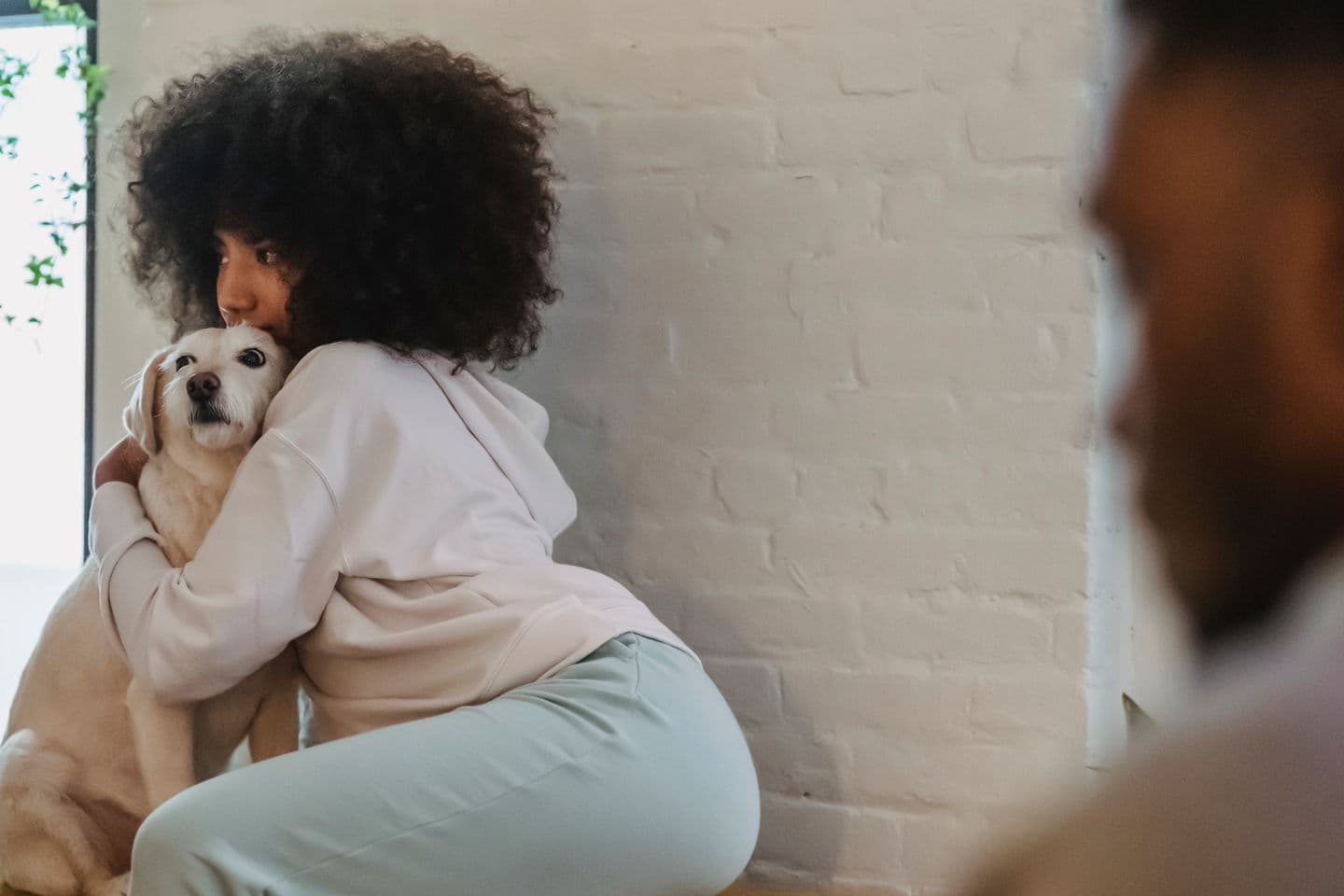
A dog that cowers at the sight of an unfamiliar person, freezes around other dogs at the park, or seems perpetually on edge in any busy social setting may be dealing with social anxiety, a genuine and increasingly recognised pattern distinct from simple shyness or an off day.
How it differs from ordinary caution
Most dogs show some caution around genuinely novel people, animals, or situations, and this is entirely normal. Social anxiety is different in that it's a consistent, often intensifying pattern rather than an occasional moment of wariness: a socially anxious dog reliably reacts with fear across a wide range of social settings, whether that's unfamiliar people, unfamiliar dogs, children, crowds, or loud or busy environments, and the anxiety tends not to fade with brief, one-off exposure the way ordinary caution often does.
Recognising the signs
Cowering, tucking the tail, pinning the ears back, trembling, and trying to hide behind a person or piece of furniture are common physical signs. Some dogs freeze entirely rather than trying to flee, while others attempt to bolt away from whatever is triggering the discomfort. Excessive lip licking, yawning outside of tiredness, and avoiding eye contact are subtler signals worth watching for as well, since they often appear before the more obvious signs and give an owner a chance to intervene earlier. Left unaddressed, social anxiety can occasionally progress to defensive aggression, including growling, air-snapping, or biting, when a dog feels it has run out of other options.
Where it tends to come from
Inadequate socialisation during the critical puppyhood window, roughly the first four months of life, is one of the most consistently cited causes, alongside genetics, since some individual dogs and even some breeds show a naturally more cautious temperament. A specific negative experience, a frightening encounter with another dog or a rough handling incident, can also plant the seed for broader social anxiety, particularly if it happens during a developmentally sensitive period.
Building confidence gradually
A veterinary check is a sensible first step to rule out any physical contributor before assuming the anxiety is purely behavioural. From there, gradual, carefully paced desensitisation, starting with mild versions of a trigger at a distance the dog can handle calmly and pairing that exposure with something the dog loves, remains the best-supported approach, alongside never forcing an interaction the dog isn't ready for. Progress in social anxiety is often slower and less linear than with a single, specific fear, so working with a certified trainer or veterinary behaviourist experienced in anxiety cases tends to produce steadier results than trial and error alone, and in more significant cases, a vet may discuss anti-anxiety medication as a support alongside training rather than a replacement for it.
Managing socially anxious dogs at Indian gatherings
Weddings, festivals, and large family gatherings are a fixture of Indian social life, and they can be genuinely overwhelming for a socially anxious dog, who may face a sudden crowd of unfamiliar people, children, and noise all at once. Setting up a quiet, dog-only room away from the main gathering, with familiar bedding and no expectation of the dog joining in, is a kinder and more realistic option than trying to socialise a genuinely anxious dog through a big event, and it prevents a stressful experience from setting the training back further.
Beyond the familiar Great Dane and Saint Bernard, a number of large, calm breeds carry the same gentle-giant temperament without quite the same name recognition. Most remain genuinely rare in India, b
A once-bouncy dog that suddenly seems flat, uninterested in walks, and withdrawn from the family is unsettling to watch, and the question that naturally follows is whether dogs can actually feel somet
A healthy dog isn't just a contented one; they're more playful, more energetic and more emotionally settled. As their owner, you're the biggest factor in how well your dog thrives, day in and day out.