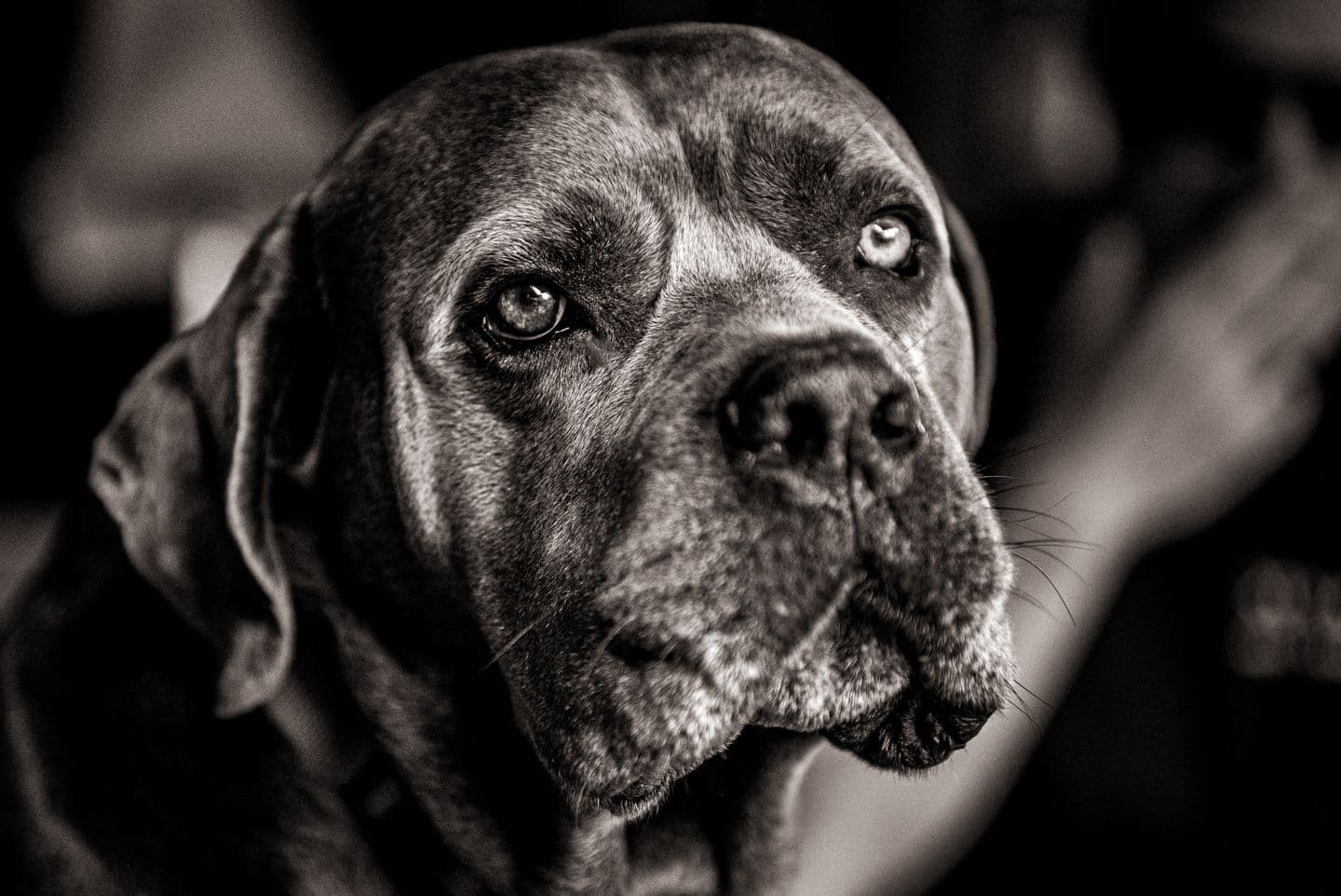
They pull people from burning buildings, sense medical emergencies before symptoms show, take on physical threats, and even retrieve bullets for wounded soldiers. What actually drives a dog to risk it
They pull people from burning buildings, sense medical emergencies before symptoms show, take on physical threats, and even retrieve bullets for wounded soldiers. What actually drives a dog to risk its own life for a human? Love plays a role, and so might simple loyalty or gratitude, but recent research points to something more specific: empathy.
Dogs appear to feel connected to us in a way that's deep enough to explain why some are willing to make the ultimate sacrifice to keep us safe.
Consider contagious yawning as a case study. The phenomenon is driven by mirror neurons in the brain, and generally speaking, the more emotionally attuned an animal is, the more likely it is to unconsciously mirror the expressions and behaviour of those around it.
Researchers use yawning specifically to measure empathy because it's such a clean, observable mirror response. In a 2013 study, 21 of 29 dogs yawned after watching a researcher do the same, reasonably strong evidence of cross-species empathy at work.
Study co-author Ramiro Jolie-Mascheroni acknowledged that some of that yawning could simply reflect tiredness or stress in the dogs, but noted that none of them yawned during control periods or between sessions, only after seeing the human yawn. Taken at face value, the finding suggests a dog's capacity for empathy is roughly on par with that of a four or five-year-old child.
Dr Brian Hare, founder of the Duke Canine Cognition Center at Duke University, argues that dogs have effectively learned to read our minds, relating to people in ways no other species does. He compares the bond to that between parent and child. When a parent and child look into each other's eyes, it triggers a release of oxytocin, the hormone associated with bonding and affection, creating a cycle that reinforces protective, caring behaviour.
The same reaction happens between humans and dogs. When your dog meets your eyes, your oxytocin rises, and so does theirs. Hare suggests dogs have, in effect, moved into the emotional space that exists between parents and children, so when a dog stares at you for no obvious reason, they're often not after anything at all. They're simply expressing affection through eye contact.
Annika Huber, at the Veterinary Institute for Public Health at the University of Bern in Switzerland, studies dog behaviour and cautions that a scientifically verifiable emotional connection between humans and dogs is genuinely hard to establish, given the communication barriers involved. Even so, MRI scans show that specific regions of a dog's brain activate in response to a familiar, upbeat human voice.
Other research has shown dogs can distinguish between different emotional expressions on human faces, though some dogs appear far more attentive and responsive to human needs than others, adding another layer to an already complex picture.
There's no definitive scientific answer to why a dog would give up its life for a person. Most dog owners don't need one. Ask them, and the answer is usually simple: unconditional love, expressed sometimes in the most extraordinary and heroic ways.
Beyond the familiar Great Dane and Saint Bernard, a number of large, calm breeds carry the same gentle-giant temperament without quite the same name recognition. Most remain genuinely rare in India, b
A once-bouncy dog that suddenly seems flat, uninterested in walks, and withdrawn from the family is unsettling to watch, and the question that naturally follows is whether dogs can actually feel somet
A healthy dog isn't just a contented one; they're more playful, more energetic and more emotionally settled. As their owner, you're the biggest factor in how well your dog thrives, day in and day out.