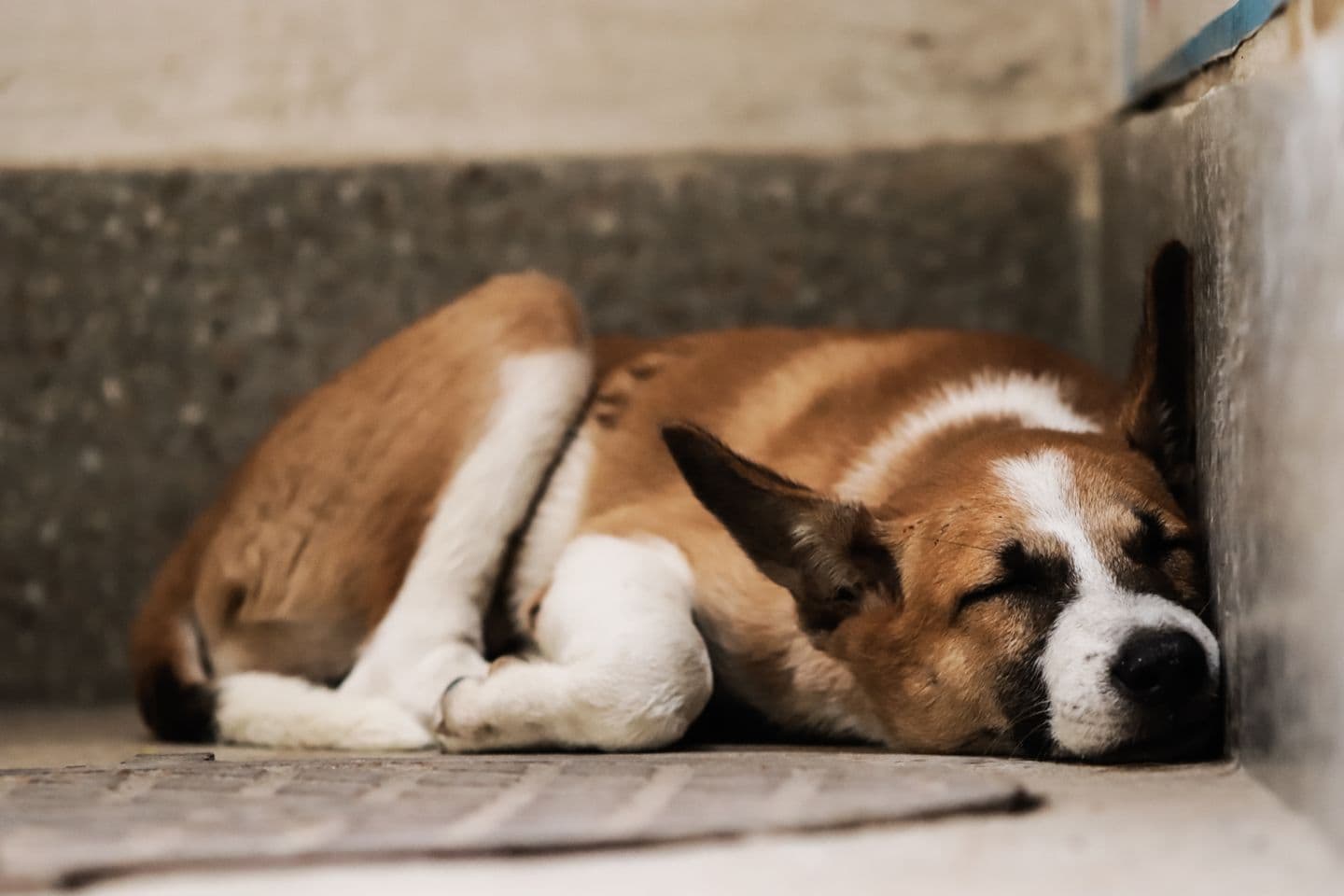
Legs in the air, belly fully exposed, completely relaxed. A dog sleeping on their back is one of the clearest, most reassuring sights for any owner, and the reasons behind it are largely positive.
Legs in the air, belly fully exposed, completely relaxed. A dog sleeping on their back is one of the clearest, most reassuring sights for any owner, and the reasons behind it are largely positive.
It Signals Deep Trust and Comfort
The belly is one of the most vulnerable parts of a dog's body, so a dog who chooses to expose it fully while asleep is showing that they feel completely safe in their environment.
Temperature Regulation
This position exposes areas with thinner fur to the air, helping a dog cool down. It is an especially common sleeping position during India's hotter months, often on a cool tiled floor rather than a heated bed.
Comfort and Muscle Relaxation
Sleeping fully on the back allows muscles to relax completely, which some dogs find more comfortable than curling tightly, particularly dogs with no joint or back discomfort limiting their flexibility.
A Sign of a Secure Environment
Dogs who feel uncertain or unsafe in their surroundings, including many rescued dogs in their first weeks in a new home, are far less likely to sleep in this exposed position. A dog gradually starting to sleep on their back over time is often a genuine milestone in settling in.
When It Is Worth Noting
There is generally nothing to worry about with a dog sleeping on their back, provided they can move normally when awake and show no signs of discomfort. If a dog who used to sleep this way stops doing so, alongside other changes like reduced activity or reluctance to move, it can be worth a vet check to rule out joint pain or another physical cause.
Breed and Body Type Considerations
Deep chested breeds and very young puppies with soft, still developing bones may sleep on their backs less often or only briefly, which is entirely normal. Older, heavier breeds with joint sensitivity may prefer a supportive orthopaedic bed if they do enjoy this sleeping position, since a firmer surface underneath makes the fully exposed posture more comfortable to hold for longer.
Noticing the Milestone in a New Rescue
For a newly adopted dog, photographing or simply noting the first time they sleep fully on their back is a small but genuine way to track emotional progress, and it is a lovely, tangible marker to look back on months later.
Beyond the familiar Great Dane and Saint Bernard, a number of large, calm breeds carry the same gentle-giant temperament without quite the same name recognition. Most remain genuinely rare in India, b
A once-bouncy dog that suddenly seems flat, uninterested in walks, and withdrawn from the family is unsettling to watch, and the question that naturally follows is whether dogs can actually feel somet
A healthy dog isn't just a contented one; they're more playful, more energetic and more emotionally settled. As their owner, you're the biggest factor in how well your dog thrives, day in and day out.