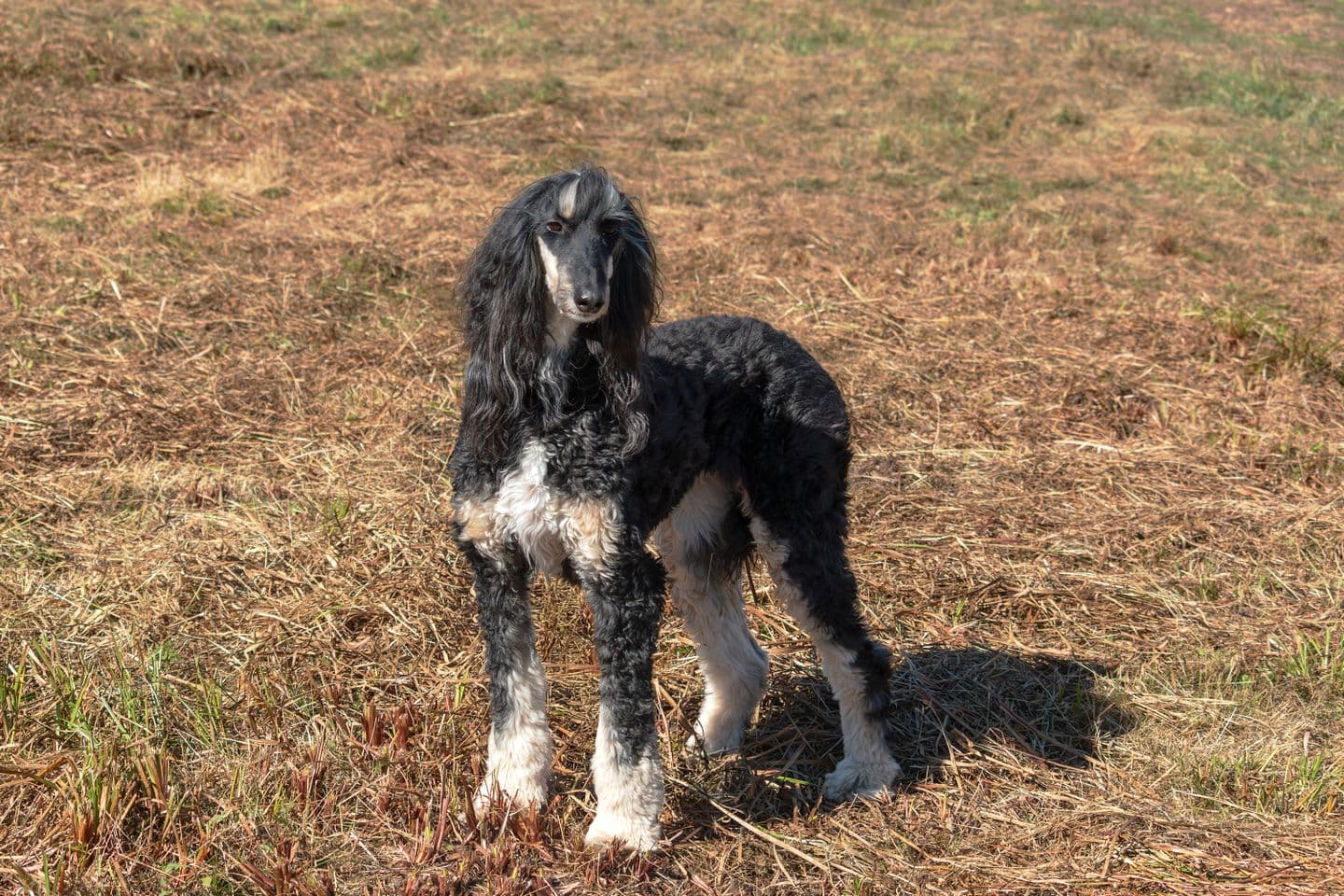
Regal, independent, and instantly recognisable for its flowing coat, the Afghan Hound is one of the most striking sighthounds in the world, descended from ancient hunting dogs of the mountainous terra
Regal, independent, and instantly recognisable for its flowing coat, the Afghan Hound is one of the most striking sighthounds in the world, descended from ancient hunting dogs of the mountainous terrain between Afghanistan and India.
Origin and History
The Afghan Hound developed in the mountainous regions of Afghanistan and the surrounding Central and South Asian terrain, bred to hunt game such as gazelle and hare across difficult, rocky ground by both sight and scent. Its long, protective coat originally evolved to guard against cold mountain climates, an interesting contrast to the warm Indian conditions many of the breed's Indian owners now keep it in.
Physical Characteristics
A tall, elegant sighthound with a narrow head, prominent hip bones, and a distinctive silky topknot.
A long, fine outer coat that, despite its appearance, is designed to allow airflow and does not trap heat as heavily as it might look.
Height typically 61 to 74 centimetres at the shoulder.
A wide range of coat colours, including cream, black, red, blue, and brindle.
Temperament
The Afghan Hound is intelligent but genuinely independent, often described as aloof or cat-like rather than eager to please. It is affectionate with its own family in its own time, but training calls for patience, consistency, and positive reinforcement rather than repetition-heavy methods. Like most sighthounds, it retains a strong prey drive and needs secure boundaries when off leash.
Living with an Afghan Hound in India
The coat is this breed's defining feature and its biggest care commitment in Indian conditions, where humidity and dust both work against it.
Brush thoroughly several times a week, working through to the skin to prevent matting, which develops quickly in a coat this fine and long.
Bathe periodically with a quality shampoo and conditioner suited to long coats, and dry completely before letting the dog outdoors, since a damp coat in humid weather invites skin issues.
Provide shade and rest during peak summer heat; despite the coat's airflow design, Indian afternoon temperatures still call for caution and access to cool, shaded areas.
Exercise generously in a secure space: this is an athletic hunting breed that needs daily activity, ideally in a safely enclosed area given its strong prey drive.
Avoid shaving the coat as a shortcut for Indian heat; it disrupts the coat's natural insulating structure and its characteristic appearance, and is not necessary if grooming and shade are managed properly.
Beyond the familiar Great Dane and Saint Bernard, a number of large, calm breeds carry the same gentle-giant temperament without quite the same name recognition. Most remain genuinely rare in India, b
A once-bouncy dog that suddenly seems flat, uninterested in walks, and withdrawn from the family is unsettling to watch, and the question that naturally follows is whether dogs can actually feel somet
A healthy dog isn't just a contented one; they're more playful, more energetic and more emotionally settled. As their owner, you're the biggest factor in how well your dog thrives, day in and day out.