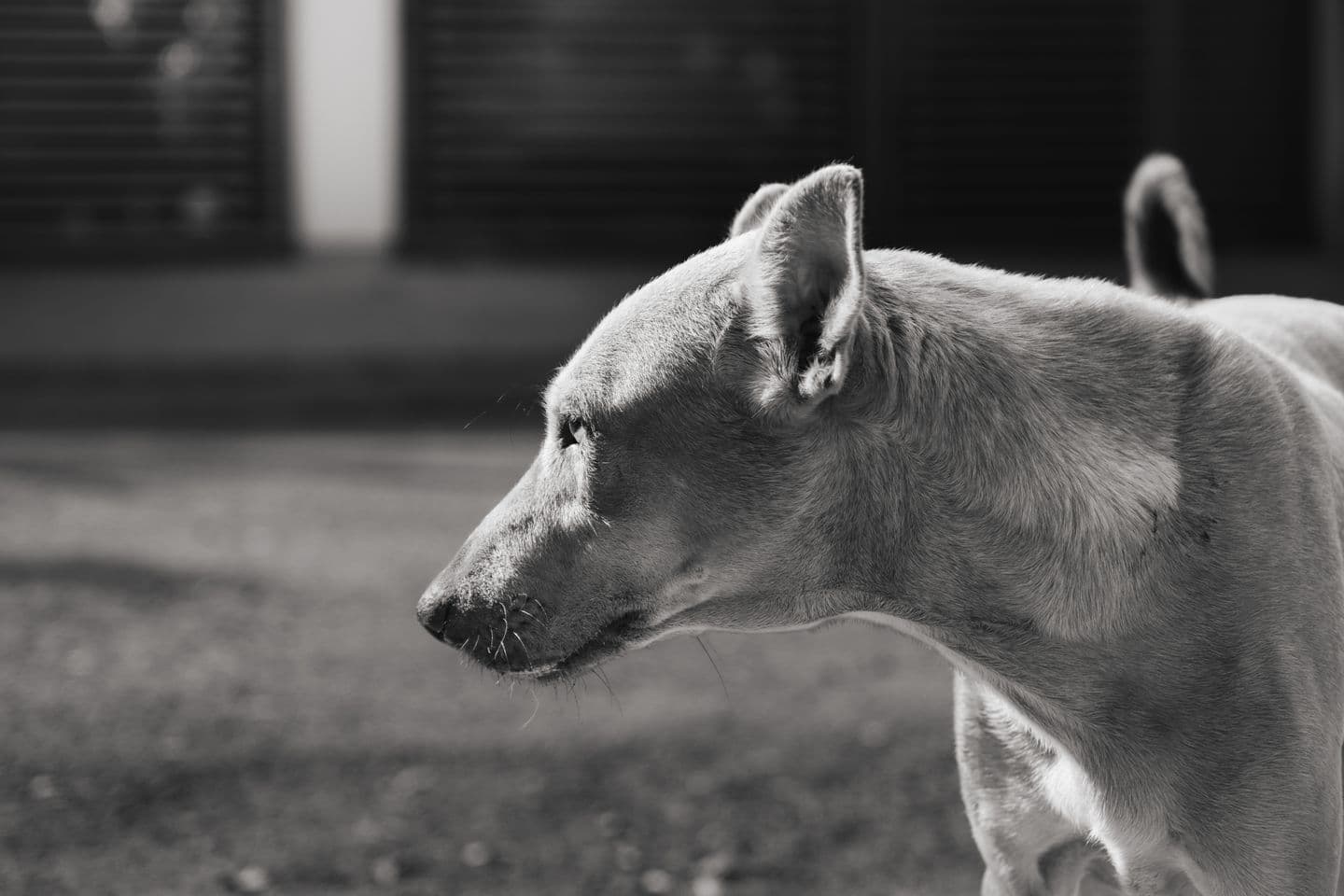
Other names: Kashmiri Sheepdog, Bakharwal Mastiff, Gujjar Dog | Native to: Jammu and Kashmir, Ladakh and Himachal Pradesh
Quick facts
A livestock guardian breed shaped by the Gujjar and Bakarwal nomadic communities over several centuries
Stands roughly 24 to 30 inches at the withers and can weigh between 38 and 90 kg depending on the strain
Coat comes in black and tan, brindle, sable, pied and white, built for high altitude cold
Not recognised by any kennel club and considered critically endangered, with only a few hundred purebred dogs believed to remain
The story
High up on the Pir Panjal range, where shepherd families still move their flocks between summer and winter pastures, a shaggy, broad-chested dog has walked alongside them for generations. This is the Bakharwal, named after the Bakarwal community that bred it, and it has spent centuries doing one job: standing between a flock of sheep or goats and whatever wants to eat them, be it a wolf, a bear or a leopard.
The breed's toughness is remarkable. It thrives in temperatures that would defeat most dogs, and unusually for a large guardian breed, it has traditionally been fed largely on bread, milk and maize rather than meat. Its thick double coat and heavy bone structure were never bred for show rings. They were bred for survival on unforgiving terrain.
Today the Bakharwal's story is one of quiet urgency. As nomadic herding declines and fewer families need a dog of this scale, the breed's numbers have fallen sharply. It has occasionally been used by police in Jammu and Kashmir for tracking work, and there is now growing interest from the Indian Army in Himalayan breeds for high altitude duties. Conservationists in the region have called for it to be recognised as an endangered breed in its own right.
Build and appearance
The Bakharwal carries the frame of a working molosser: a broad back, heavy bone and a massive head set on a thick, muscular neck built to absorb a predator's bite. Its double coat is dense enough to shrug off Himalayan winters, with heavier hair around the ears and neck in the Ladakhi strain, and it comes in black and tan, red, fawn, pied, sable, white and brindle. Adult dogs stand between 24 and 30 inches at the withers and can weigh anywhere from 38 to as much as 90 kg, a range that reflects how much regional strains vary.
It is often described as related to the Tibetan Mastiff, and some accounts suggest a mixed ancestry involving older molosser lines from Central Asia, though nothing about its exact origin is formally documented. What is consistent across the breed is a sturdy back, a bushy tail and an expression that is watchful rather than aggressive at rest, a dog built to observe first and act only when genuinely needed.
Where things stand today
Health information on the Bakharwal is limited, but breed observers note it is generally disease resistant, with the occasional case of hip dysplasia, patellar luxation, cryptorchidism or obesity reported in dogs kept without enough space to work. Like most livestock guardian breeds, it does best with room to patrol and a job to do, not a sedentary life indoors.
This is not a dog suited to apartment life or a first time owner. It is territorial, wary of strangers and needs space, cold weather and a household that understands livestock guardian instincts. For families in the hills who already work with flocks, though, few dogs match its courage and quiet loyalty, and the growing conversation around formally recognising the breed offers some hope that its numbers can be stabilised before it is too late.
Beyond the familiar Great Dane and Saint Bernard, a number of large, calm breeds carry the same gentle-giant temperament without quite the same name recognition. Most remain genuinely rare in India, b
A once-bouncy dog that suddenly seems flat, uninterested in walks, and withdrawn from the family is unsettling to watch, and the question that naturally follows is whether dogs can actually feel somet
A healthy dog isn't just a contented one; they're more playful, more energetic and more emotionally settled. As their owner, you're the biggest factor in how well your dog thrives, day in and day out.