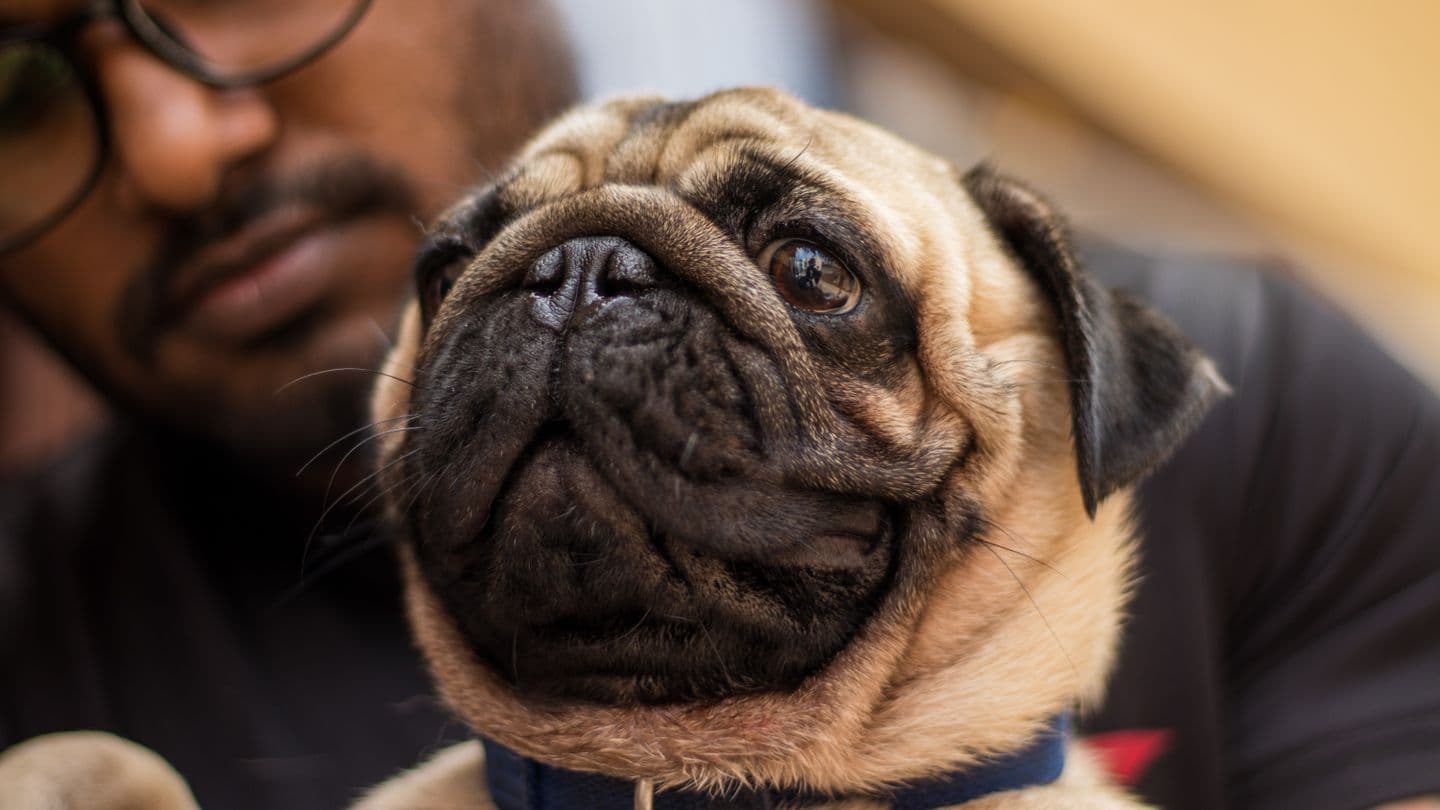
India's most recognisable toy breed, thanks in no small part to two decades of advertising. Here is what owning one actually involves.
Few breeds are as instantly recognisable in India as the Pug, a familiarity owed partly to a long running mobile network advertising campaign that made the breed a household name well beyond dog owning circles. Behind the wrinkled, comic expression is a breed with genuine care requirements that every prospective owner should understand before bringing one home.
History and Origin
The Pug originated in China, where it was kept as a companion to royalty, before spreading to Europe through Dutch trading routes and later becoming associated with several European royal households. Its short, flat face and compact body were bred deliberately, a fact that explains much of its modern health profile.
Appearance
A short, glossy coat, a deeply wrinkled face, large round eyes, and a tightly curled tail define the Pug. Adults typically weigh between six and eight kilograms, with a compact, muscular body.
Temperament
Pugs are affectionate, sociable, and generally even tempered, often described as clownish for their tendency to seek attention through playful, sometimes comic behaviour. They form close bonds with their family and are usually good with children, though as with any breed, interactions should still be supervised.
Heat and Breathing: The Central Challenge
The Pug's flat face, a trait called brachycephaly, restricts normal airflow, and this becomes a serious concern in Indian conditions. Owners need to take this seriously, not treat it as a minor inconvenience.
Exercise only during the coolest parts of the day, ideally early morning or after sunset
Never leave a Pug in a parked car, on a balcony without shade, or exposed to direct midday sun
Watch for warning signs of heat stress: heavy panting, excessive drooling, weakness, or blue tinged gums, and cool the dog down immediately while contacting a vet
Air conditioning or at least a well ventilated, shaded indoor space is close to essential during Indian summers
Keep exercise light and avoid strenuous play in warm weather
Grooming
Despite the short coat, Pugs shed considerably, and regular brushing helps manage this. The facial wrinkles need daily cleaning and thorough drying to prevent bacterial and yeast infections, particularly during humid monsoon months.
Diet and Weight Management
Pugs have a well earned reputation for overeating and under exercising, a combination that leads quickly to obesity. Excess weight makes the breed's existing breathing difficulties considerably worse, so portion control and regular, appropriately gentle exercise matter more for this breed than almost any other toy dog.
Health
Brachycephalic obstructive airway syndrome, the umbrella term for the breed's breathing challenges
Hip dysplasia and patellar luxation
Eye injuries and ulcers, given how prominent and exposed the eyes are
Skin fold infections in the facial wrinkles
Vaccination sensitivity in some individuals, worth discussing with a vet
A well cared for Pug, kept cool, at a healthy weight, and with clean facial folds, can be a wonderfully affectionate companion. The care demands are real, but they are also manageable with a bit of consistent attention. Pugs and Pug mixes are also fairly common in Indian shelters and rescues, and are worth considering as a first stop before looking at breeders.
Beyond the familiar Great Dane and Saint Bernard, a number of large, calm breeds carry the same gentle-giant temperament without quite the same name recognition. Most remain genuinely rare in India, b
A once-bouncy dog that suddenly seems flat, uninterested in walks, and withdrawn from the family is unsettling to watch, and the question that naturally follows is whether dogs can actually feel somet
A healthy dog isn't just a contented one; they're more playful, more energetic and more emotionally settled. As their owner, you're the biggest factor in how well your dog thrives, day in and day out.