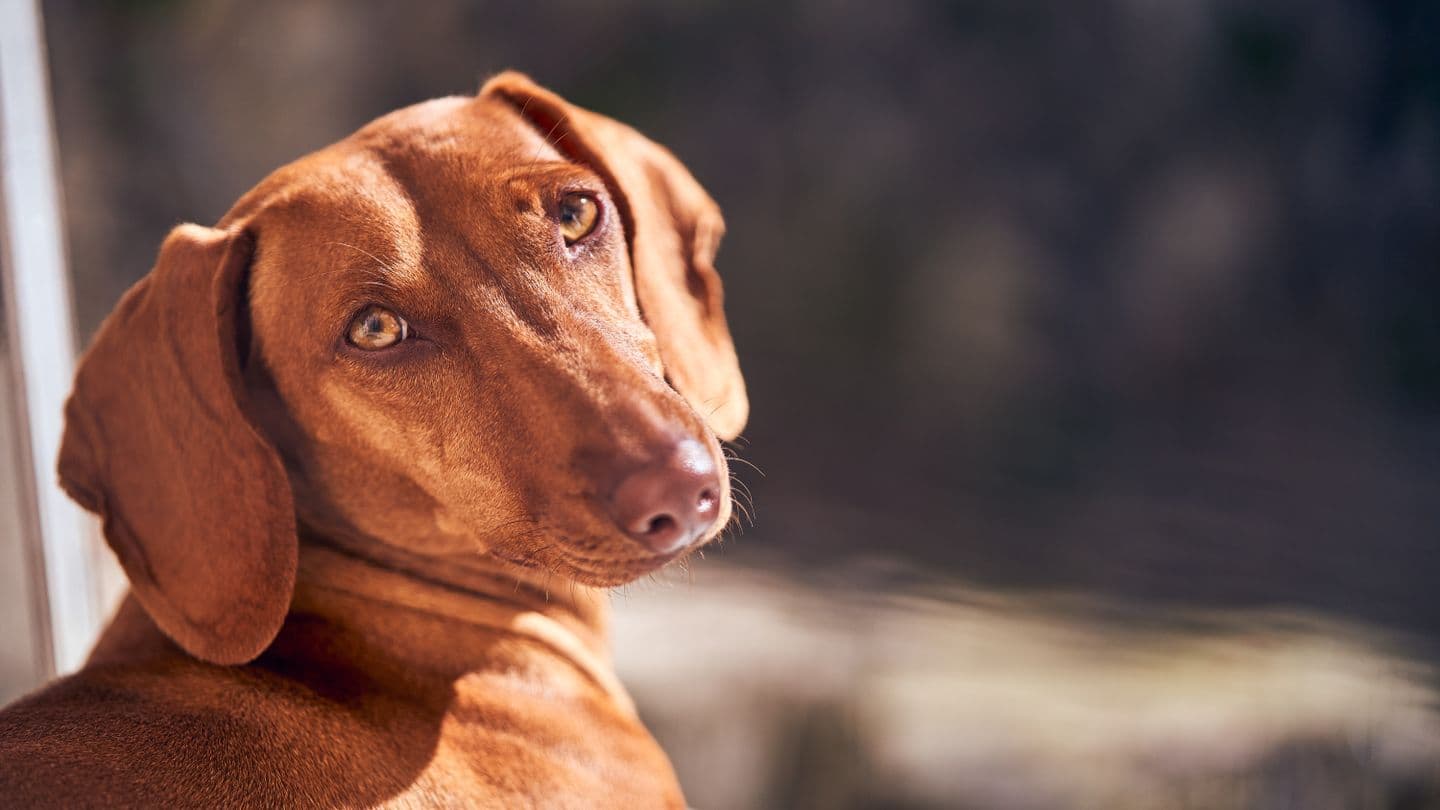
A distinctive, long bodied breed that needs more protective care in an Indian home than its cheerful nature might suggest.
Bred in Germany to hunt badgers underground, the Dachshund's unusual elongated body and short legs were purpose built for tunnelling into burrows. That same distinctive build, which makes the breed so recognisable, is also the source of its most significant health vulnerability, one every Indian owner needs to plan around from day one.
Appearance
A long back, short legs, and a deep chest define the Dachshund, available in standard and miniature sizes, and in smooth, wirehaired, and longhaired coat varieties. Colours range widely, including red, black and tan, and dappled patterns.
Temperament
Dachshunds are curious, bold, and often stubborn, retaining strong hunting instincts including a tendency to dig and chase. They are loyal and affectionate with their family, and their characterful personality has made them a genuinely popular companion breed in India in recent years.
The Back Problem: What Every Owner Must Know
The Dachshund's long spine makes it particularly prone to intervertebral disc disease, commonly known as IVDD, a condition where spinal discs bulge or rupture, sometimes causing severe pain or paralysis. This is not a rare or minor risk. It is common enough that everyday household habits need to change around this breed.
Discourage jumping on and off sofas, beds, and other furniture, common in Indian homes with high seating; use ramps or steps instead
Avoid excessive stair use where possible, particularly in multi storey Indian homes
Support the full length of the body when picking the dog up, never lifting under the front legs alone
Keep the dog at a healthy weight, since excess weight puts significantly more strain on the spine
Watch for early warning signs such as reluctance to jump, yelping when touched, or dragging of the back legs, and treat these as an emergency vet visit, not a wait and see situation
Living With a Dachshund in India
The smooth coat variety handles Indian heat reasonably well, though all varieties benefit from shaded, well ventilated spaces during peak summer. The wirehaired and longhaired varieties need more regular grooming to manage their coat in humid conditions.
Exercise
Moderate daily walks suit the breed well, though high impact activity like jumping for a ball or rough play should be limited given the spinal risk. Mental stimulation through scent games taps into the breed's natural hunting instincts safely.
Health
Intervertebral disc disease, the breed's primary concern
Obesity risk, which compounds spinal strain
Patellar luxation
Progressive retinal atrophy in some lines
The Dachshund's personality wins people over quickly. The commitment that comes with protecting that long spine for the dog's entire life is worth understanding fully before falling for the breed's obvious charm.
Beyond the familiar Great Dane and Saint Bernard, a number of large, calm breeds carry the same gentle-giant temperament without quite the same name recognition. Most remain genuinely rare in India, b
A once-bouncy dog that suddenly seems flat, uninterested in walks, and withdrawn from the family is unsettling to watch, and the question that naturally follows is whether dogs can actually feel somet
A healthy dog isn't just a contented one; they're more playful, more energetic and more emotionally settled. As their owner, you're the biggest factor in how well your dog thrives, day in and day out.