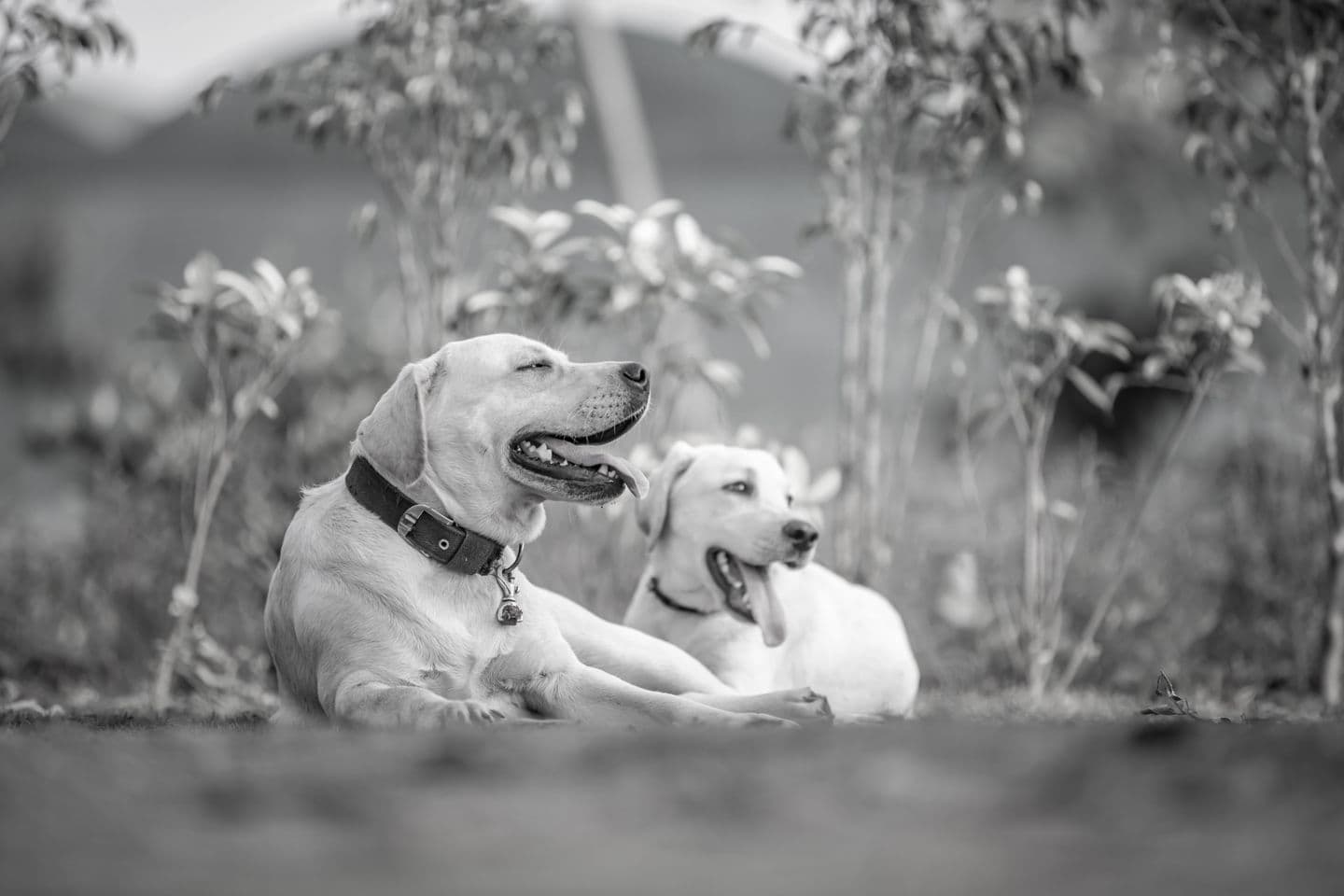
Bigger dogs are not just small dogs scaled up. Their nutrition, growth and joint care all need a fundamentally different approach.
Large and giant breed dogs, generally defined as adults reaching 32 kilograms or more, face a distinct set of care needs shaped almost entirely by their size. Getting this right, particularly during the first two years of a dog's life, has a lasting effect on joint health and overall longevity.
Puppy growth needs careful management
Large and giant breed puppies grow for far longer than smaller dogs, with growth plates that may not close until 18 months of age compared to around 12 months in smaller breeds. Until those plates close, a puppy's joints are genuinely vulnerable to injury and developmental problems. Rapid growth, driven by overfeeding or excess calcium, is a significant risk factor for developmental orthopaedic disease, which is why a dedicated large-breed puppy formula, with controlled calcium, phosphorus and calorie levels, matters far more here than it does for a smaller dog. Free feeding, letting a puppy eat whenever it likes, is best avoided for this reason.
Joint health across the dog's life
Large and giant breeds are predisposed to hip and elbow dysplasia and other developmental joint conditions, so screening breeding lines and monitoring gait as the dog ages both matter.
Diets with glucosamine, chondroitin and omega-3 fatty acids support joint health, and a vet can advise on supplementation as the dog matures.
Keeping a large dog at a lean, healthy weight is one of the single most effective ways to protect its joints, since every extra kilogram adds meaningful stress to hips, knees and elbows.
Moderate, low-impact exercise, regular walks rather than repetitive high-impact activity, protects joints better than intense exercise, particularly in a growing puppy.
Feeding practicalities
Large and giant breeds generally need fewer calories per kilogram of body weight than small dogs do, despite needing more food overall, so portion control matters more than it might seem. Deep-chested giant breeds also carry a real risk of bloat, a life-threatening emergency, which is why smaller, more frequent meals and avoiding vigorous exercise immediately before or after eating are worth building into a daily routine rather than treating as optional advice. Knowing the warning signs matters too: a visibly swollen or distended abdomen, unproductive retching, restlessness and an inability to settle. Bloat can turn fatal within hours, so any dog showing these signs needs emergency veterinary care immediately rather than a wait-and-see approach.
What Indian conditions add to the picture
Beyond the universal large-breed concerns, many giant breeds carry coats bred for far cooler climates, covered in more depth elsewhere in this series. In practice, this means factoring heat management, shade, water, and activity scheduled around the cooler hours of the day, into daily care alongside the nutrition and joint considerations above. Veterinary costs also scale with a dog's size, so budgeting for larger medication doses, bigger equipment and potentially more frequent joint-related care is worth doing before bringing a large or giant breed puppy home.
None of this makes large and giant breeds harder to love, only more deliberate to care for properly, and owners who get the fundamentals right in the first two years tend to see the benefit for the rest of the dog's life.
Tags: large dog breed care, giant dog breeds, puppy nutrition, joint health dogs
Beyond the familiar Great Dane and Saint Bernard, a number of large, calm breeds carry the same gentle-giant temperament without quite the same name recognition. Most remain genuinely rare in India, b
A once-bouncy dog that suddenly seems flat, uninterested in walks, and withdrawn from the family is unsettling to watch, and the question that naturally follows is whether dogs can actually feel somet
A healthy dog isn't just a contented one; they're more playful, more energetic and more emotionally settled. As their owner, you're the biggest factor in how well your dog thrives, day in and day out.