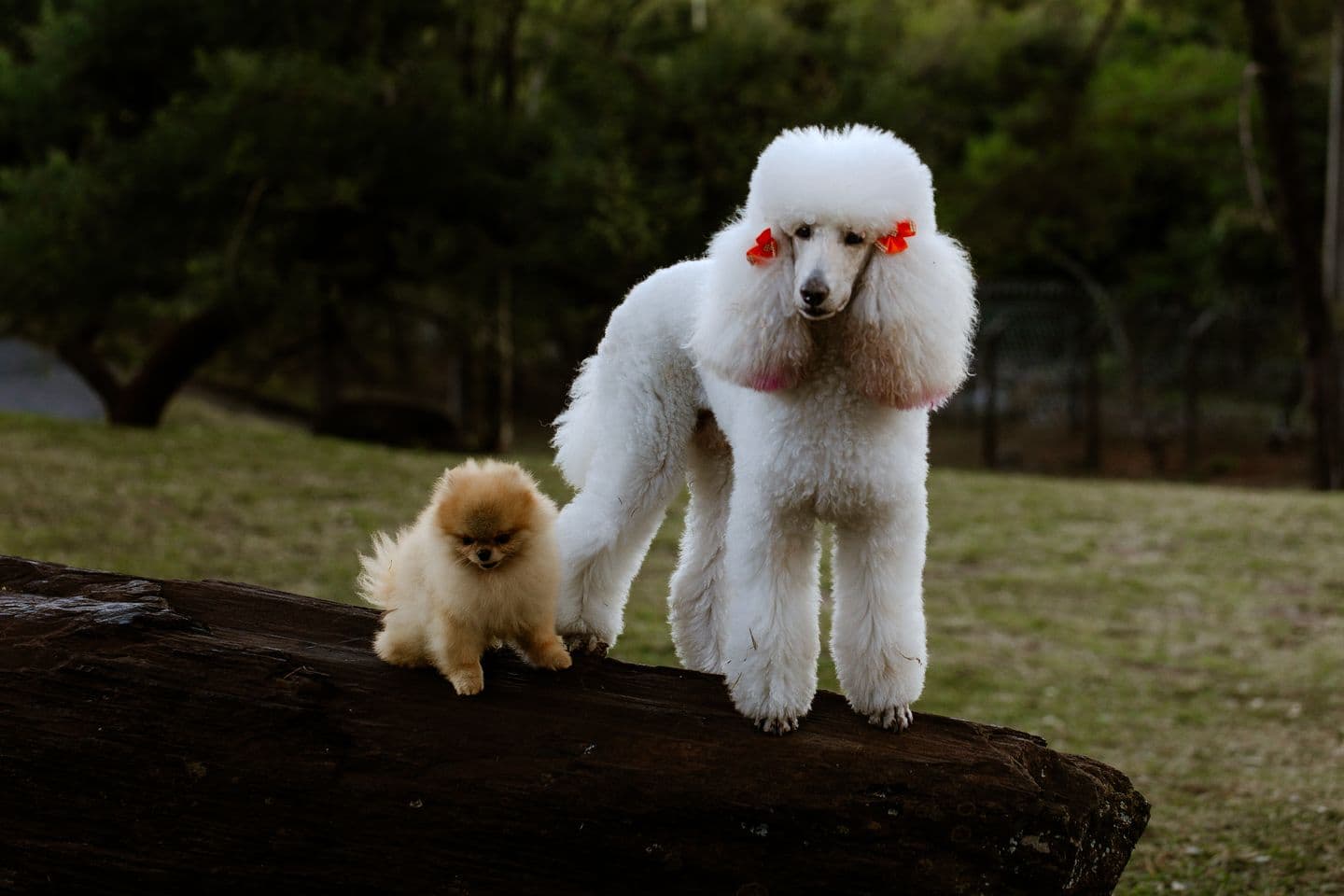
A breed literally built for Indian homes and Indian weather, and one of the most sensible choices on this entire list.
The Indian Spitz owes its existence to the Pomeranians and German Spitz dogs brought to India during the colonial era, later bred down and adapted locally into a distinct type suited to Indian conditions. It became hugely popular through the 1980s and 1990s, familiar to an entire generation from television and advertising, and it remains one of the most recognised companion breeds across the country today.
Two Varieties
The Indian Spitz comes in two recognised sizes, the Greater Indian Spitz, standing around thirty five to forty five centimetres, and the smaller Lesser Indian Spitz. Both share the same build and temperament, differing mainly in scale.
Appearance
A predominantly white or cream double coat, a pointed fox like muzzle, small erect ears, and a tail that curls over the back are the breed's defining features. The build is compact and sturdy rather than delicate.
Temperament
Indian Spitz dogs are alert, intelligent, and deeply loyal to their family, making excellent watchdogs thanks to a strong instinct to bark at anything unfamiliar. They are generally friendly and playful with children they have grown up around, and they train reasonably well given consistent, patient handling.
Why It Suits Indian Homes So Well
Unlike many of the toy and small breeds covered elsewhere in this collection, the Indian Spitz was shaped by Indian conditions rather than a European or East Asian climate. It tolerates Indian heat and humidity considerably better than breeds like the Pomeranian or Pekingese, and it has none of the brachycephalic breathing concerns that come with a flat face.
Grooming
Brush two to three times a week to manage the double coat and reduce loose hair around the home
Expect a heavier seasonal shed around the change from winter to summer
Bathe every three to four weeks, more often if the white coat picks up dust
Check ears and trim nails as part of a regular routine
Exercise
A daily walk and some active play are enough to keep an Indian Spitz content. It is an adaptable breed, equally comfortable in a compact city flat or a house with outdoor space, provided it gets regular company and activity.
Health
The Indian Spitz is a comparatively hardy breed with fewer of the extreme health complications seen in more heavily miniaturised toy breeds. Dental care still matters, and like most small breeds it can be prone to patellar luxation, so regular vet checks remain worthwhile.
Availability
This is one of the easiest breeds to find through adoption in India. Indian Spitz dogs and mixes turn up regularly in shelters and rescue networks across the country, and choosing one this way is a genuinely straightforward option rather than a compromise.
For a family wanting a loyal, climate suited, moderately low maintenance companion with a long history in Indian households, the Indian Spitz is difficult to overlook.
Beyond the familiar Great Dane and Saint Bernard, a number of large, calm breeds carry the same gentle-giant temperament without quite the same name recognition. Most remain genuinely rare in India, b
A once-bouncy dog that suddenly seems flat, uninterested in walks, and withdrawn from the family is unsettling to watch, and the question that naturally follows is whether dogs can actually feel somet
A healthy dog isn't just a contented one; they're more playful, more energetic and more emotionally settled. As their owner, you're the biggest factor in how well your dog thrives, day in and day out.