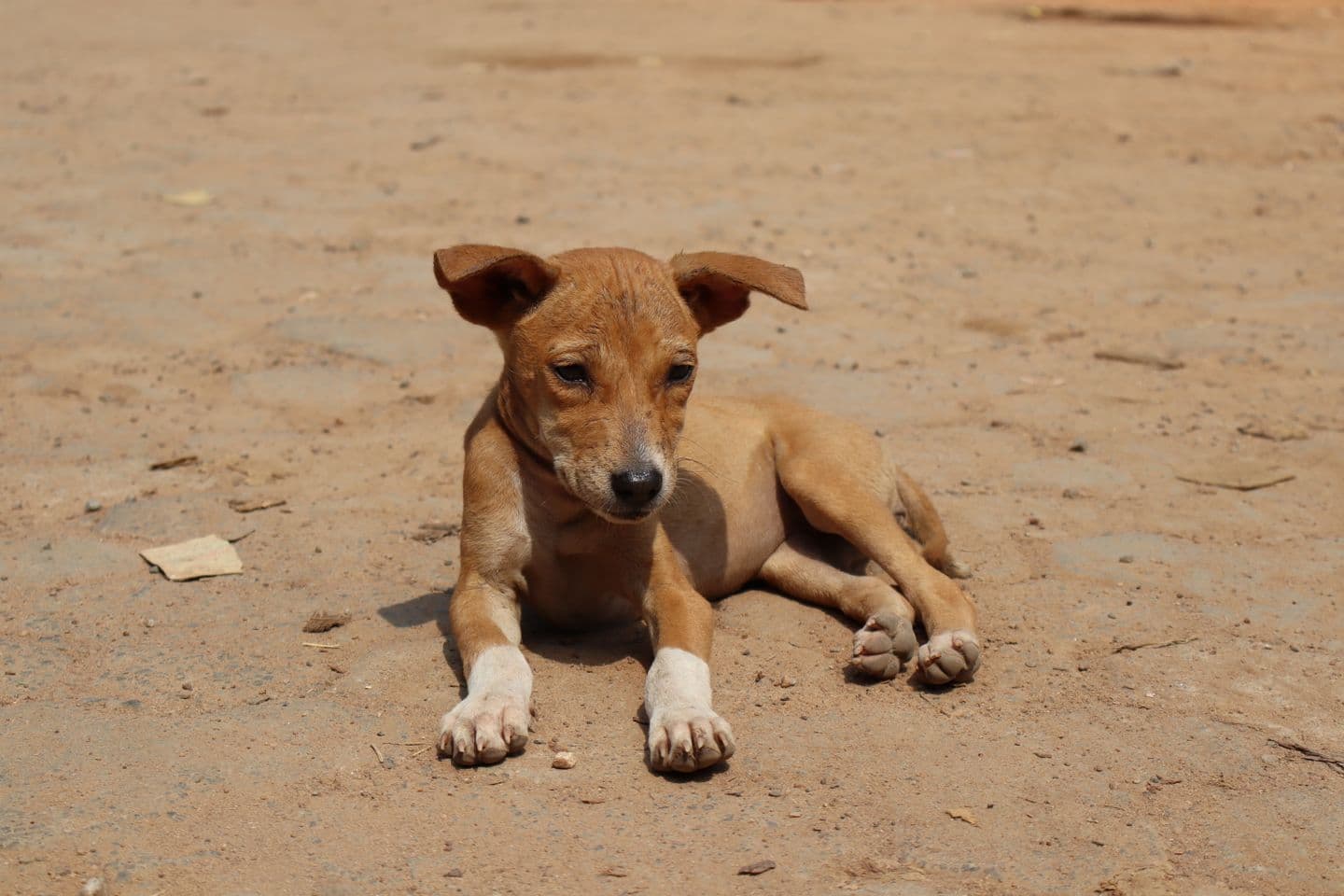
Other names: Jonangi Jagilam, Kolleti Jagilam, Indian Duck Herding Dog | Native to: Kolleru Lake region, Andhra Pradesh
Quick facts
A medium sized breed developed by duck farming communities along India's eastern coast
Known for a distinctive yodelling bark, used historically to herd waterfowl without startling them
Wrinkled forehead, curled tail and tulip shaped ears give it a fox like appearance
Now found in small numbers across Andhra Pradesh, Karnataka, Tamil Nadu, Maharashtra and Goa
The story
Few Indian breeds have a working history as specific as the Jonangi's. Around Kolleru Lake in Andhra Pradesh, duck farmers once relied on this agile, wetland adapted dog to herd flocks of ducks between water bodies, moving with the birds and keeping them safe from predators along the way. It is thought to have developed its unusual yodelling bark specifically so as not to frighten the ducks it was guiding.
As duck farming gave way to more profitable aquaculture around Kolleru and Pulicat lakes, the Jonangi's traditional role largely disappeared. Left without work, many dogs were pushed into a semi feral existence, developing independent fishing behaviour to survive, and some aquaculture farmers came to view them as pests, leading to a sharp and troubling decline in numbers.
Physically, the Jonangi is agile and athletic, with a short, dense coat suited to hot, humid coastal conditions and a distinctive wrinkled forehead. It tends to bond closely with one person or family, is naturally protective, and its short coat requires very little grooming, though its skin is sensitive to intense sun.
Build and appearance
The Jonangi is a medium sized, sturdy and athletic dog with a striking head, marked by a wrinkled forehead and tulip shaped ears that stand erect and articulate, giving it an almost fox or dingo like appearance. Its tail is medium length and carried curled over the back, and its coat is extremely short, fine and dense, coming in white, white with black spots, black, grey and brindle. Adults can stand up to around 21 inches, and despite the compact frame, the breed is capable of covering very large distances with a long, easy stride.
One trait that continues to puzzle even experienced owners is its digging habit: Jonangis are known to dig shallow ditches to stay cool in hot weather, a behaviour tied to its wetland origins and its short coat's limited insulation against direct sun.
Where things stand today
Because it has sensitive, thinly coated skin, the Jonangi is prone to sunburn and needs shade during peak heat, but otherwise it is a naturally healthy, disease resistant breed suited to India's tropical climate. It is not recommended for cold environments, and it thrives best with access to water, reflecting its wetland working origins.
In recent years, a small but committed group of breeders and farmers, particularly in Andhra Pradesh, has taken an interest in reviving the Jonangi, valuing its usefulness for guarding poultry, ducks and livestock from predators. It remains a rare breed, one of India's most quietly endangered, and its story is a reminder of how closely a working dog's fate is tied to the human livelihood it once served.
Beyond the familiar Great Dane and Saint Bernard, a number of large, calm breeds carry the same gentle-giant temperament without quite the same name recognition. Most remain genuinely rare in India, b
A once-bouncy dog that suddenly seems flat, uninterested in walks, and withdrawn from the family is unsettling to watch, and the question that naturally follows is whether dogs can actually feel somet
A healthy dog isn't just a contented one; they're more playful, more energetic and more emotionally settled. As their owner, you're the biggest factor in how well your dog thrives, day in and day out.