Other names: None widely used | Native to: Tirunelveli, Virudhunagar and Thoothukudi districts, Tamil Nadu
Quick facts
A rare South Indian sighthound recognised by the Kennel Club of India specifically for black and tan or black and sable colouring
Stands 64 to 74 cm at the withers and weighs 16 to 22 kg
Traditionally gifted to newlywed brides among the Kambalathu Naicker community as a guardian
Closely related to the Chippiparai, with the two sometimes considered variants of the same southern sighthound
The story
In Tamil, Kanni means pure, and the name reflects the deep loyalty this sighthound was traditionally valued for. Among certain communities in southern Tamil Nadu, a Kanni puppy was once part of a bride's dowry, sent along with her into a new household as a devoted protector, which is how the breed earned its evocative other name, the Maiden's Beastmaster.
The Kanni's relationship with the Chippiparai is a point of ongoing debate among breed enthusiasts. The Kennel Club of India settled the matter on paper by registering black and tan or black and sable coloured dogs as Kanni, and solid coloured dogs of essentially the same type as Chippiparai. Many breeders and old timers, however, still maintain the two represent genuinely distinct lines with their own histories.
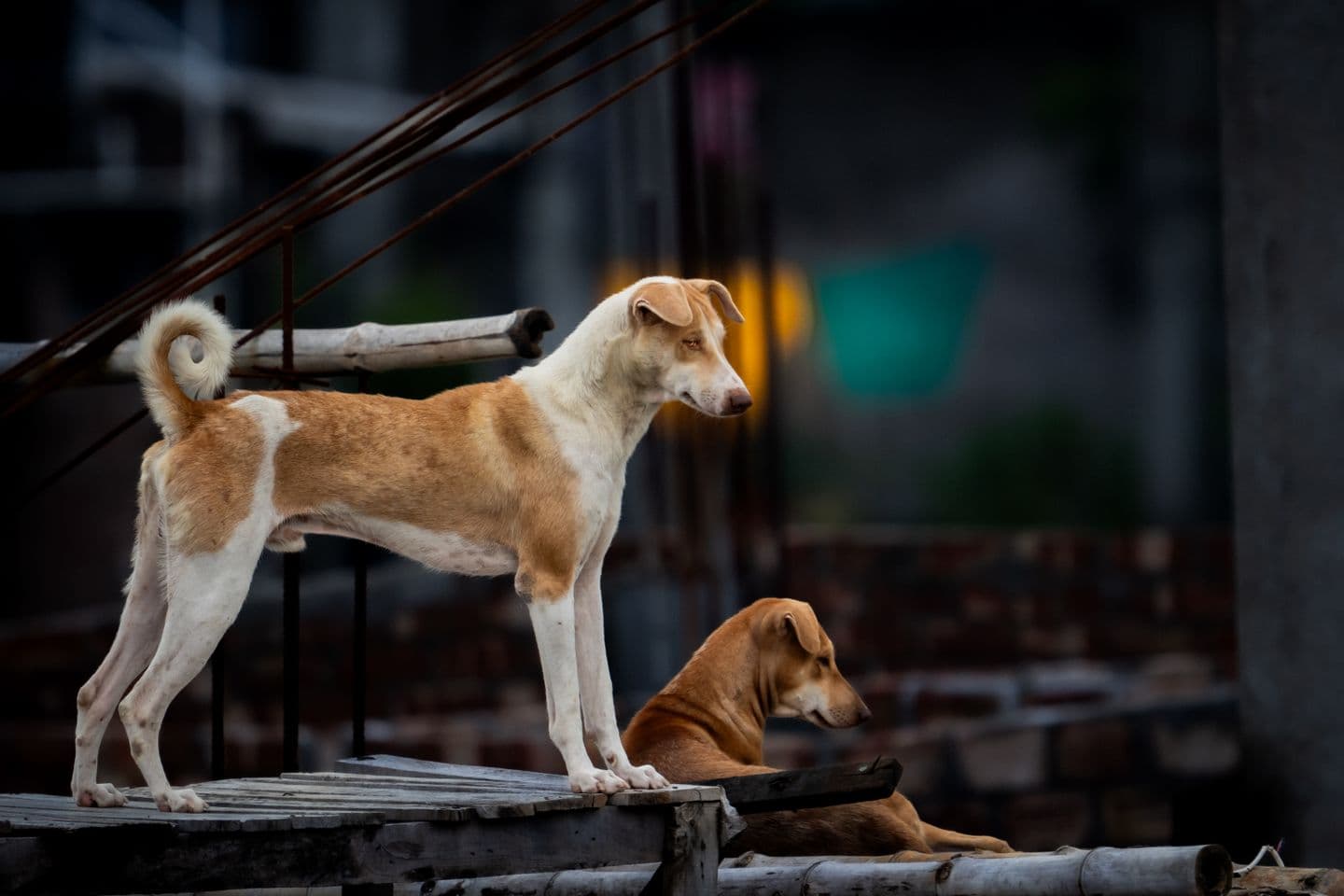
Whatever the taxonomy, the Kanni is unmistakably a working sighthound, built with a straight top line, a tucked up abdomen and golden eyes set in a lean, straight head. It was traditionally used for coursing hare and small game, relying on sight rather than scent, and it retains a strong prey drive and considerable stamina.
Build and appearance
Kannis are medium to large sighthounds with a straight top line and a distinctly tucked up abdomen, standing 64 to 74 cm at the withers and weighing a comparatively light 16 to 22 kg, a build that favours speed and endurance over mass. The head is straight with strong jaws, golden eyes and a black nose, and the ears are medium sized, flat, and can be erect, dropping or semi dropping depending on the individual dog. Its coat is short and close lying, needing very little grooming.
Within the breed, colour has its own local vocabulary. An off white coated Kanni is called Paala Kanni, one with brown spots is Pottu Kanni, and one with black fur is Karun Kanni, terms that reflect just how closely local communities have historically tracked and valued the breed's variations.
Where things stand today
Shy with strangers but fiercely protective of its own family, the Kanni needs space, consistent exercise and gentle, patient socialisation rather than a small flat. It is a naturally healthy, low maintenance breed by native sighthound standards, with its short coat requiring only occasional bathing rather than regular grooming.
The Kanni remains genuinely rare, found mostly in its home districts of Tirunelveli, Virudhunagar and Thoothukudi, and conservation centres run with support from Tamil Nadu Veterinary and Animal Sciences University, including one in Tenkasi district, are now working to keep the bloodline alive and to encourage farmers and animal lovers to raise the breed rather than default to imported dogs.
Beyond the familiar Great Dane and Saint Bernard, a number of large, calm breeds carry the same gentle-giant temperament without quite the same name recognition. Most remain genuinely rare in India, b
A once-bouncy dog that suddenly seems flat, uninterested in walks, and withdrawn from the family is unsettling to watch, and the question that naturally follows is whether dogs can actually feel somet
A healthy dog isn't just a contented one; they're more playful, more energetic and more emotionally settled. As their owner, you're the biggest factor in how well your dog thrives, day in and day out.