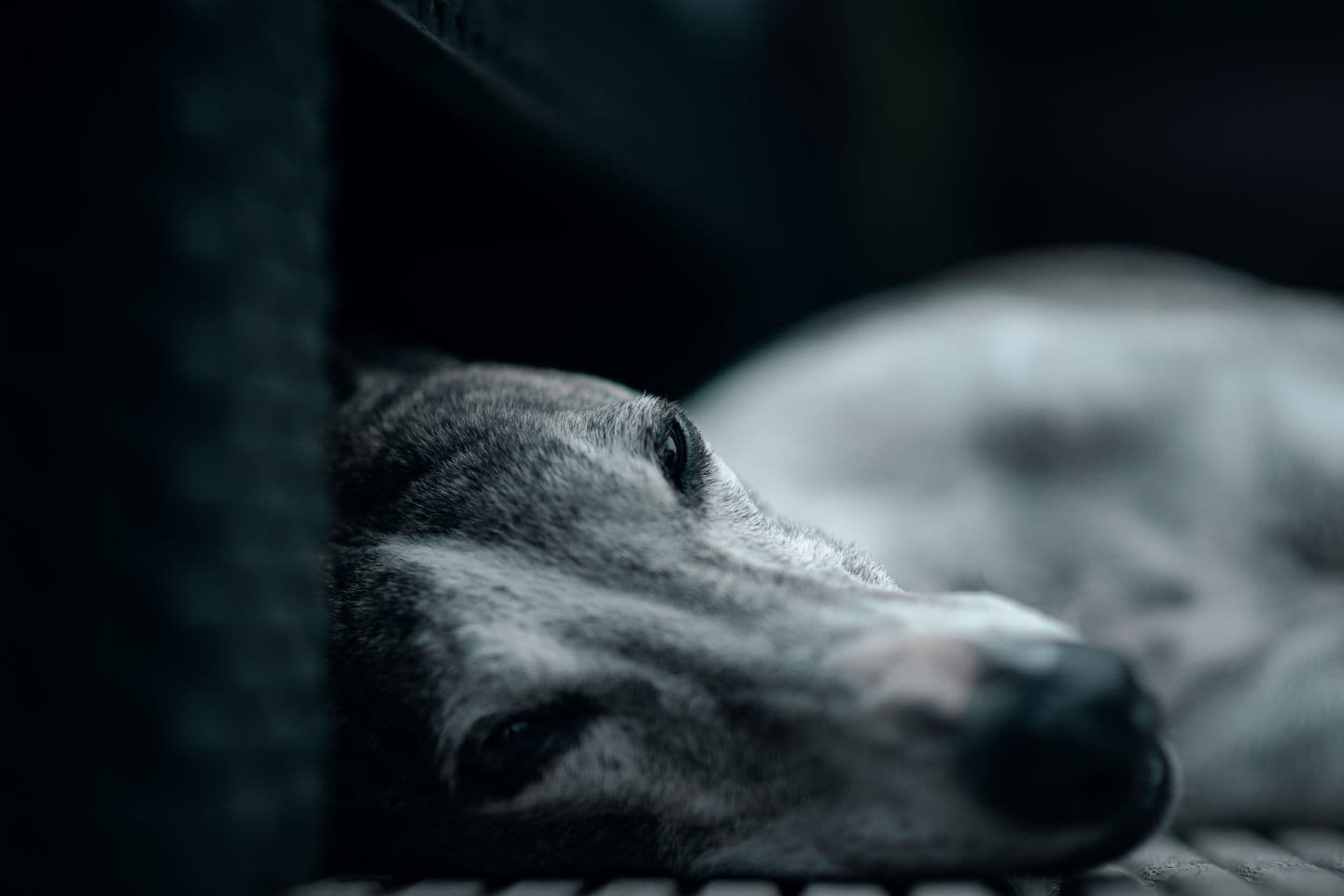
Smaller and slighter than its cousin the Banjara Hound, the Mahratta Greyhound was developed for the same essential purpose: chasing down hare and other small, fast game across the open farmland of Ma
Other names: Mahratta Hound | Native to: Maharashtra
Quick facts
A sighthound believed to carry Arabian or Persian ancestry, standing around 22 inches at the withers
Often blue and tan in colouring, with a short coat suited to Indian conditions
Closely related to the Banjara Hound, also developed among the nomadic Banjara of Maharashtra
Not recognised by any kennel club and now extremely difficult to find as a purebred dog
The story
Smaller and slighter than its cousin the Banjara Hound, the Mahratta Greyhound was developed for the same essential purpose: chasing down hare and other small, fast game across the open farmland of Maharashtra. Its build echoes the classic sighthound template, a lean chest, thin but powerful legs and a short coat, giving it the speed and agility needed to outrun prey across rough country.
The breed's exact origins are debated, with some tracing its lineage to Arabian or Persian hounds carried into the Deccan by traders, and others linking it more closely to indigenous Indian sighthound lines. Either way, it developed alongside communities in Maharashtra who valued it as a farm hunting companion rather than a formal show dog, and it was never bred with an eye toward any international standard.
In appearance, the Mahratta Greyhound is often blue and tan, a colouring that sets it apart from many of its sighthound relatives, and it carries the same short, weather resistant coat typical of India's native hounds. Despite its more modest size, it shares the alert, independent temperament common to the sighthound family, requiring patient training and plenty of exercise.
Build and appearance
Standing around 22 inches at the withers, the Mahratta Greyhound is noticeably smaller than the larger Mudhol Hound or Rampur Greyhound, closer in scale to a smaller version of the Indian Caravan Hound. Its build is unmistakably that of a working sighthound: a lean chest, thin but powerful legs and a short coat, all suited to sustained pursuit across open farmland rather than short bursts of speed alone.
The blue and tan colouring most associated with the breed is relatively unusual among Indian sighthounds, most of which run to fawn, brindle or solid shades, and it is one of the clearer visual markers used to distinguish the Mahratta Greyhound from its close relative the Banjara Hound when the two are seen side by side.
Where things stand today
As a companion, the Mahratta Greyhound shares the alert, somewhat independent character typical of Indian sighthounds, needing patient, consistent training rather than harsh correction, along with plenty of space to run given its hunting background. Its short coat needs little upkeep, an advantage for owners in Maharashtra's warmer months.
Today the Mahratta Greyhound is considered one of the rarest of India's indigenous sighthounds, rarely seen even within its home province. With no kennel club recognition and few dedicated breeders, it survives largely through informal lines in rural Maharashtra, making documentation and conservation work genuinely difficult but increasingly urgent if the breed is to avoid disappearing altogether.
Beyond the familiar Great Dane and Saint Bernard, a number of large, calm breeds carry the same gentle-giant temperament without quite the same name recognition. Most remain genuinely rare in India, b
A once-bouncy dog that suddenly seems flat, uninterested in walks, and withdrawn from the family is unsettling to watch, and the question that naturally follows is whether dogs can actually feel somet
A healthy dog isn't just a contented one; they're more playful, more energetic and more emotionally settled. As their owner, you're the biggest factor in how well your dog thrives, day in and day out.