The Indie: A Complete Guide to India's Original Dog
Every list in this series has, in its own way, circled back to the same dog: heat-tolerant, low-maintenance, healthy, long-lived, affectionate, trainable, and genuinely native to the country it lives
Every list in this series has, in its own way, circled back to the same dog: heat-tolerant, low-maintenance, healthy, long-lived, affectionate, trainable, and genuinely native to the country it lives in. It felt right to close with the breed itself, in full. This is the Indian Pariah Dog, known just as often as the Indie, the Desi Dog, or the INDog, and it deserves to be understood on its own terms rather than as a footnote to imported breeds.
A History Older Than Almost Any Named Breed
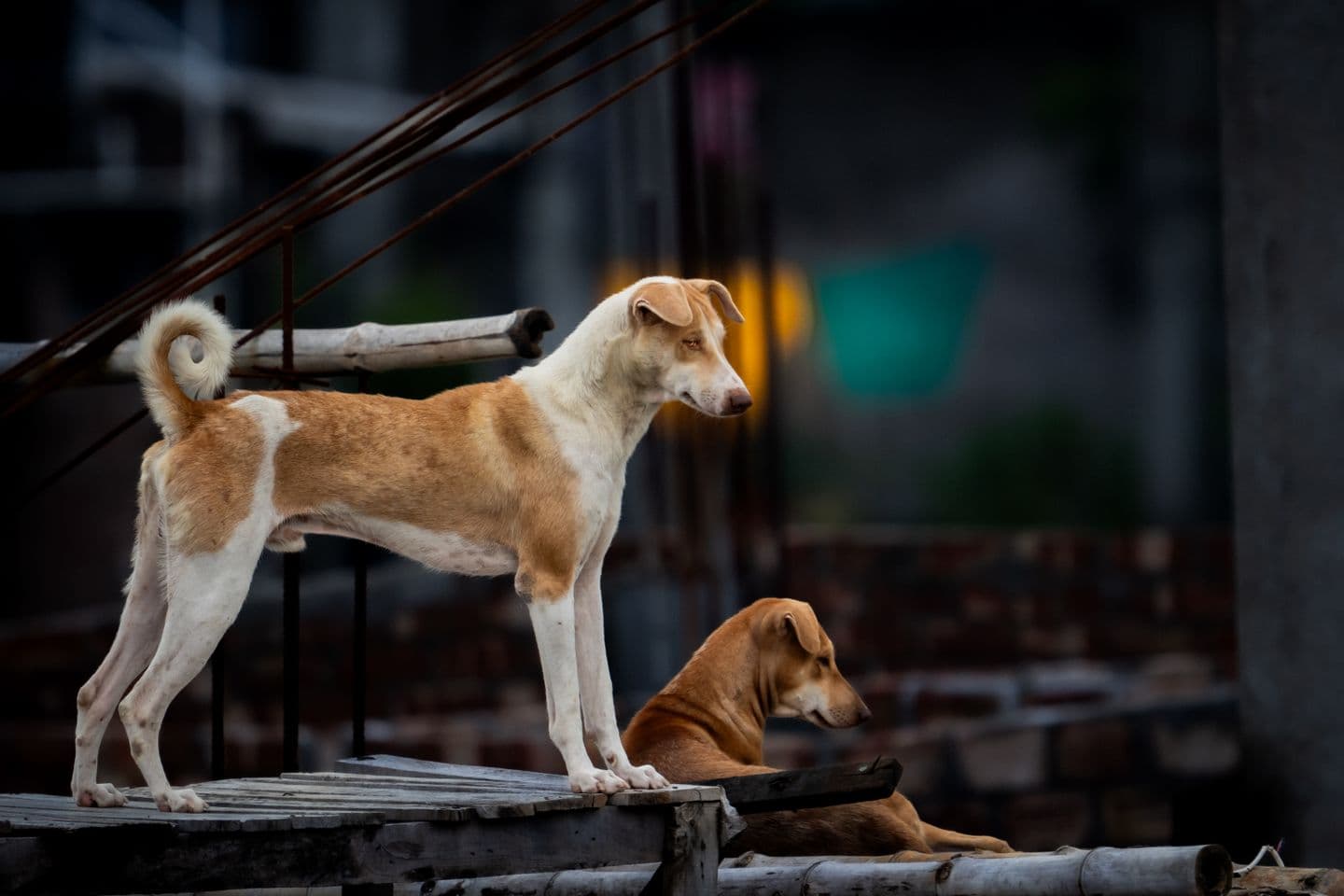
The word pariah traces to the Tamil paraiyar, historically meaning outsider, and it was applied to village dogs living alongside but not fully inside human settlements. Archaeological evidence, including dog remains at Harappan sites and depictions in the rock art of Bhimbetka, places pariah-type dogs in India at least 4,500 years ago, with genetic studies suggesting a lineage stretching back as far as 15,000 years, connecting the Indie to some of the oldest dog populations on earth, alongside the dingo, the Basenji and the New Guinea Singing Dog. Unlike every pedigree breed discussed elsewhere in this series, the Indie was never designed. No kennel club wrote a standard for it first and bred dogs to match. Thousands of years of natural selection, surviving India's heat, its diseases, its scarcity and its cities, did the shaping instead. The wedge-shaped head, the erect ears, the curled tail, the lean, athletic build, every trait earned its place because it helped a dog survive here.
What an Indie Actually Looks Like
Build: Medium-sized, lean and athletic, typically fifteen to twenty five kilograms, with a wedge-shaped head and erect, triangular ears.
Coat: Short, dense and double-layered, low shedding relative to how well it insulates and cools, most commonly in shades of brown ranging from pale tan to deep reddish-brown, with black, brindle and solid white or black individuals also occurring naturally.
Tail: Typically carried curled or in a sickle shape over the back, a defining Indie feature shared with its Spitz-family cousins around the world.
Lifespan: Commonly thirteen to sixteen years, among the longest of any dog type, purebred or otherwise.
It is worth being precise about terminology here. Not every dog seen on an Indian street is a pure Indie. Urban interbreeding with foreign and pedigree breeds has produced a huge range of genuine street mixes, and the Indie is also a distinct type from India's other named native breeds, the Rajapalayam, Mudhol Hound, Chippiparai and Kombai among them, each shaped by a specific region and role. The INDog Project and similar organisations work specifically to document and describe the true pariah type, distinct from both random mixes and the country's other purebred native dogs.
Temperament: What to Actually Expect
Indie temperament is shaped by both nature and upbringing, and the honest answer to what an Indie is like depends heavily on that dog's individual history. A puppy raised from a young age in a stable home behaves very differently from an adult dog rescued off the street after years of hardship, and both are genuinely Indies.
Intelligence: Consistently described by trainers as among the sharpest dogs they work with, quick to learn and highly observant of routine and pattern.
Loyalty: Deep and often intensely focused on one or two primary people, rather than distributed evenly across a household.
Independence: A genuinely independent streak, more self-directed than many pedigree companion breeds, which some owners love and others find requires adjustment.
Wariness with strangers: Common, especially in dogs with any street history, and generally responds well to gradual, positive socialisation rather than forced exposure.
Watchdog instinct: Naturally alert and quick to signal anything unusual, a trait many Indian owners specifically value.
Street-rescued Indies in particular may arrive with real behavioural baggage, fear responses, resource guarding, or a strong chase instinct, built from genuine hardship rather than any flaw in the dog. This is not a reason to avoid adopting one. It is a reason to go in with patience, and ideally some support from a trainer experienced with rescued dogs, rather than expecting instant, uncomplicated gratitude.
Health: The Breed's Strongest Case for Itself
This is where the Indie's natural-selection history pays off most clearly. Because the breed was never funnelled through the narrow gene pools that selective pedigree breeding creates, it largely escaped the hip dysplasia, breathing problems, skin allergies and cancer predispositions that affect many popular foreign breeds. That does not mean an Indie needs no veterinary care. Dogs with a street history often carry a heavy tick burden and are more likely to have been exposed to tick-borne diseases, and every Indie, like any dog, needs core vaccinations, deworming and regular checkups. What it does mean is that, given reasonable care, an Indie's baseline health odds are genuinely excellent, a real and evidence-backed advantage over many breeds Indian buyers pay significantly more for.
Bringing an Indie Home: Myths Worth Retiring
Myth: An adopted Indie will be automatically grateful and obedient. Reality: gratitude is not a training method. Every Indie, like every dog, needs consistent training and boundaries, regardless of where it came from.
Myth: Indies don't need grooming because their coat is short. Reality: short does not mean maintenance-free. Regular brushing and bathing still matter, especially through the monsoon.
Myth: Indies have natural immunity and don't need vaccines. Reality: Indies are exactly as susceptible to rabies and other core diseases as any other dog and need the same vaccination schedule.
Myth: Street dogs and Indies are the same thing, and all street dogs make easy pets. Reality: many street dogs are pariah-type, but temperament varies enormously with individual history, and a dog that has survived years on the street may need genuine behavioural support to adjust to home life.
Myth: Indies are inherently aggressive. Reality: defensive or fearful behaviour in street dogs is almost always a learned response to a genuinely hard environment, hunger, injury, abuse, not a fixed trait of the breed.
Practical Care
Exercise: Moderate to high. Indies are naturally active and do best with a proper daily walk plus some off-leash or play time where safely possible.
Diet: A balanced, appropriately portioned diet rather than reliance on leftovers, since Indies are just as prone to diet-related health issues as any breed when fed poorly.
Grooming: Weekly brushing, occasional bathing, and standard nail, ear and dental care.
Training: Responds very well to positive, reward-based methods; early socialisation with people, other dogs and everyday city sounds makes a genuine difference to adult temperament.
Space: Adaptable to apartments provided exercise needs are genuinely met, though Indies with a strong independent streak sometimes find purely indoor confinement more stifling than other breeds.
How to Adopt
Contact a local shelter or animal welfare organisation, present in most Indian cities, where Indies and Indie mixes are consistently the most available dogs looking for homes.
Expect a modest adoption fee covering vaccination and sterilisation rather than a purchase price.
Ask about the individual dog's history, street-origin, surrendered, or shelter-born, since this genuinely shapes what the first few months at home will look like.
Budget time for a settling-in period, particularly for adult rescues, and consider professional trainer support for dogs showing fear or reactivity.
The Current Policy Landscape
This is a genuinely live and evolving issue. In 2025 and 2026, India's Supreme Court issued a series of significant rulings on the management of stray dogs in public spaces, driven by concerns over dog bites and rabies, particularly around schools, hospitals and transit hubs. The rulings have moved between requiring permanent relocation of stray dogs from sensitive public areas and, at other points, directing that sterilised, vaccinated dogs be returned to their original territory, reflecting a genuine and ongoing tension between public safety concerns and animal welfare advocacy, including calls from some quarters for community feeders and adoption-focused approaches to be treated as partners in managing the population rather than obstacles to it. Municipal bodies remain legally required under the Animal Birth Control Rules to sterilise and vaccinate street dogs, and the practical situation continues to vary significantly by city and is still being actively litigated. Anyone feeding or caring for community dogs, or considering fostering or adopting a street-origin Indie, should check current local rules, since this is an area where the situation on the ground can shift with each new ruling.
Why the Indie Deserves the Final Word
Across fifty six articles, breed after breed has been measured against the same basic Indian yardstick: does the coat suit the heat, does the temperament suit the household, does the health profile suit a country where imported pedigree care can still be hard to access outside major cities. The Indian Pariah Dog was never trying to pass that test. It simply is the test, written by thousands of years of Indian conditions themselves. It is not the flashiest dog on any list in this series, and it rarely gets the same admiring second glance as a Husky or a Golden Retriever on an Indian street. But for anyone genuinely weighing which dog is best built for a life in India, the honest answer has been standing at the tea stall, curled up on the veranda, or waiting at the local shelter the whole time.
Beyond the familiar Great Dane and Saint Bernard, a number of large, calm breeds carry the same gentle-giant temperament without quite the same name recognition. Most remain genuinely rare in India, b
A once-bouncy dog that suddenly seems flat, uninterested in walks, and withdrawn from the family is unsettling to watch, and the question that naturally follows is whether dogs can actually feel somet
A healthy dog isn't just a contented one; they're more playful, more energetic and more emotionally settled. As their owner, you're the biggest factor in how well your dog thrives, day in and day out.