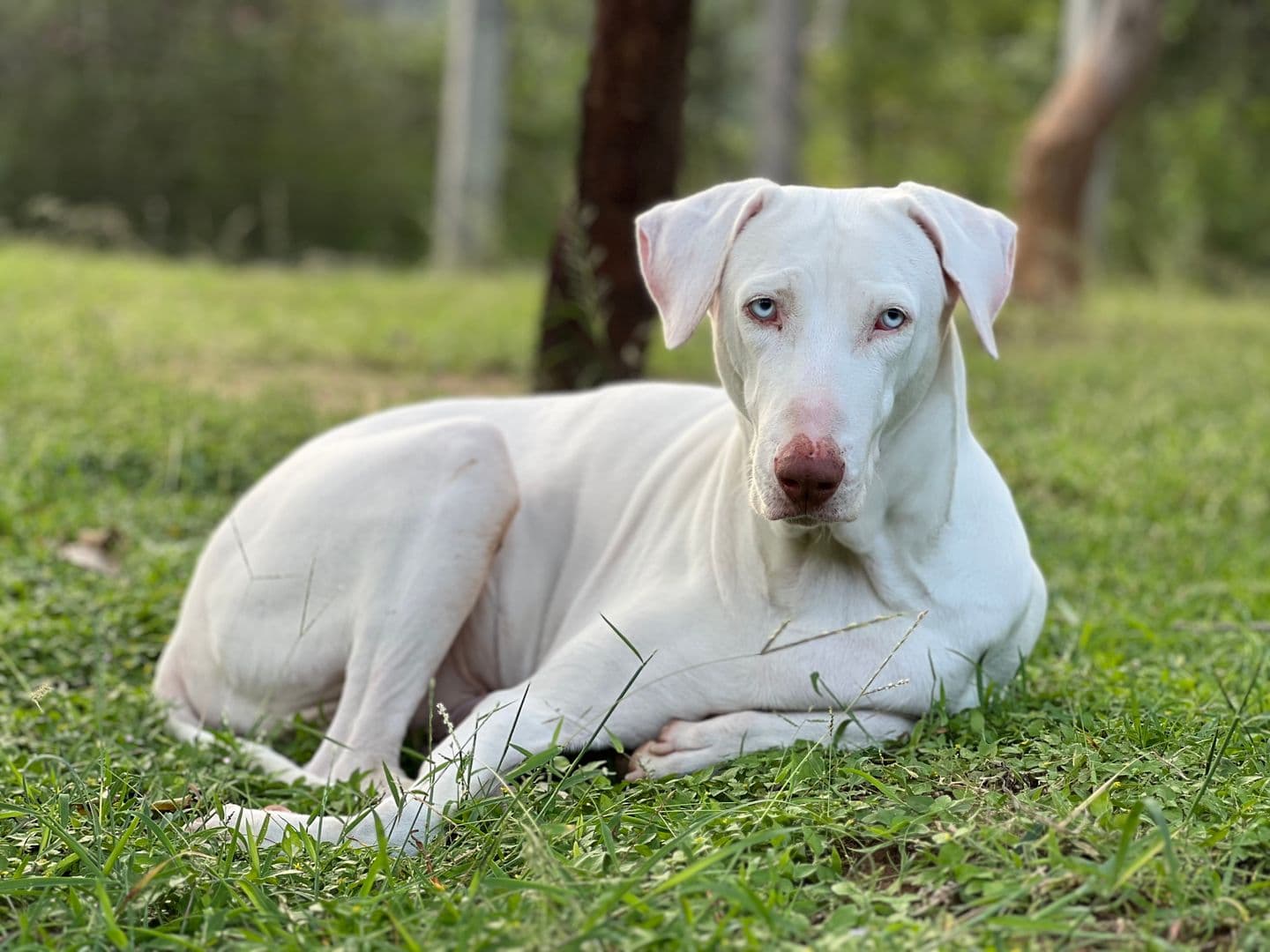
Milky white, tall, and unmistakably regal, the Rajapalayam is one of South India's most striking native breeds, once kept exclusively by the aristocracy of the Nayak and Polygar era for hunting wild b
Milky white, tall, and unmistakably regal, the Rajapalayam is one of South India's most striking native breeds, once kept exclusively by the aristocracy of the Nayak and Polygar era for hunting wild boar and guarding estates.
Origin and History
The breed takes its name from Rajapalayam, a town in the Virudhunagar district of Tamil Nadu, where it was developed under the region's Nayak rulers and the Polygar chieftains. Records suggest these dogs were used for hunting large game, particularly wild boar, and later served as war dogs during the Carnatic Wars and the Polygar Wars of the eighteenth century. The Kennel Club of India first recognised the breed in 1954, and it appeared on an Indian postage stamp in 2005.
Physical Characteristics
A tall, muscular sighthound, generally pure white in colour with a pink or red-toned nose.
Males typically stand around 63 centimetres at the shoulder and weigh 22 to 32 kilograms; older breed descriptions cite taller and heavier dogs, though these are the exception rather than the rule today.
A short, single coat that needs minimal grooming.
A gait often described as horse-like, with a long, elegant stride.
Temperament
The Rajapalayam bonds hard to a single person or household and stays reserved, occasionally suspicious, of everyone else. This makes it an outstanding guard dog and a poor candidate for a casually social household. The breed is touch-sensitive, meaning it dislikes being handled by strangers, and it carries a genuine prey drive that requires careful management around smaller pets. Early, patient socialisation matters more here than for almost any other Indian breed.
Living with a Rajapalayam in India
This is a working guard breed at heart, and Indian owners should plan accordingly.
Give it a secure, well-fenced space with room to patrol; a Rajapalayam is not suited to a small flat or an inexperienced first-time owner.
Socialise early and consistently, exposing the puppy to a range of people and situations while it is still young enough to form balanced habits.
Watch for skin and hearing issues, which show up more often in this breed due to a history of inbreeding within a limited gene pool.
Keep grooming simple: the short coat needs only occasional brushing, though the naturally white coat shows dirt easily in Indian dust and monsoon mud.
Exercise generously: this is an active hunting breed that needs daily, vigorous activity to stay balanced and calm indoors.
Beyond the familiar Great Dane and Saint Bernard, a number of large, calm breeds carry the same gentle-giant temperament without quite the same name recognition. Most remain genuinely rare in India, b
A once-bouncy dog that suddenly seems flat, uninterested in walks, and withdrawn from the family is unsettling to watch, and the question that naturally follows is whether dogs can actually feel somet
A healthy dog isn't just a contented one; they're more playful, more energetic and more emotionally settled. As their owner, you're the biggest factor in how well your dog thrives, day in and day out.