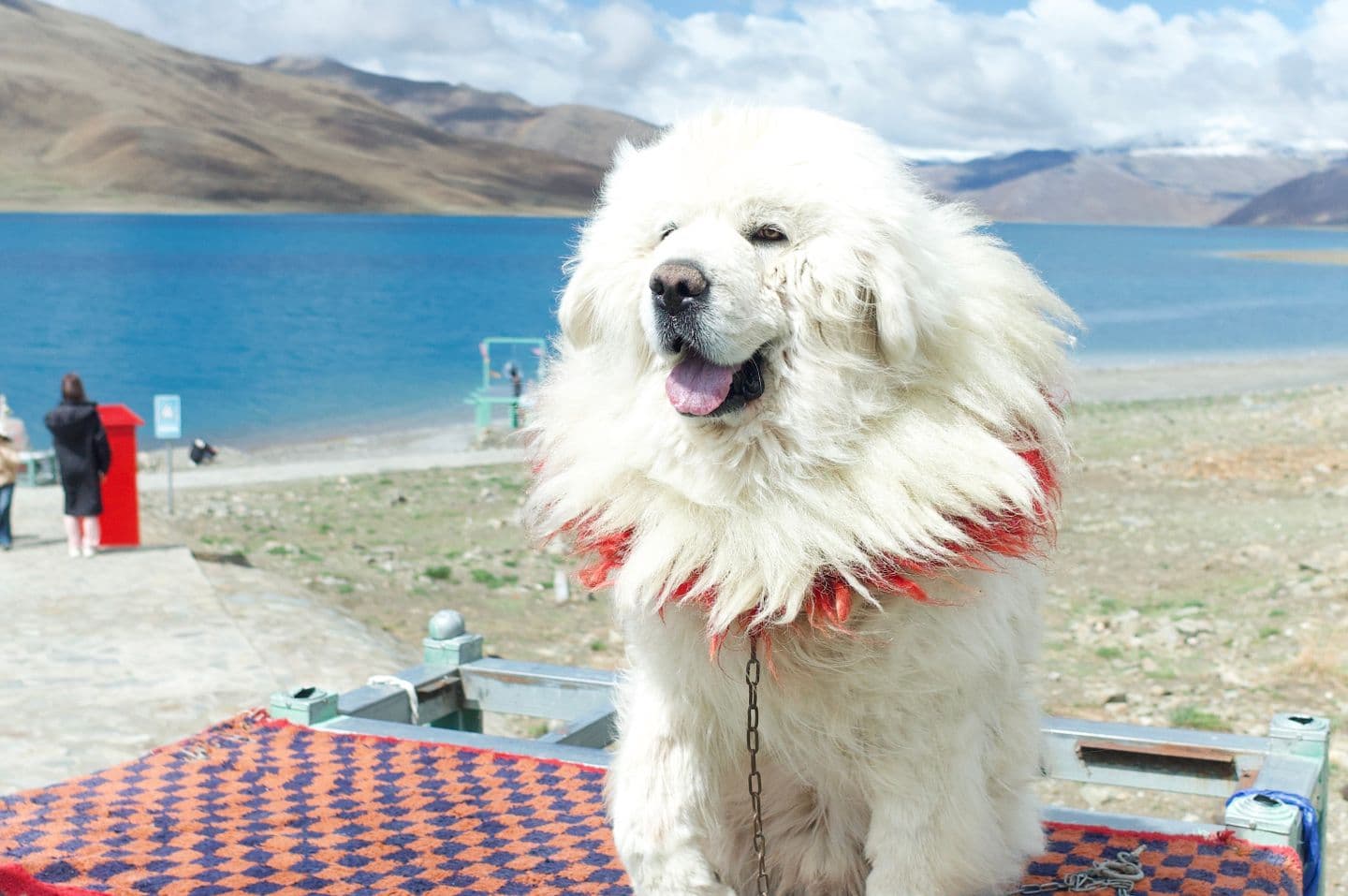
Tibetan Mastiff: Dog Breed Characteristics and Care
One of the oldest guardian breeds alive, developed for the Tibetan Plateau's brutal cold. It is also, by wide consensus among Indian vets, one of the least compatible breeds with Indian conditions.
One of the oldest guardian breeds alive, developed for the Tibetan Plateau's brutal cold. It is also, by wide consensus among Indian vets, one of the least compatible breeds with Indian conditions.
The Tibetan Mastiff's dense double coat evolved over centuries on the Tibetan Plateau, at elevations above 4,000 metres, in temperatures frequently below minus 20 degrees Celsius and extremely low humidity. It is, in effect, evolutionary engineering for extreme cold, built by monasteries and nomadic herders to guard livestock and property against wolves, leopards and even bears at altitude. This is also a genuinely massive breed: males typically stand 66 to 76 centimetres at the shoulder and weigh 40 to 68 kilograms, with females somewhat smaller.
Temperament
Independent and reserved, historically bred to make guarding decisions without a handler present.
Deeply protective and naturally territorial, requiring an experienced, confident owner from puppyhood.
Nocturnally active by instinct, prone to barking at night if kept outdoors, a habit that needs early management.
Generally calm indoors as an adult, though early socialisation is essential to prevent excessive wariness from tipping into aggression.
Why Indian conditions are a genuine mismatch
This is one of the clearest breed-climate incompatibilities in the dog world. In Delhi's 44 degree June afternoons, Mumbai's oppressive humidity, or Chennai's year-round heat, the Tibetan Mastiff's coat becomes a serious welfare concern rather than a cosmetic feature. Owners who have kept the breed on the Indian plains describe near-constant panting even indoors with air conditioning running, skin problems, eye infections from heat and dust, and walks restricted to before sunrise and late at night. This is not a training issue that can be worked around with enough discipline; it follows directly from a body built for a climate that is the near-opposite of most of India.
Space and lifestyle needs
Beyond climate, the Tibetan Mastiff needs a large, securely fenced property with substantial space to patrol, and enough isolation to manage its nocturnal barking without disturbing neighbours. Apartment living is categorically unsuitable, not because of temperament but because of the breed's size, territorial instincts and vocal habits. With proper care, the breed can live 10 to 12 years, but achieving that in a hot Indian city typically means air conditioning for the majority of daylight hours for much of the year, a serious and costly ongoing commitment.
An honest recommendation
For Indian owners in the Himalayan belt or other genuinely cool regions, with a large secure property, the Tibetan Mastiff can be a remarkable guardian. For the overwhelming majority of Indian households, on the plains or in coastal cities, this is a breed better admired than owned, and the honest, responsible choice is usually to look toward a native livestock guardian breed suited to the actual climate instead.
Tags: Tibetan Mastiff, mastiff breeds India, livestock guardian dogs, dog breeds heat tolerance
Beyond the familiar Great Dane and Saint Bernard, a number of large, calm breeds carry the same gentle-giant temperament without quite the same name recognition. Most remain genuinely rare in India, b
A once-bouncy dog that suddenly seems flat, uninterested in walks, and withdrawn from the family is unsettling to watch, and the question that naturally follows is whether dogs can actually feel somet
A healthy dog isn't just a contented one; they're more playful, more energetic and more emotionally settled. As their owner, you're the biggest factor in how well your dog thrives, day in and day out.