Better than you, worse than a cat, and not remotely like night-vision goggles. Here is what is really happening behind those glowing eyes.
Most Indian dog walks happen at the edges of the day, early morning before the heat sets in, or after dusk once it has broken. Anyone who has watched their dog navigate a dim stairwell with total confidence while they themselves fumble for a light switch has wondered exactly how much a dog can see in low light.
The short answer: dogs see far better in dim light, not in total darkness
Dogs genuinely do have an evolutionary edge over humans once the light drops, but it is not the all-seeing night vision people sometimes imagine.
A dog's retina contains a much higher proportion of rod cells than a human's, and rods are the receptors specialised for detecting movement and brightness in low light rather than colour or fine detail.
Behind the retina sits a reflective layer called the tapetum lucidum, which bounces light back through the photoreceptors for a second pass. This is also why a dog's eyes appear to glow under a torch or car headlight at night.
Dogs also have larger pupils relative to their eye size than humans, letting in more available light.
In near-total darkness, however, none of this helps much. A dog's vision, like a human's, still needs some ambient light to function, whether that is moonlight, a streetlamp or the glow from a nearby building.
What this means for the Indian walking schedule
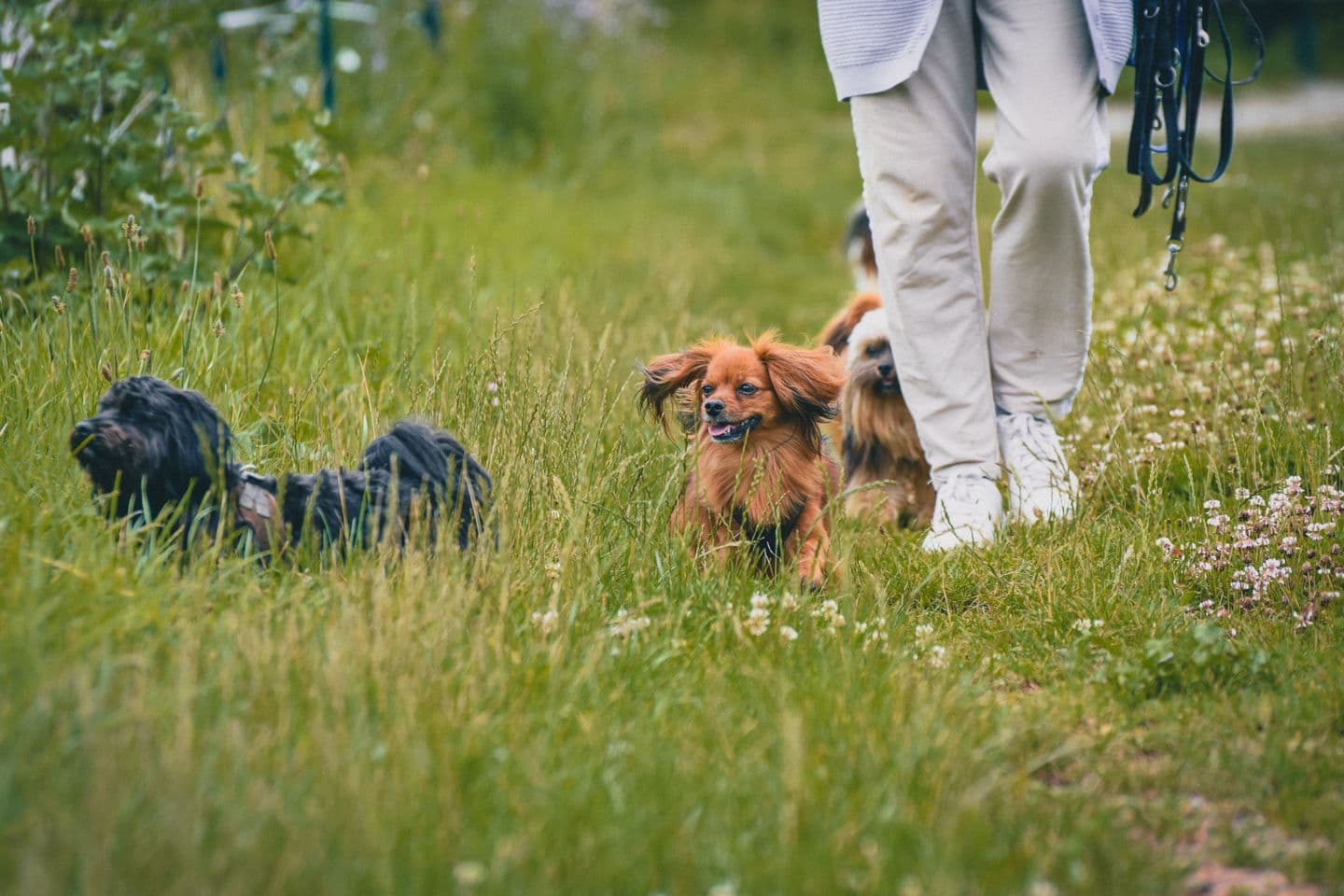
Dawn and dusk, exactly when most Indian dog walks happen to avoid daytime heat, are precisely the light conditions a dog's eyes are best adapted for.
Poorly lit residential lanes are less of a problem for your dog than they are for you. Their limitation is less about seeing shapes and more about picking up fine detail or colour.
Dogs also see a narrower colour range than humans, largely blues and yellows, so a red leash or ball is far less visible to them against green grass than most owners assume.
Practical takeaways for pet parents
Do not assume your dog can spot a pothole, glass shard or loose wire on a badly lit street purely because their night vision is good. Motion and rough shape register far better than fine detail.
A dog's hearing and sense of smell do most of the real work after dark. Vision is a support system, not the primary sense, in low light.
If your dog seems to hesitate more than usual in dim conditions, particularly as they age, get their eyes checked. Cataracts and other age-related changes are common and often first show up as reduced confidence at dusk.
Dogs are built for the in-between hours, not for pitch darkness. It is one more reason the early-morning and post-sunset walk, already an Indian pet-owning habit born out of avoiding the heat, happens to suit a dog's eyesight rather well.
Beyond the familiar Great Dane and Saint Bernard, a number of large, calm breeds carry the same gentle-giant temperament without quite the same name recognition. Most remain genuinely rare in India, b
A once-bouncy dog that suddenly seems flat, uninterested in walks, and withdrawn from the family is unsettling to watch, and the question that naturally follows is whether dogs can actually feel somet
A healthy dog isn't just a contented one; they're more playful, more energetic and more emotionally settled. As their owner, you're the biggest factor in how well your dog thrives, day in and day out.