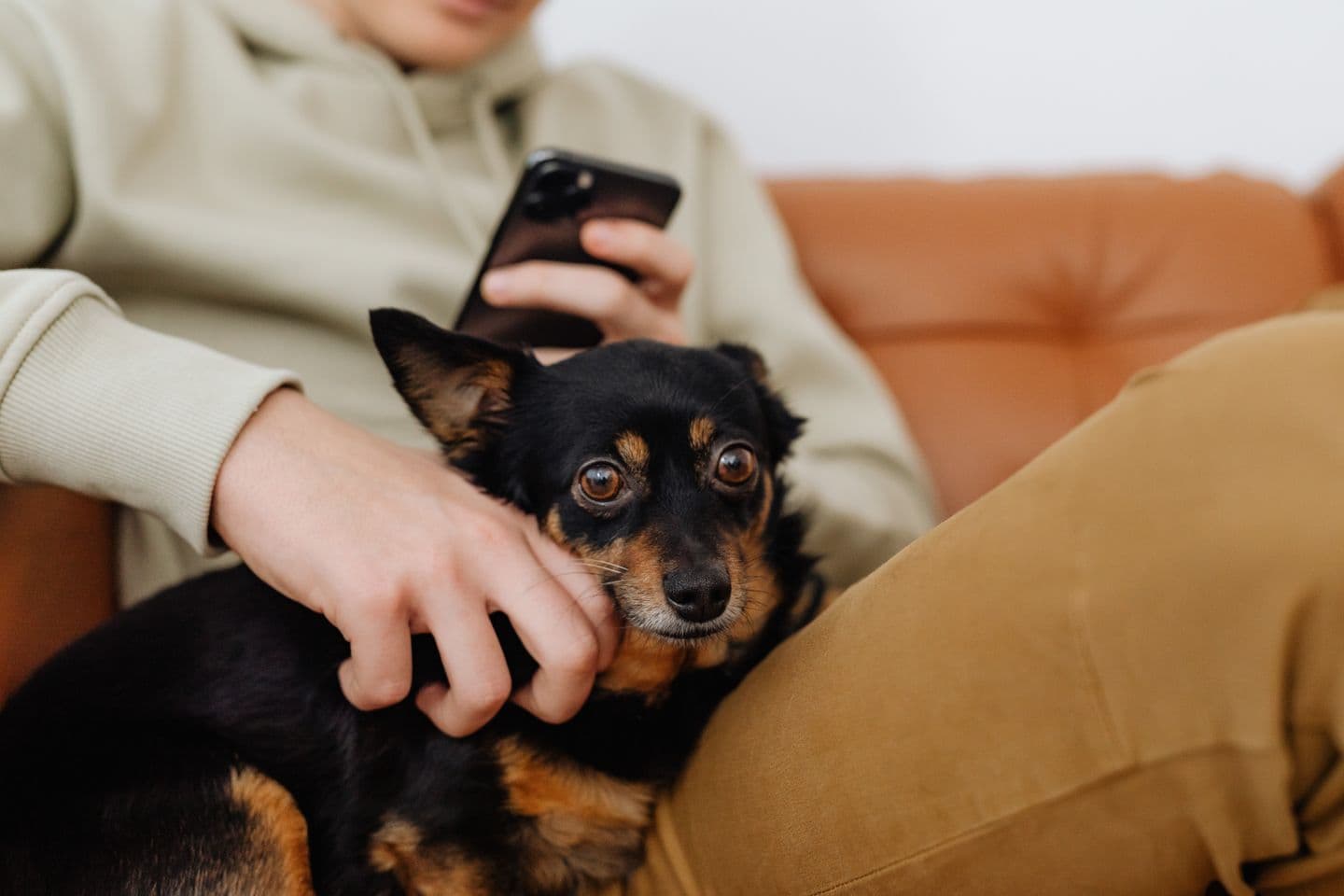
Nearly half of UK pet owners say they would end a romantic relationship if their pet disapproved of their partner.
It's worth reading that again slowly. This isn't a lifestyle survey about who walks the dog on weekends, or whether couples argue over vet bills. It's a question about whether a dog or cat's reaction to a partner is reason enough to end that relationship altogether. Forty-eight per cent said yes.
The figures come from Mars, Incorporated, the company behind Pedigree, Whiskas and Sheba, gathered across 2,000 UK cat and dog owners in May 2026. What makes the numbers striking isn't that they're outliers, it's that they confirm something that has been building quietly for years: the pet is no longer simply a companion. In a great many households, it has become the primary emotional relationship.
This is playing out globally, and India, with its own version of the story unfolding in Bengaluru apartments and Mumbai high-rises, isn't far behind.
What the Data Shows
The Mars survey reveals just how central pets have become to emotional life in the UK.
48% of pet owners would consider ending a relationship if their pet disapproved of their partner
53% willingly give up their spot on the sofa for their pet
31% regularly confide in their pet, sharing gossip, secrets or relationship troubles
25% consider their pet the favourite member of the household
27% of Gen Z pet owners regularly discuss their love life with their pet, nearly double the UK average of 16%
35% of Gen Z owners trust their pet's judgement of other people more than their own, against 24% across all age groups
18% of Gen Z owners have chosen time with their pet over going on a date
This builds on a 2025 collaboration between Mars and CALM (Campaign Against Living Miserably), which found that 83% of UK pet owners believe their pet positively affects their mental wellbeing. Pets aren't simply filling a lifestyle gap, they're functioning as emotional infrastructure.
A Mars spokesperson summed it up by noting that while people's love for their pets has always been clear, this research shows just how central pets have become to daily life, acting as confidantes, support systems and, evidently, trusted relationship advisors.
Not Just a Western Phenomenon
It would be easy to write this off as British eccentricity, a culture famous for its attachment to animals. But the evidence from India tells a strikingly similar story, adjusted for local context.
Mars's own Global Pet Parent Survey, spanning 20,000 respondents across more than 20 markets including India, found that two-thirds of pet owners globally see their dog or cat as the most important thing in their lives. In India specifically, that figure sits at 66% among dog and cat owners.
A 2024 TGM Research report on pet humanisation in India found that 57% of Indian pet owners consider their pets to be family members, and 16% describe them outright as their children. These aren't fringe responses, they represent a mainstream shift in how urban India relates to the animals it keeps.
Why Pets Have Moved to the Centre in India
India's version of this story has its own structural drivers, arguably more acute than what's happening in the West.
Nuclear families grew from 37% of households in 2008 to around 50% by 2022. Delayed parenthood among young urban professionals has become a defining trend. Double-income households with limited nearby family support are the norm in cities like Bengaluru, Hyderabad and Pune. In that environment, a pet stops being a luxury and becomes a relationship.
According to Euromonitor, India's overall pet population grew by roughly 5% in 2024, reaching an estimated 39 million. Mordor Intelligence puts the pet-dog population at 31 million in 2024, with an annual addition of two million companion animals from metro nuclear families, and millennials and Gen Z together account for 68% of first-time pet adopters.
The spending figures reflect the emotional stakes too. Urban Indian households now spend Rs 5,000 or more a month on pet care, with Bengaluru averaging around Rs 3,000 monthly, according to industry estimates. India's pet food market, valued at USD 2.52 billion in 2025, is projected to reach USD 4.60 billion by 2034, growing at a CAGR of 6.91%.
But the more interesting story here isn't about money, it's about emotional function.
Pets as Emotional Infrastructure
What the Mars data captures, in both the UK and India, is something psychologists and sociologists have been tracking for over a decade: the shift of pets from peripheral to primary in people's emotional lives.
A 2026 peer-reviewed study in the Journal of Social and Personal Relationships examined how pet presence during daily activities affects human wellbeing, and found that it isn't ownership itself that correlates with higher life satisfaction, but the frequency and quality of interaction with the pet. That distinction matters. The pet isn't a symbol of affection, it's an active participant in emotional life.
In India, this plays out shaped by local social norms. In a culture where open emotional expression has historically been constrained by family hierarchy and social expectation, the pet occupies a unique space. You can tell the dog things you wouldn't tell your parents. You can cry in front of the cat without consequence. For young urban professionals navigating career pressure, uncertain relationships and the isolation of apartment living away from their hometown, the pet has quietly become the safest emotional relationship on offer.
This isn't anthropomorphism running wild. It's rational emotional allocation in conditions of genuine social scarcity.
Gen Z Is Leading, and India's Gen Z Is Following
The Mars data identifies Gen Z as the leading edge of this shift in the UK, and the Indian parallel is direct. According to the Global Pet Parent Survey, 70% of Gen Z pet owners globally are first-time pet parents, reflecting what the report calls a desire to start early bonds. In India, Gen Z is already reshaping the pet care market, pushing brands to rethink engagement for a digitally native audience that brings the same values-driven intensity to pet care as it does to every other consumer decision.
This generation doesn't separate emotional life from consumer behaviour. A brand that doesn't acknowledge the dog as family is effectively invisible to them. A product that doesn't signal an understanding of the bond is irrelevant.
Indian Gen Z pet owners are showing up in premium nutrition, functional supplements, grooming and wellness categories in ways that would have been hard to predict a decade ago. A market once dominated by basic kibble and worming tablets is now seeing real demand for probiotic supplements, coat care syrups and breed-specific functional nutrition.
The Business Implications Are Substantial
For brands in the pet care space, this data is a strategic signal, not a curiosity.
When nearly half of pet owners say they'd end a relationship over their pet's reaction to a partner, you're looking at a consumer for whom the pet sits at the very top of the emotional hierarchy. This consumer doesn't think of pet care as a category, they think of it as caregiving, and caregiving consumers behave very differently from commodity consumers. They research obsessively, scrutinise ingredients, and respond to brands that speak the language of the bond rather than just the language of the product. They aren't buying pet food, they're buying what's best for their dog.
The implications for D2C pet brands in India are significant. The market is growing at a CAGR of 16.70%, projected to reach USD 2.54 billion by 2031. The window to build loyalty with this emotionally invested consumer is open right now, but it won't stay open indefinitely. As international brands sharpen their India strategy and domestic consolidation accelerates, the brands that have already earned emotional credibility with the pet parent will be very hard to dislodge.
The Mars survey is also a product signal in its own right. If pets are being consulted on romantic partners, they're certainly being consulted on what goes into their bowl. Brands that build on this emotional depth, through transparency, science-backed claims, and genuine engagement with the bond, will earn the trust that drives both retention and advocacy.
A Cultural Shift With No Reverse Gear
What the Mars data captures, and what the Indian parallel confirms, is that pet humanisation isn't a trend in the conventional marketing sense. It's a structural cultural shift, driven by demographic change, urbanisation and shifting definitions of family that have been decades in the making.
In the UK, it has reached the point where pets influence romantic decisions for nearly half the pet-owning population. India is earlier in that arc, but the underlying forces, the nuclear family, delayed parenthood, the isolation of urban professional life, the social media community around pet ownership, are arguably even stronger.
The pet is no longer the loyal companion at the margins of human life. For a large and growing segment of urban consumers, it is now at the centre of it. For brands, for marketers, and for anyone trying to understand what Indian consumers will look like by 2030, that may be the single most important sentence in the Mars data.
References
1. Mars, Incorporated (May 2026). For the Love of Pets! Brits break up if pet disapproves. Opinium Research, n=2,000 UK cat and dog owners. mars.com
2. Mars Petcare (December 2024). Global Pet Parent Survey: Over Two-thirds of Gen Z and Millennials in India Are First-time Pet Parents. n=21,106 globally, including 1,000 respondents in India. aninews.in
3. TGM Research (2024). India Pet Humanization Insights 2024: Consumer Behavior and Trends. tgmresearch.com
4. Euromonitor International (2025). Pet Care in India. euromonitor.com
5. Mordor Intelligence (January 2026). India Pet Food Market Size and Forecast. mordorintelligence.com
6. IMARC Group (2025). India Pet Food Market: Size, Share and Forecast 2026-2034. imarcgroup.com
7. BlueWeave Consulting (2025). India Pet Market Size, Share and Growth Analysis 2025-2031. blueweaveconsulting.com
8. Market Xcel (2025). Pet Retail Reimagined: India's Pet Care Industry 2025 and the Rise of Pawrents. market-xcel.com
9. Barklam, E.B. and Felisberti, F.M. (2026). The effects of pets and human-pet interactions on humans' romantic relationships and friendships. Journal of Social and Personal Relationships. doi.org/10.1177/02654075251383683
10. ResearchAndMarkets.com / BusinessWire (2022). India Pet Care Market Overview 2021-2026: Delayed Parenthood Increasing Pet Ownership and Boosting Industry. businesswire.com
11. Nexdigm (2025). India Pet Care Market Report. nexdigm.com
Beyond the familiar Great Dane and Saint Bernard, a number of large, calm breeds carry the same gentle-giant temperament without quite the same name recognition. Most remain genuinely rare in India, b
A once-bouncy dog that suddenly seems flat, uninterested in walks, and withdrawn from the family is unsettling to watch, and the question that naturally follows is whether dogs can actually feel somet
A healthy dog isn't just a contented one; they're more playful, more energetic and more emotionally settled. As their owner, you're the biggest factor in how well your dog thrives, day in and day out.