The Small, Everyday Moments That Build a Dog's Trust in You
Dogs have kept us company for thousands of years. They laugh with us in their own way, sit quietly with us when words aren't needed, and remind us what unconditional love actually feels like. None of
Twelve gentle habits for a friendship that lasts a lifetime.
Tags: dog and owner bond, dog trust, dog behaviour tips, rescue dog bonding, dog relationship
Why This Bond Is Worth the Effort
Dogs have kept us company for thousands of years. They laugh with us in their own way, sit quietly with us when words aren't needed, and remind us what unconditional love actually feels like. None of that happens automatically, though; it's built through patience, trust and genuine connection.
A dog who feels secure and understood tends to be calmer, more confident and better behaved. And the benefit runs both ways: that same connection can lower our stress, lift our mood, and fill a home with a particular kind of warmth.
Here are twelve ways to deepen that friendship.
1. Give their days a shape.
Dogs love structure. A steady schedule for meals, walks and rest helps them feel safe and know what's coming, which is especially valuable for new arrivals or rescues still settling in. Feed, walk and play at roughly the same times each day and you'll notice your dog start to anticipate those moments with real excitement.
2. Learn their language properly.
Your dog is always talking to you, just through body language and small gestures rather than words. A loose, sweeping tail wag usually means relaxation. Lip-licking or yawning can signal stress. Turning away or avoiding eye contact often means they need a bit of space. Understanding these cues means you can support them properly, and they'll feel genuinely seen.
3. Challenge their mind, not just their legs.
A contented dog is a busy one, mentally as much as physically. Puzzle toys, scent games, training challenges and treat-based hide-and-seek all tap into natural curiosity while strengthening teamwork between you. Mental enrichment also heads off boredom, which is often behind destructive habits.
4. Choose trust over control in training.
Training works best as communication rather than dominance. Reward-based methods using treats, toys or praise build clarity and confidence. When your dog learns that good behaviour brings good outcomes, they start listening out of love and enthusiasm rather than fear. Harsh corrections or shouting only chip away at their confidence; kindness builds connection instead.
5. Protect their comfort.
Like people, dogs have boundaries and preferences. Some thrive at a busy dog park; others prefer a quiet street. Respect what actually makes your dog comfortable, and don't be afraid to say no on their behalf if strangers or loud environments make them anxious. Being their protector, not just their owner, is what earns lasting trust.
6. Play, properly, every day.
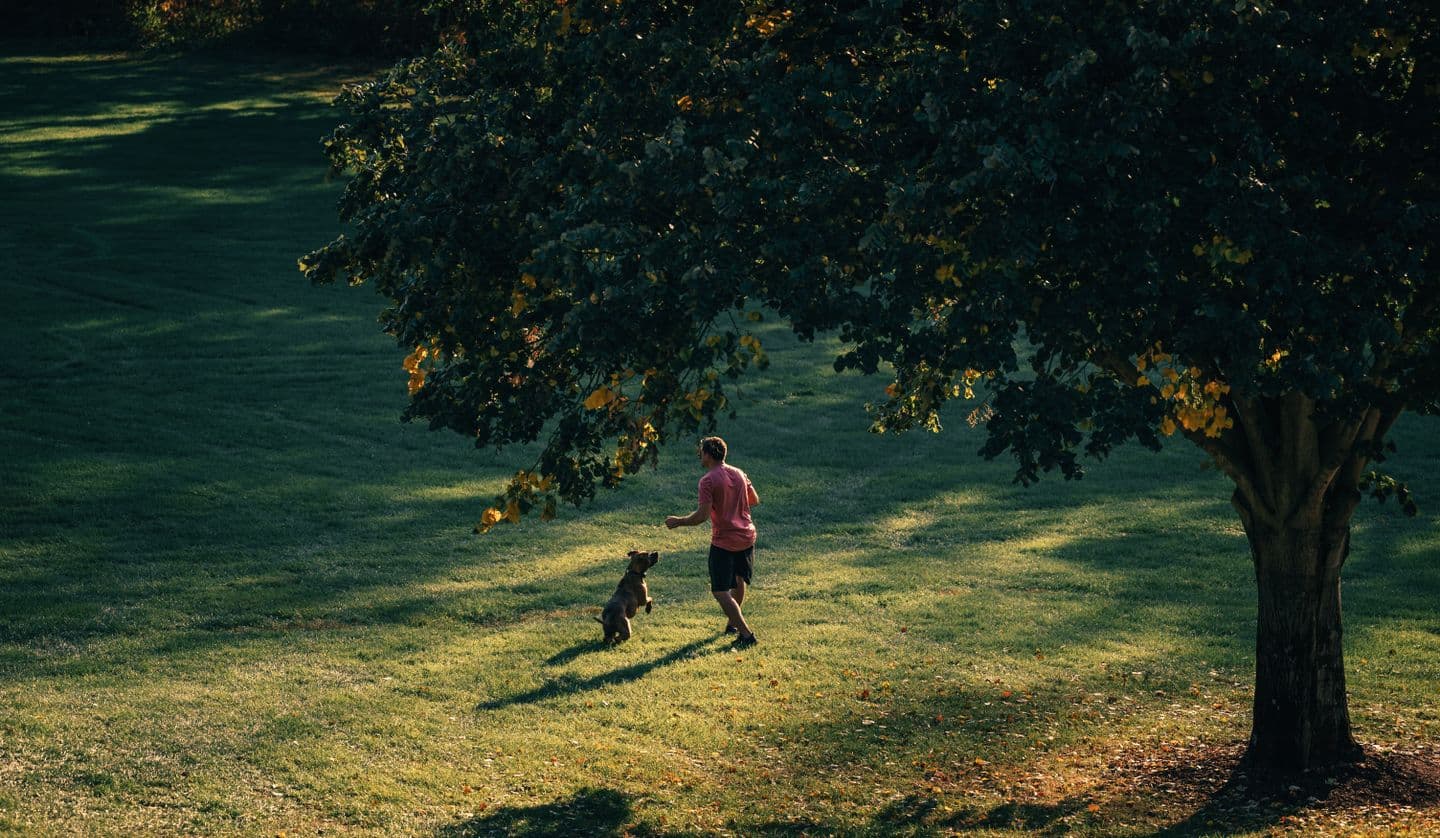
Play is a language of its own. Tug-of-war, fetch or a playful chase burns energy and builds shared memories at the same time. Pay attention to what your dog actually enjoys, whether that's gentle games or full-speed sprints, and join in on their terms. That's when play turns into real connection.
7. Sit in the quiet together.
Not every bonding moment needs excitement behind it. Reading, watching television, or simply resting nearby while your dog naps can mean just as much. Dogs are remarkably good at picking up on our calm energy, and when you're relaxed and present, they feel safe and settled too.
8. Go somewhere new.
A different route, an unfamiliar park, even a short drive: all of it stimulates your dog's senses and reinforces their trust in you as a reliable guide through the world. Shared adventures tend to become shared memories that last.
9. Groom them with real patience.
Brushing, bathing and nail trims are intimate acts of care. Approach them gently and calmly, and your dog will learn that your hands mean comfort rather than stress, turning grooming into another form of bonding instead of a battle.
10. Let them set the pace, especially early on.
Every dog bonds on their own timeline. Some attach almost instantly; others take weeks or months to fully trust. Avoid forcing affection or interaction. Offer treats, gentle words and space, and let them come to you. Patience here tends to be rewarded with a loyalty that doesn't waver.
11. Celebrate the small wins.
Did your dog stay calm through a grooming session for the first time? Approach a new friend without flinching? Notice it and celebrate it. Dogs feel your genuine joy, and that encouragement builds both their confidence and your emotional connection.
12. Love the dog in front of you.
Every dog has their own personality, whether that's playful, shy, clingy, goofy or fiercely independent. Resist comparing your dog to anyone else's. Embrace their quirks, respect their limits, and love them exactly as they are. The strongest bonds are built on acceptance, not expectation.
What a Strong Bond Actually Looks Like
A well-bonded dog isn't simply obedient; they're happy, confident, and genuinely connected to their person. Dogs who feel secure tend to be less anxious, more playful, and more responsive generally. And for you, the comfort and loyalty of a dog who truly trusts you ranks among life's better rewards.
So take it slowly. Listen more than you direct. Be kind, be consistent, and be patient.
Because in your dog's eyes, you're not just someone who feeds and walks them. You're their whole world.
Quick Answers to Common Questions
1. How long does bonding actually take?
It depends entirely on the dog: their personality, background and past experiences all play a part. Some connect within days; others need weeks or months. Consistency and patience matter more than speed.
2. What if my dog avoids people or other dogs?
Respect their comfort zone and don't force interactions. Gradual desensitisation and building positive associations over time tends to work far better than pushing them into situations they're not ready for.
3. Do some breeds bond more easily than others?
Breed shapes temperament, but bonding is ultimately an individual process. Understanding your specific dog's needs matters far more than their breed label.
A Final Thought
Bonding with your dog isn't a single achievement; it's an ongoing journey, present in every walk, every gentle touch, and every quiet word before bed.
The more love, patience and presence you offer, the more you'll get back in return: a bond that's hard to put into words, but that every tail wag says plainly enough. You're my person.
Beyond the familiar Great Dane and Saint Bernard, a number of large, calm breeds carry the same gentle-giant temperament without quite the same name recognition. Most remain genuinely rare in India, b
A once-bouncy dog that suddenly seems flat, uninterested in walks, and withdrawn from the family is unsettling to watch, and the question that naturally follows is whether dogs can actually feel somet
A healthy dog isn't just a contented one; they're more playful, more energetic and more emotionally settled. As their owner, you're the biggest factor in how well your dog thrives, day in and day out.