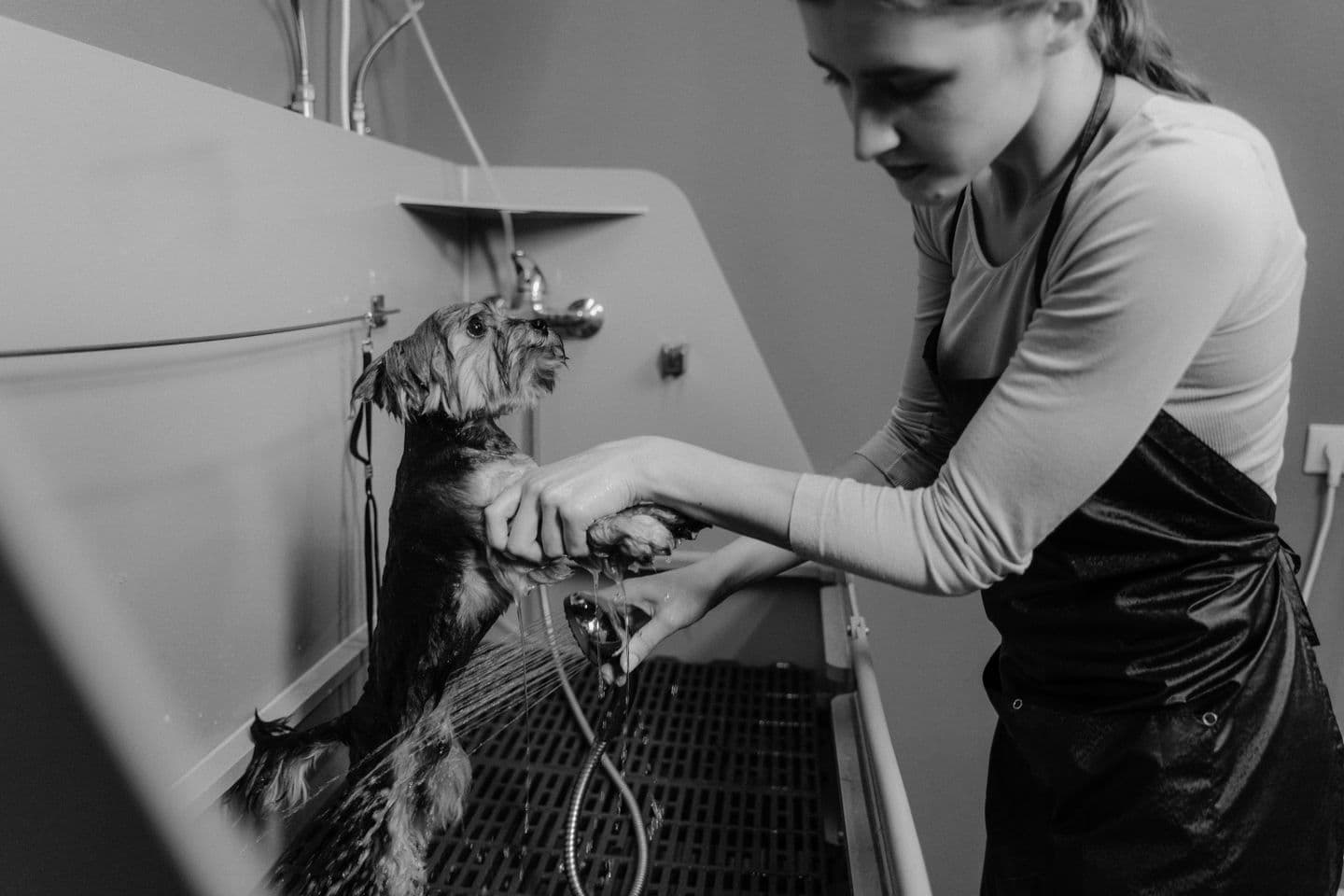
A good bath is less about scrubbing hard and more about sequence. Getting the order right, brush first, water temperature checked, shampoo applied and rinsed properly, drying done thoroughly, makes th
A good bath is less about scrubbing hard and more about sequence. Getting the order right, brush first, water temperature checked, shampoo applied and rinsed properly, drying done thoroughly, makes the whole process faster and considerably less stressful for the dog.
Before the water
Brush out any tangles or loose fur first, since wet mats are far harder to work through
Place a rubber mat in the tub or bathing area so your dog does not slip
Gather everything you need within reach: shampoo, towels, a jug or handheld shower head
During the bath
Use lukewarm water, checked with your wrist. Wet the coat thoroughly down to the skin before applying shampoo, a common mistake is applying shampoo to a coat that is only damp on the surface, which makes it lather poorly and rinse out unevenly. Work the shampoo in with your hands, avoiding the eyes and inside the ears, then rinse until the water runs completely clear. Leftover shampoo residue is one of the most common causes of post-bath itching.
Drying properly
Towel dry as much as possible first. For long or double-coated breeds, a blow dryer on a low, cool setting speeds things up and helps prevent a damp undercoat, which in humid Indian conditions can lead to skin irritation if left to air dry slowly. Pay particular attention to the armpits, belly, and between the toes, areas that trap moisture and dry last.
Timing it around the day
In summer, bathe during cooler hours and keep the dog out of direct heat afterwards until fully dry. In winter, especially in northern India, bathe earlier in the day so the coat has time to dry fully before evening temperatures drop.
Protecting eyes and ears while you wash
A dab of plain petroleum jelly around the eyes before you start can help shield them from shampoo runoff, and a cotton ball loosely placed at the entrance of each ear canal keeps water from pooling inside, a common trigger for ear infections. Remember to remove both once the bath is done.
Setting up the space in an Indian home
A bathroom with a handheld shower head or a large bucket and mug works perfectly well for most dogs, and is the standard setup in most Indian households. For larger breeds, bathing on a balcony or in a courtyard with a hose is common and works fine as long as the water is warmed appropriately and the dog is not left standing on cold stone afterwards. Whichever setup you use, non-slip footing matters more than the size or grandeur of the space.
Beyond the familiar Great Dane and Saint Bernard, a number of large, calm breeds carry the same gentle-giant temperament without quite the same name recognition. Most remain genuinely rare in India, b
A once-bouncy dog that suddenly seems flat, uninterested in walks, and withdrawn from the family is unsettling to watch, and the question that naturally follows is whether dogs can actually feel somet
A healthy dog isn't just a contented one; they're more playful, more energetic and more emotionally settled. As their owner, you're the biggest factor in how well your dog thrives, day in and day out.