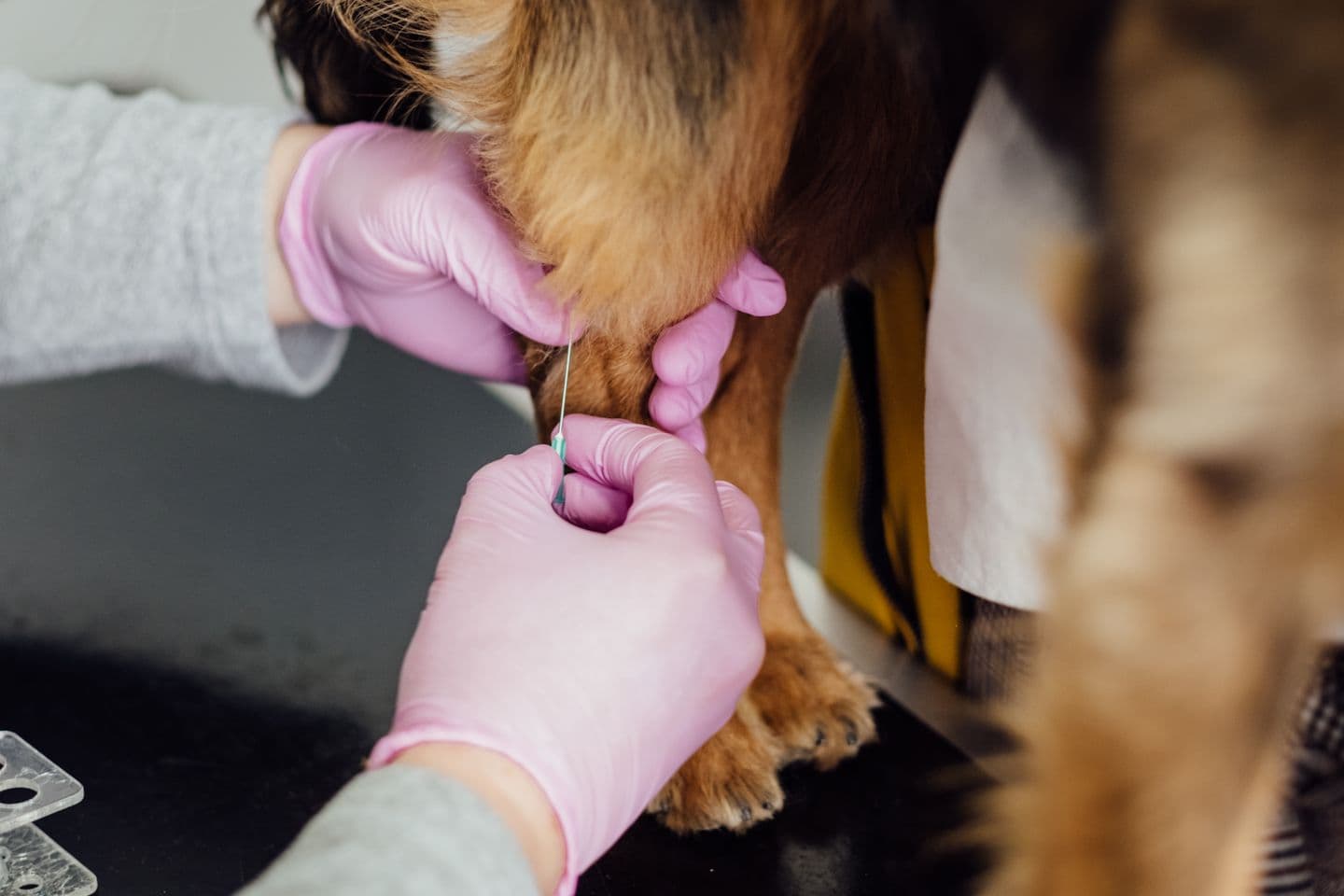
Allergy Shots for Dogs: A Longer-Term Answer to Chronic Itching
For dogs whose itching returns year after year despite shampoos, diet changes and short-term medication, allergy shots, more formally called allergen-specific immunotherapy, offer a different approach
For dogs whose itching returns year after year despite shampoos, diet changes and short-term medication, allergy shots, more formally called allergen-specific immunotherapy, offer a different approach. Rather than simply blocking the itch signal, this treatment gradually retrains the immune system to tolerate the substances triggering the reaction in the first place.
How the Treatment Works
Once allergy testing has identified the specific triggers, whether pollen, dust mites or particular grasses, a customised serum is prepared containing tiny amounts of those exact allergens. This is given as a series of injections, starting with a very low dose and gradually increasing, usually under the skin, either at the vet's clinic or, once the dog and owner are comfortable, at home. A sublingual version, given as drops under the tongue once or twice daily, is also available and suits dogs or owners who are needle-averse, though it requires very consistent daily dosing to work well. Over months, the immune system becomes progressively less reactive to the allergen. Unlike medications that simply suppress the itch, immunotherapy addresses the underlying overreaction itself, and in a meaningful number of dogs the improvement continues to build over the first year of treatment.
What Kind of Results to Expect
Veterinary dermatologists commonly report that around sixty to seventy per cent of dogs on immunotherapy show a clear improvement in itching and skin health, though it is not always a complete cure and some dogs still need occasional additional medication during flare-ups. The trade-off is patience: allergy shots are a long game, often continued for a year before the full benefit becomes clear, and many dogs remain on a maintenance dose for life.
Allergy Shots Versus Faster-Acting Options
It helps to understand where immunotherapy sits relative to other treatments an Indian vet might discuss. Cytopoint, a monthly injection, and Apoquel, a daily tablet, both work quickly to control itching but need to be continued indefinitely since they treat the symptom rather than the underlying sensitivity. Immunotherapy takes longer to show benefit but is the only approach aimed at the root cause, and the two approaches are often combined, with faster-acting medication used to manage flare-ups while the immunotherapy builds its effect in the background.
Practical Considerations for Indian Households
Injections are typically given every one to two weeks initially, tapering to a longer interval as maintenance is reached, so a realistic commitment to the schedule matters.
Most vets will teach owners to give the injections at home after an initial supervised period, which keeps ongoing costs more manageable.
Keep the dog under observation for about an hour after each injection, since a mild reaction at the injection site is normal but a more serious reaction needs prompt attention.
Discuss cost and duration honestly before starting, since testing, the initial serum and months of injections represent a genuine investment.
Realistic Timeline to Expect
Owners starting their dog on immunotherapy sometimes expect a dramatic, early improvement, and when it does not arrive within the first few weeks, some give up too soon. In reality, the injection schedule usually spans months before reaching a maintenance dose, and meaningful improvement in itching and skin health tends to build gradually over that first year rather than appearing suddenly. Sticking with the full course, even through a slow start, is what gives immunotherapy its best chance of working.
Some households find it easier to build injection days into a shared calendar visible to everyone at home, particularly once a dog has moved to home-administered injections, so that the schedule is not accidentally missed during a busy week or when the usual administering family member is travelling.
Patience through the early months of treatment tends to pay off far more reliably than switching approaches too soon out of frustration.
A five-minute conversation now can save a difficult decision later.
Common Questions
Are allergy shots painful for dogs?
The needles used are very fine, and most dogs tolerate the injections well, with mild, brief discomfort at most.
Can allergy shots cure my dog's allergies completely?
They are not typically described as a cure, though a meaningful number of dogs see such a strong improvement that other medication is barely needed.
What happens if I miss a scheduled injection?
A missed or delayed dose is usually manageable, but your vet may need to adjust the next dose or schedule, so it is best to call rather than guess.
Beyond the familiar Great Dane and Saint Bernard, a number of large, calm breeds carry the same gentle-giant temperament without quite the same name recognition. Most remain genuinely rare in India, b
A once-bouncy dog that suddenly seems flat, uninterested in walks, and withdrawn from the family is unsettling to watch, and the question that naturally follows is whether dogs can actually feel somet
A healthy dog isn't just a contented one; they're more playful, more energetic and more emotionally settled. As their owner, you're the biggest factor in how well your dog thrives, day in and day out.