Fibrosarcoma in Dogs: A Firm, Deep Growing Tumour to Know About
Fibrosarcoma is a type of soft tissue sarcoma, a cancer that arises from the connective tissue found throughout the body. It tends to grow locally and invasively rather than spreading to distant organ
Fibrosarcoma is a type of soft tissue sarcoma, a cancer that arises from the connective tissue found throughout the body. It tends to grow locally and invasively rather than spreading to distant organs quickly, which shapes how it is best treated.
What it looks and feels like
A firm, often deep seated mass, frequently on a limb, the trunk, or within the mouth
Generally slower growing than some other cancers, though it can grow significantly before being noticed if in a less visible area
Can feel fixed to underlying tissue rather than freely movable under the skin
May ulcerate or become irritated if located somewhere the dog can reach to lick or chew
Where it commonly develops
Fibrosarcoma can occur on the skin and just beneath it, within the mouth (where it is one of the more common oral tumours in dogs), and occasionally at old vaccination or injection sites, though this is uncommon in dogs compared to cats.
Diagnosis
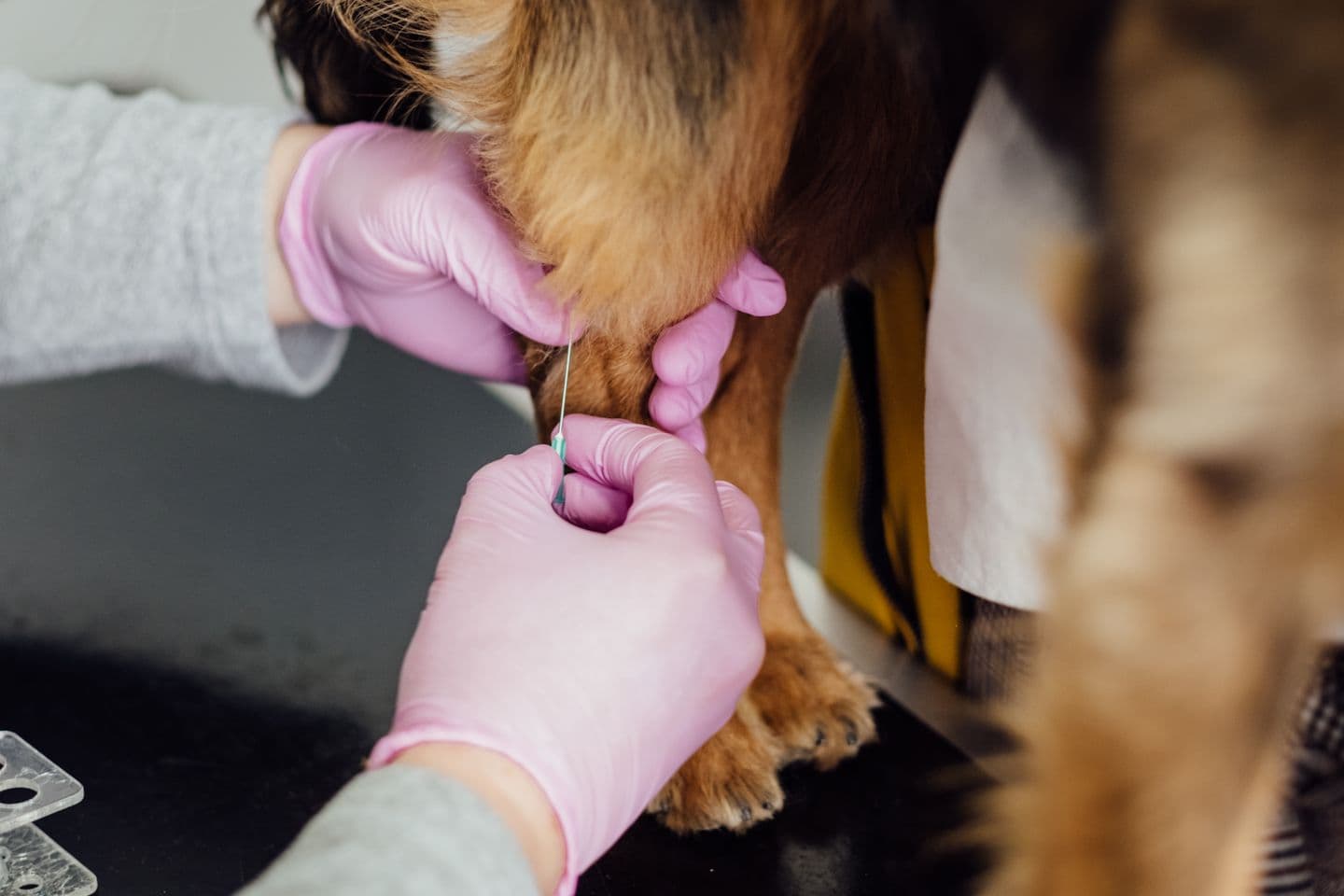
A fine needle aspiration provides an initial clue, but fibrosarcoma often needs a proper biopsy to confirm, since it can be difficult to distinguish from other soft tissue growths on cell sampling alone. Once confirmed, imaging such as chest X-rays helps check whether it has spread, though this is less common with fibrosarcoma than with some other cancers.
Treatment and outlook
Wide surgical removal, taking a generous margin of healthy looking tissue around the tumour, is the primary treatment and offers the best chance of a good long term outcome, since this tumour type tends to send microscopic tendrils further into surrounding tissue than it appears on the surface. Radiation therapy is often recommended afterward if the margins are not completely clear, particularly for tumours in more surgically challenging areas like the mouth or lower limb. When completely removed with clean margins, the long term outlook is generally favourable, since distant spread is less common than with many other cancer types.
Common Questions
Q: Can fibrosarcoma be prevented? A: There is no known way to prevent it, which makes regular home lump checks and early veterinary assessment the best available defence.
Q: Does fibrosarcoma commonly spread to other organs? A: Less commonly than some other cancer types, though achieving wide, clean surgical margins remains essential for the best long term outcome.
Beyond the familiar Great Dane and Saint Bernard, a number of large, calm breeds carry the same gentle-giant temperament without quite the same name recognition. Most remain genuinely rare in India, b
A once-bouncy dog that suddenly seems flat, uninterested in walks, and withdrawn from the family is unsettling to watch, and the question that naturally follows is whether dogs can actually feel somet
A healthy dog isn't just a contented one; they're more playful, more energetic and more emotionally settled. As their owner, you're the biggest factor in how well your dog thrives, day in and day out.