Giving Your Dog Eye Drops Without a Struggle: A Step-by-Step Guide
Few medical tasks feel as intimidating to a first-time pet parent as putting drops directly into a dog's eye. Dogs sense hesitation quickly, and a nervous owner often ends up with more medication on t
Few medical tasks feel as intimidating to a first-time pet parent as putting drops directly into a dog's eye. Dogs sense hesitation quickly, and a nervous owner often ends up with more medication on the fur than in the eye. With the right technique and a calm approach, however, this becomes a quick, manageable routine within a few attempts.
Why Eye Drops Are Often Prescribed
Indian vets commonly prescribe eye drops for conditions such as conjunctivitis, common in dogs exposed to dust and pollution in Indian cities, corneal scratches, mild infections, and dry eye. Getting the full course in correctly and consistently matters, since half-finished treatment is one of the most common reasons an eye infection lingers or returns.
Setting Up Before You Start
Have the bottle open and ready within reach before you pick up your dog, so there is no fumbling once you have them positioned.
Choose a calm, well-lit spot, a table for a small dog, or the floor with your dog sitting between your knees for a larger one.
Wipe away any discharge gently with a warm, damp cloth before applying the drops, so the medication is not diluted or blocked by debris.
Keep a small treat ready for afterwards, since positive reinforcement makes each future session easier.
The Technique, Step by Step
Rest the hand holding the bottle against the dog's head or skull rather than holding it up in the air. This keeps your hand steady and reduces the risk of accidentally poking the eye if the dog moves suddenly. With your other hand, gently tilt the dog's nose upward and use your thumb to pull the lower eyelid down slightly, creating a small pouch. Bring the bottle close, without letting the tip touch the eye or fur, and release the prescribed number of drops into that pouch, then let the dog blink naturally to spread the medication across the eye's surface.
If your vet has prescribed more than one eye medication, leave a gap of about five minutes between them so the first drop is not simply washed out by the second.
Making It Easier Over Time
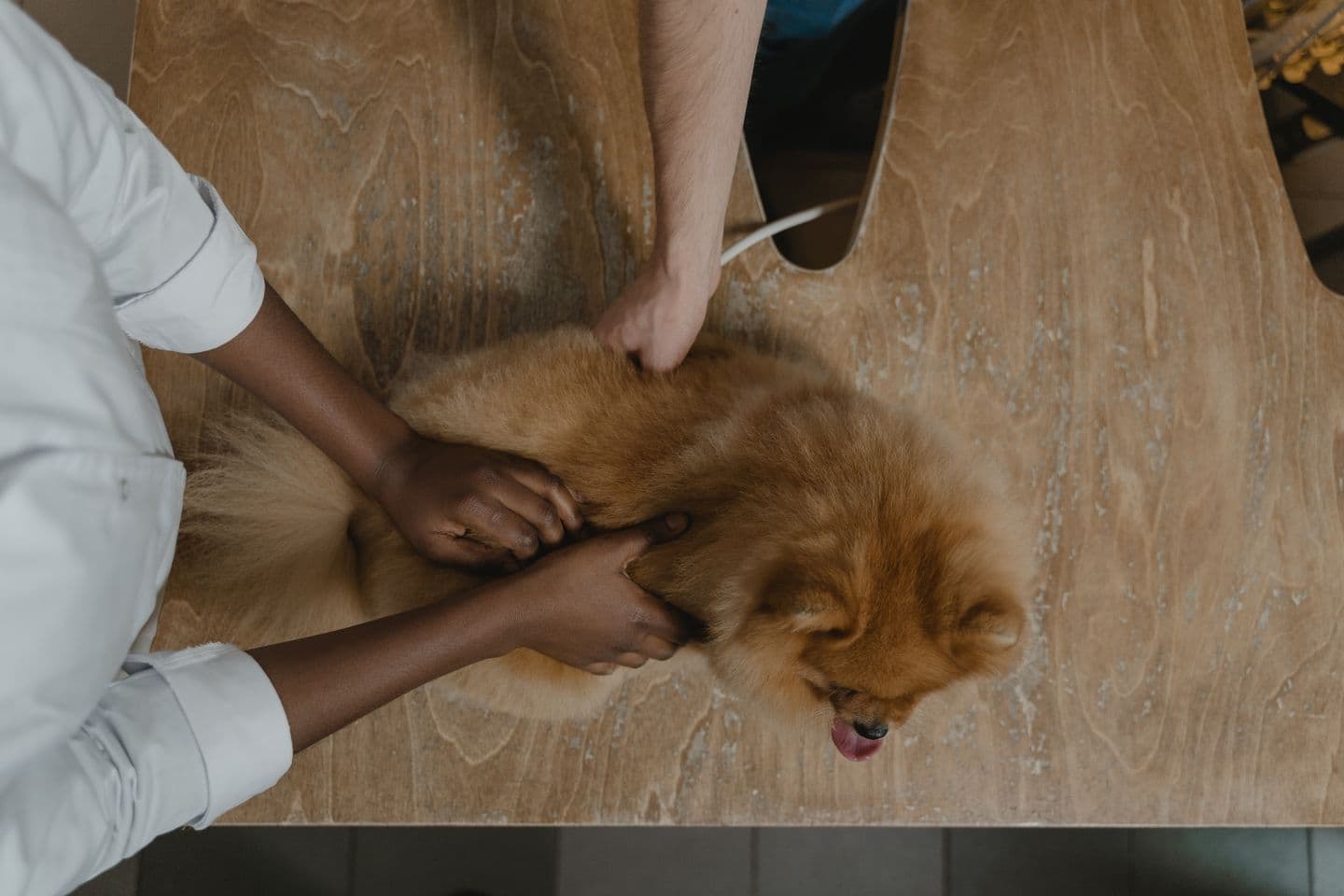
If a dog is particularly wriggly, wrapping them gently in a towel with just the head exposed can help, and having a second person hold the body steady while you handle the head allows for a calmer, more controlled application. Approaching from behind and slightly above, rather than head-on, also tends to be less alarming for a nervous dog, since it feels less like a direct confrontation. Praise, in a calm and reassuring tone, throughout the process, and a treat immediately after, builds positive associations quickly, and most dogs settle into the routine within a week of twice-daily drops.
Storing and Handling Eye Medication
Most prescribed eye drops need to be stored in specific conditions, some in the fridge, others simply away from direct sunlight, and many have a limited shelf life once opened, often thirty days regardless of how much is left in the bottle. Writing the date opened directly on the bottle with a marker is a simple habit that avoids accidentally using an expired product, which can be less effective or, in rare cases, contaminated with bacteria from repeated use near the eye.
If your dog associates the sight of the eye drop bottle itself with stress, keeping a second, empty bottle around for casual handling outside of actual treatment times can help dilute that specific association and make real dosing sessions calmer over the following weeks.
With a bit of practice, most dogs settle into this routine far more easily than the first attempt might suggest.
Most dogs adapt more easily than owners initially expect.
Common Questions
My dog blinks the drop out immediately. Did it still work?
Some blinking is normal and expected, and it actually helps spread the medication. As long as the drop landed in the eye or the pouch of the lower lid before blinking, it has done its job.
Can I use the same eye drops for both eyes if only one looks infected?
Only if your vet has specifically advised this. Different eye conditions need different treatments, and using leftover medication in an undiagnosed eye can mask a separate problem.
What if my dog paws at the eye after the drops?
Mild rubbing or blinking afterwards is common, especially with bitter-tasting medication. Persistent pawing, redness, or increased discomfort should be reported to your vet.
Beyond the familiar Great Dane and Saint Bernard, a number of large, calm breeds carry the same gentle-giant temperament without quite the same name recognition. Most remain genuinely rare in India, b
A once-bouncy dog that suddenly seems flat, uninterested in walks, and withdrawn from the family is unsettling to watch, and the question that naturally follows is whether dogs can actually feel somet
A healthy dog isn't just a contented one; they're more playful, more energetic and more emotionally settled. As their owner, you're the biggest factor in how well your dog thrives, day in and day out.