Hemangiosarcoma in Dogs: A Silent but Serious Cancer
Hemangiosarcoma has earned a grim nickname among veterinary oncologists: the silent killer. This aggressive cancer of the blood vessel lining often develops with no visible warning at all, sometimes a
Hemangiosarcoma has earned a grim nickname among veterinary oncologists: the silent killer. This aggressive cancer of the blood vessel lining often develops with no visible warning at all, sometimes announcing itself only when a tumour ruptures and causes sudden, life-threatening internal bleeding. Understanding the warning signs, even vague ones, can occasionally make the difference between catching it early and a genuine emergency.
Where It Develops
Hemangiosarcoma most commonly arises in the spleen, though it can also develop in the heart, liver, skin, or, less commonly, other organs. When it affects the heart, it typically involves the right atrium and can cause fluid to build up around the heart itself, a condition called pericardial effusion, which further compresses the heart's ability to pump and can cause its own sudden collapse independent of blood loss elsewhere. Golden Retrievers, German Shepherds and Labrador Retrievers are diagnosed with this cancer disproportionately often, suggesting a genetic predisposition in these breeds, though any dog can be affected. Cutaneous, or skin-based, hemangiosarcoma is a somewhat different and generally less aggressive picture, more often seen in dogs with pale skin and thin fur who spend significant time in strong sun.
Why It Is So Often Caught Late
Internal hemangiosarcoma, particularly of the spleen, typically grows silently with no obvious symptoms until it has become large enough to bleed internally, either gradually or suddenly. This means the first sign owners often notice is a dog collapsing, becoming suddenly weak, or showing pale gums, all pointing to acute internal blood loss, rather than a slow build-up of recognisable illness.
Signs to Watch For
Sudden weakness, collapse, or lethargy, sometimes appearing and then partially resolving as the body reabsorbs blood from a slow internal bleed, only to recur later.
Pale gums, a sign of blood loss and reduced oxygen delivery.
A visibly swollen or distended abdomen, sometimes from blood pooling internally.
For cutaneous hemangiosarcoma, a red to purple raised lump on or under the skin, which can look similar to many other, more benign growths.
Diagnosis
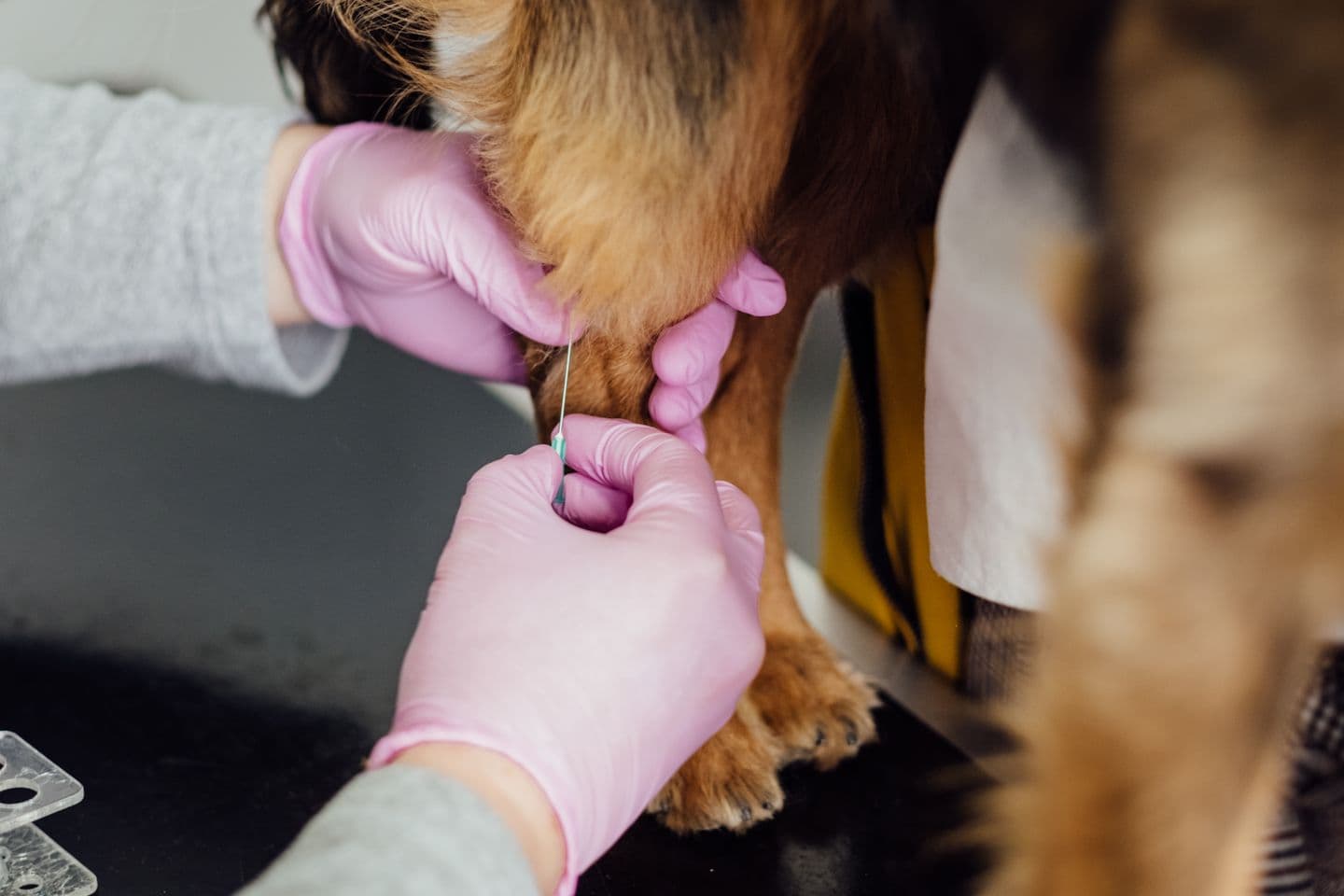
A vet suspecting internal hemangiosarcoma will typically use bloodwork, chest X-rays, and an abdominal ultrasound to look for a mass and evidence of bleeding, sometimes followed by a cardiac ultrasound, since the heart is another possible site. A biopsy or surgical sample is usually needed for a definitive diagnosis, though the overall clinical picture often points strongly towards this cancer even before confirmation.
Treatment and What to Expect
For splenic hemangiosarcoma, surgical removal of the spleen is often performed both to control active bleeding and to obtain tissue for diagnosis, though surgery alone is rarely curative since this cancer spreads aggressively. Chemotherapy following surgery can extend survival time somewhat, though the disease is generally regarded as carrying a guarded to poor long-term prognosis even with treatment. For cutaneous hemangiosarcoma caught early and fully removed surgically, the outlook can be considerably better, particularly when the tumour has not invaded deeper tissue.
Being Realistic and Compassionate
Given how difficult this cancer is to catch early, many families first learn of it during an emergency, which understandably leaves very little time to process decisions. Vets will discuss realistic options honestly, including palliative, comfort-focused care where aggressive treatment is not appropriate or wanted, and there is no wrong choice in prioritising a dog's comfort and dignity over pursuing treatment with a limited chance of meaningfully extending life.
Emotional Support for the Family
A hemangiosarcoma diagnosis is often sudden and emotionally difficult, sometimes arriving during what felt like an ordinary day before a collapse. It is worth knowing that many veterinary hospitals, and increasingly online communities specifically for pet loss and serious illness, can offer support during this period, and there is no obligation to make immediate decisions about treatment before having time to process the diagnosis and ask every question that matters to your family.
Some families find comfort in creating a simple memory, a paw print, a favourite photo collected together, during this period, and there is no right or wrong way to navigate this time, only what genuinely helps your particular household.
Whatever helps your family process this news is the right approach; there is no single correct way to grieve.
A brief, honest look at the numbers helps set realistic expectations.
Common Questions
Can hemangiosarcoma be prevented?
There is no known way to prevent it, and no reliable early screening test currently exists for general use, though research into earlier detection methods is ongoing.
Is there any warning before a dog collapses from internal bleeding?
Sometimes there are subtle earlier signs, such as brief episodes of weakness or lethargy that seem to resolve on their own, but often there is genuinely little to no warning before a significant bleed.
Does surgery cure hemangiosarcoma?
Surgery alone rarely cures internal hemangiosarcoma, since this cancer spreads aggressively, though it can control active bleeding and, combined with chemotherapy, may extend survival time to some degree.
Beyond the familiar Great Dane and Saint Bernard, a number of large, calm breeds carry the same gentle-giant temperament without quite the same name recognition. Most remain genuinely rare in India, b
A once-bouncy dog that suddenly seems flat, uninterested in walks, and withdrawn from the family is unsettling to watch, and the question that naturally follows is whether dogs can actually feel somet
A healthy dog isn't just a contented one; they're more playful, more energetic and more emotionally settled. As their owner, you're the biggest factor in how well your dog thrives, day in and day out.