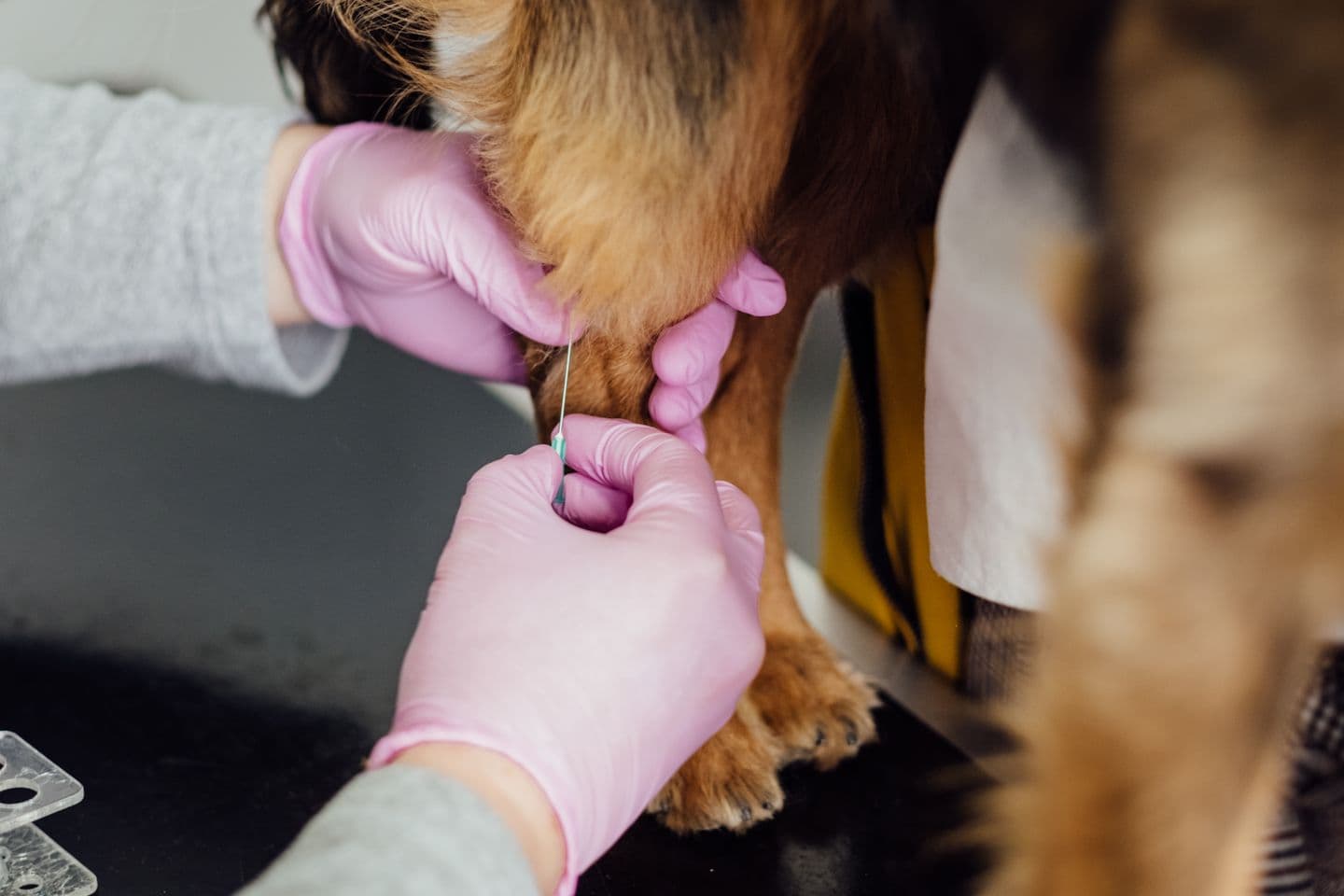
The female equivalent of neutering, and one of the most impactful decisions an owner can make for a dog's long-term health.
Spaying, medically known as an ovariohysterectomy, is the surgical removal of a female dog's ovaries and uterus. It is one of the most common surgical procedures performed on dogs in India, carried out routinely for pet dogs and at scale for community dogs through Animal Birth Control programmes run under Animal Welfare Board of India guidelines.
What the Surgery Involves
The dog is given a pre-anaesthetic check, then placed under general anaesthesia for the procedure.
An incision is made in the abdomen, through which the ovaries and uterus are located, their blood supply tied off, and the organs removed.
The incision is closed in layers, usually with internal dissolvable sutures and either external sutures or surgical glue.
The procedure generally takes 30 to 90 minutes depending on the dog's size, age, and whether she is in heat or pregnant at the time, both of which make the surgery more complex.
Most dogs go home the same day or the following morning, depending on the clinic's protocol.
Why Vets Recommend It
Eliminates the risk of uterine infections, including pyometra, a serious and sometimes fatal condition common in older unspayed females.
Removes the risk of ovarian and uterine cancers entirely.
Significantly lowers the risk of mammary tumours, especially when done before the first or second heat cycle.
Ends heat cycles altogether, along with the bleeding, the attention from male dogs, and the risk of unplanned pregnancy that comes with them.
Prevents false pregnancy from recurring, since the hormonal cycle driving it is removed.
Recovery at Home
Restrict activity for about 10 to 14 days, no jumping, running, or rough play, since this is a more invasive procedure than neutering a male.
Use an Elizabethan collar or recovery suit to prevent licking at the incision.
Check the incision daily; mild swelling or bruising is normal, but redness, discharge, heat, or gaping is not.
Keep her away from stairs and slippery floors, and avoid bathing until the incision has fully healed.
Attend any scheduled follow-up for suture removal if non-dissolvable sutures were used.
The Right Age to Spay
Many vets recommend spaying before the first heat cycle, typically around 6 months, since this timing offers the strongest protection against mammary tumours later in life. That said, the right age can depend on breed size and individual health, so it is worth discussing timing directly with your vet rather than following a single fixed rule.
Frequently Asked Questions
Is spaying more invasive than neutering a male dog? Yes, it is abdominal surgery rather than a more superficial procedure, which means a slightly longer and more involved recovery, though it is still routine and low-risk with a qualified vet.
Can a dog be spayed while in heat or pregnant? It is possible but more complex and carries higher surgical risk due to increased blood flow to the reproductive organs; most vets prefer to wait until she is out of heat where the situation allows.
Does spaying prevent all future health issues? No procedure eliminates every risk, but spaying removes several of the most serious reproductive-related health threats a female dog faces over her lifetime.
Beyond the familiar Great Dane and Saint Bernard, a number of large, calm breeds carry the same gentle-giant temperament without quite the same name recognition. Most remain genuinely rare in India, b
A once-bouncy dog that suddenly seems flat, uninterested in walks, and withdrawn from the family is unsettling to watch, and the question that naturally follows is whether dogs can actually feel somet
A healthy dog isn't just a contented one; they're more playful, more energetic and more emotionally settled. As their owner, you're the biggest factor in how well your dog thrives, day in and day out.