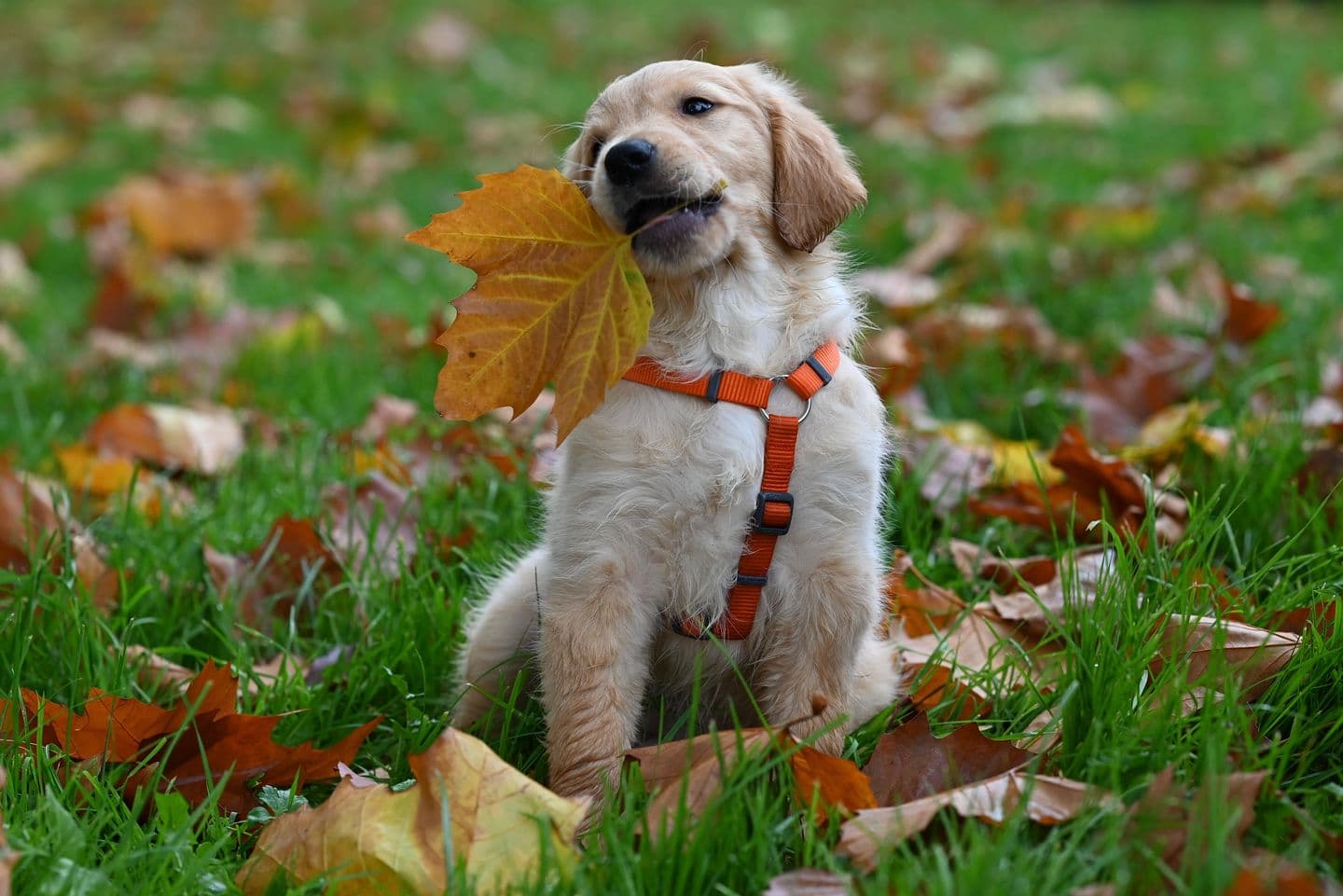
All the Ways Puppies Like to Play, and What Each One Teaches
Play is not just entertainment for a puppy, it is genuinely important developmental work, building social skills, coordination and confidence all at once. Recognising the different forms it takes, and
Play is not just entertainment for a puppy, it is genuinely important developmental work, building social skills, coordination and confidence all at once. Recognising the different forms it takes, and what each one is actually teaching, helps you support healthy play rather than accidentally discouraging it or letting it tip into something less constructive.
Social play
Play biting, wrestling, chasing and play bowing with other puppies, dogs or people fall into this category, usually beginning as early as three to four weeks of age among littermates. This is where a puppy learns bite inhibition, how much pressure is too much, through the yelps and pauses of playmates, a lesson that genuinely shapes how gently an adult dog eventually mouths or plays for the rest of its life.
Object play
Chasing a ball, pouncing on a toy, tugging at a rope, all forms of object play tap into a puppy's natural predatory instincts in a safe, redirected way. This kind of play does not require a partner and is particularly valuable for burning physical energy and satisfying chase and grab instincts that are stronger in some breeds, herding and terrier types especially, than others.
Motion or self play
The classic burst of zoomies, jumping, spinning, chasing its own tail, this largely solitary, high energy play often appears out of nowhere and passes just as quickly. It looks chaotic but is a completely normal release of pent up energy, particularly common after a nap or a period of confinement.
Tug and sharing play
A gentle game of tug, played with clear rules, a release cue the puppy reliably responds to, and pauses when teeth touch skin, can actually be a useful tool for teaching impulse control rather than something to avoid entirely, contrary to some outdated advice. Holding one end of a chew toy while a puppy gnaws the other, rewarding calm engagement, is a related exercise that helps prevent resource guarding by building a positive association with hands near valued objects.
Reading when play is healthy
Loose, relaxed bodies rather than stiff, tense ones
Frequent pauses and role swaps, particularly in chase games, where both participants take turns being chaser and chased
A returning play bow after any pause, signalling the game is still on and welcome
Mouthing that stays soft even during excited moments
When play needs a pause
Stiffening, growling that shifts in tone from playful to genuinely tense, one participant repeatedly trying to disengage while the other keeps pursuing, or mouthing that becomes hard and unyielding are all signs to calmly interrupt and let things settle, rather than assuming it will sort itself out. This is not the same as ending play permanently, most sessions restart happily after a short break once arousal has come back down.
Why variety matters
No single type of play meets every developmental need on its own, a puppy that only ever gets object play misses out on the social calibration that comes from playing with other dogs, while one that only plays with other puppies misses some of the focused engagement that structured toy or training based play builds with people. A mix across the week, some social time, some solo object play, some interactive games with you, covers considerably more developmental ground than any single favourite repeated exclusively.
Beyond the familiar Great Dane and Saint Bernard, a number of large, calm breeds carry the same gentle-giant temperament without quite the same name recognition. Most remain genuinely rare in India, b
A once-bouncy dog that suddenly seems flat, uninterested in walks, and withdrawn from the family is unsettling to watch, and the question that naturally follows is whether dogs can actually feel somet
A healthy dog isn't just a contented one; they're more playful, more energetic and more emotionally settled. As their owner, you're the biggest factor in how well your dog thrives, day in and day out.