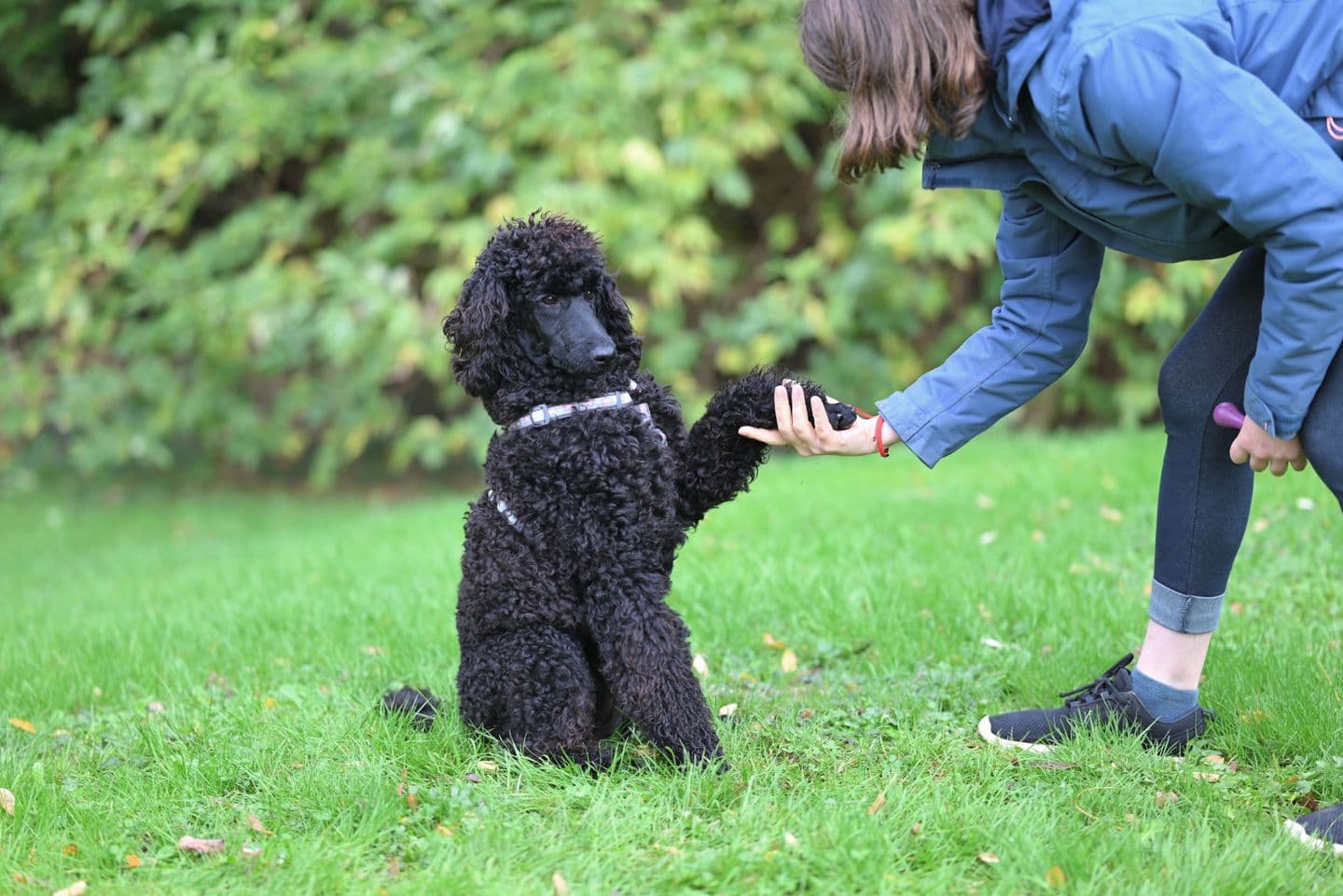
Shake is one of the first tricks most people try to teach, and for good reason. It is quick to learn, always gets a reaction from guests, and gives you a simple, low stakes way to practise clicker or
Shake is one of the first tricks most people try to teach, and for good reason. It is quick to learn, always gets a reaction from guests, and gives you a simple, low stakes way to practise clicker or marker training if you have not tried it before. Most dogs with a bit of paw awareness can pick it up within a handful of short sessions.
Before You Begin
Check that your dog is comfortable having their paws touched. Some dogs, especially rescues or those who have not been handled much as puppies, find this unsettling. If your dog pulls their paw away or seems tense, spend a few days simply touching and gently holding each paw during calm moments and rewarding with a treat, before attempting the trick itself. It also helps if your dog already knows how to sit, since shake is usually taught from a seated position.
Choosing the Right Training Treats
Pick something small, soft, and quick to eat, so your dog can get back to training instead of chewing for half a minute. Tiny cubes of boiled chicken, cheese, or paneer work well, as do small pieces of chapati for dogs who are not particularly food driven. Avoid anything seasoned with onion or garlic, and skip fatty or oily leftovers, since both can upset a dog's stomach and onion in particular is toxic to dogs. Keep the pieces pea sized. The goal is a quick reward, not a meal, so your dog stays focused on the exercise rather than the eating.
Step by Step
Ask your dog to sit, then kneel or crouch in front of them at a comfortable height.
Hold a small treat in your closed fist and present it near your dog's nose, off to one side rather than straight on.
Most dogs will try pawing at your closed hand to get at the treat. The instant a paw touches your hand, open it and reward, adding warm praise.
Repeat this a good number of times until your dog is reliably pawing at your hand without hesitation.
Once that is consistent, start holding your other hand out, open and flat, without a treat inside it. Say the word shake just before you expect the paw to land, then reward from your other hand.
Practise with both paws separately so your dog learns to offer either one on cue, not just the one they favour.
If Your Dog Gets Stuck
Some dogs are naturally pawsy and offer their paw within the first session. Others need more encouragement. If your dog just stares at your fist instead of pawing it, try gently lifting the paw yourself the first couple of times while saying the cue word, then reward, so they understand what movement earns the treat. From there, fade your hand back to just waiting for them to offer it. Avoid physically forcing the paw up and down like a handshake motion in the early stages, that tends to make dogs stiffen up rather than relax into the trick.
Keeping It Fresh
Once your dog has the trick down, practise it in short bursts across the week rather than one long session, and gradually cut back on treats in favour of praise and the occasional reward. A well practised shake also becomes a handy way to redirect a dog who tends to jump up on visitors, since it gives them something polite to do with their paws instead.
Extending the Trick: Teaching a Wave
Once shake is solid, it is a short step to teaching a wave, which is really the same behaviour offered without contact. Hold your hand out as you normally would for shake, but this time pull it back slightly, just out of reach, right as your dog lifts their paw. Mark and reward the paw lift itself rather than waiting for contact, and introduce a new cue word such as wave or bye bye. Most dogs pick this up quickly once shake is well established, since the underlying paw lift is already familiar.
Beyond the familiar Great Dane and Saint Bernard, a number of large, calm breeds carry the same gentle-giant temperament without quite the same name recognition. Most remain genuinely rare in India, b
A once-bouncy dog that suddenly seems flat, uninterested in walks, and withdrawn from the family is unsettling to watch, and the question that naturally follows is whether dogs can actually feel somet
A healthy dog isn't just a contented one; they're more playful, more energetic and more emotionally settled. As their owner, you're the biggest factor in how well your dog thrives, day in and day out.