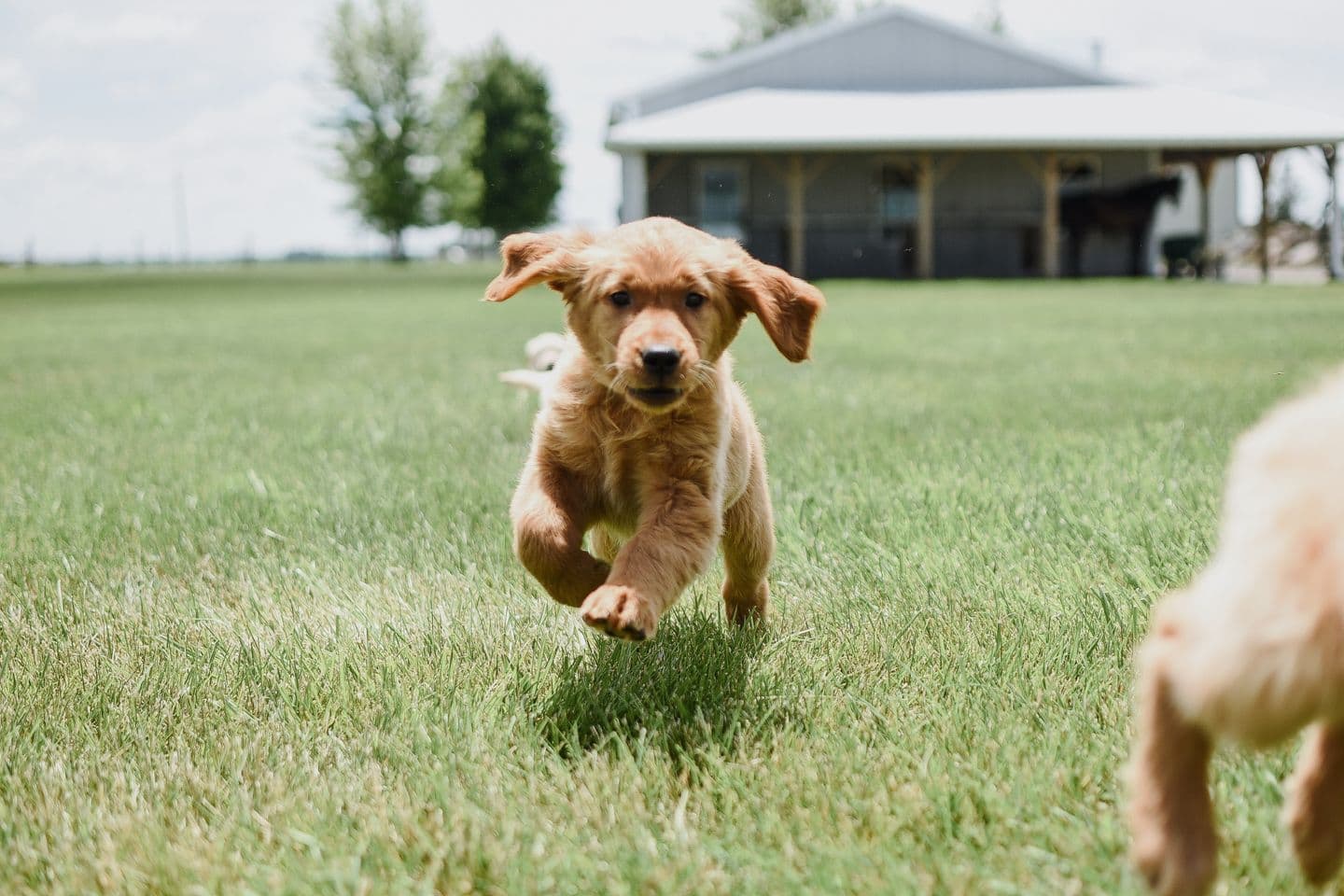
Puppies learn quickly, but their attention spans are short and their impulse control is close to nonexistent. Teaching sit and stay together works well for puppies because sit gives them an easy first
Puppies learn quickly, but their attention spans are short and their impulse control is close to nonexistent. Teaching sit and stay together works well for puppies because sit gives them an easy first success, and a short stay simply builds a small amount of patience on top of it.
Keep sessions puppy sized
A young puppy can usually focus for two to five minutes before losing interest. Several short sessions across the day work far better than one long one. Train before meals when your puppy is a little hungry and motivated, and always end while they are still having fun.
Teaching sit first
Hold a treat just above your puppy's nose and move it slowly back over their head. As their nose tilts up to follow it, their bottom naturally lowers to the ground. Mark the instant they sit and reward immediately. Puppies often sit by accident several times a session before they understand the pattern, so reward generously in the early days.
Adding a one second stay
Once sit is reliable, ask for a sit, wait one second, then reward while your puppy is still sitting rather than after they get up. Slowly build to two seconds, then three, adding the word "stay" once your puppy is holding the position for a couple of seconds consistently. Keep early stays extremely short. Asking a young puppy to hold still for thirty seconds is asking for failure.
A note on the vaccination window
Most vets recommend keeping puppies away from unfamiliar dogs and public ground until their vaccination course is complete, typically around fourteen to sixteen weeks. This makes early sit and stay training an ideal indoor or balcony activity during exactly the period when outdoor socialising still needs to wait. Once your vet gives the go ahead, carry the same skills outdoors and practise around gentle, controlled distractions.
Beyond the familiar Great Dane and Saint Bernard, a number of large, calm breeds carry the same gentle-giant temperament without quite the same name recognition. Most remain genuinely rare in India, b
A once-bouncy dog that suddenly seems flat, uninterested in walks, and withdrawn from the family is unsettling to watch, and the question that naturally follows is whether dogs can actually feel somet
A healthy dog isn't just a contented one; they're more playful, more energetic and more emotionally settled. As their owner, you're the biggest factor in how well your dog thrives, day in and day out.