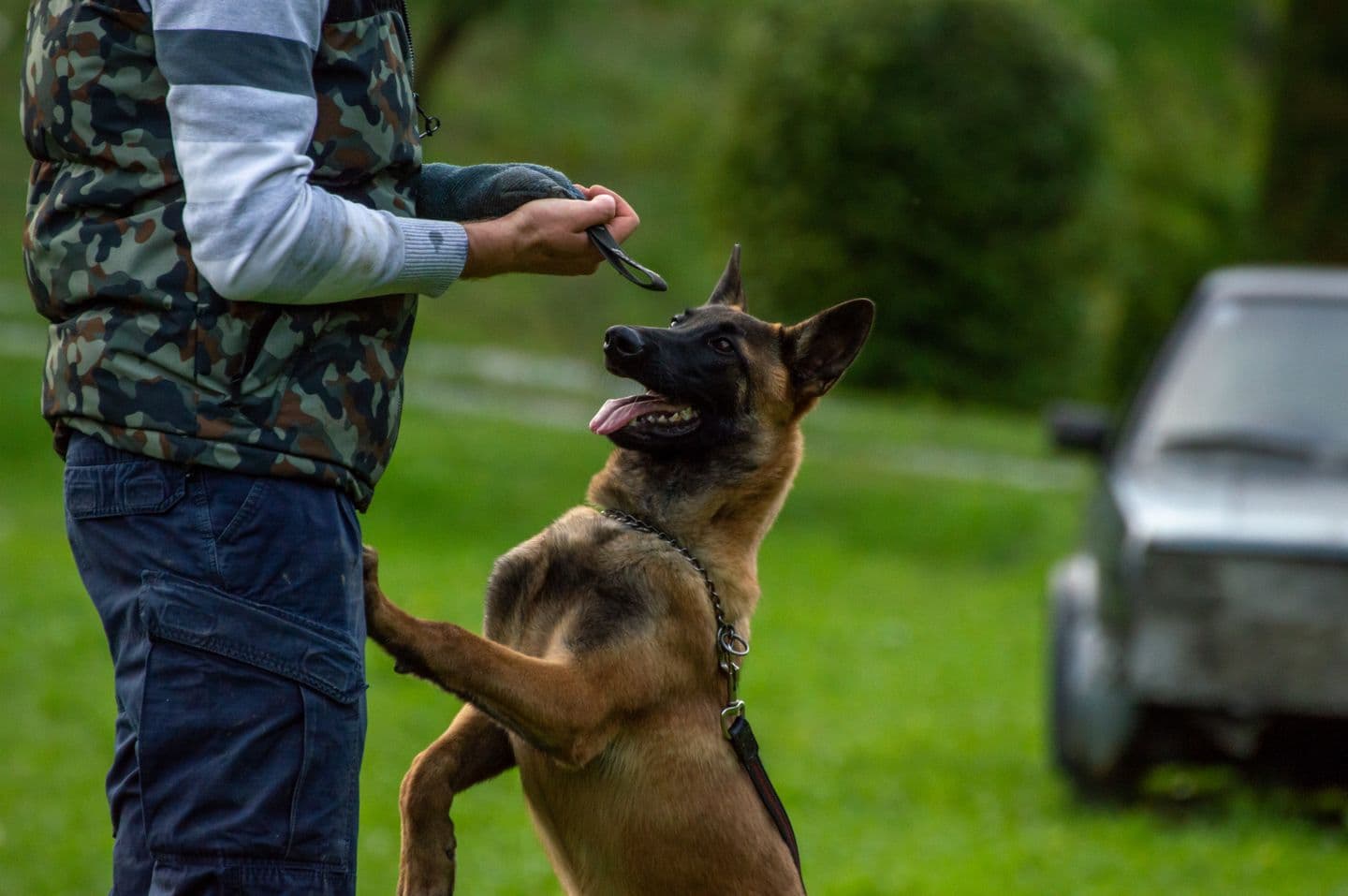
Barking on cue sounds like an odd party trick, but it is actually one of the fastest routes to teaching a reliable "quiet" cue, since you cannot reward the absence of barking until you have a way to r
Barking on cue sounds like an odd party trick, but it is actually one of the fastest routes to teaching a reliable "quiet" cue, since you cannot reward the absence of barking until you have a way to reliably produce barking in the first place.
Teaching speak
Find whatever naturally makes your dog bark, whether that is the doorbell, a knock, or you holding up their favourite toy just out of reach. The moment your dog barks, mark with "yes" and reward immediately. After several repetitions, add the word "speak" right before the trigger. Eventually your dog will offer a bark on the word alone, without needing the trigger.
Teaching quiet
Once speak is reliable, ask for a bark, let your dog bark once or twice, then hold a treat silently at their nose. Most dogs stop barking to sniff the treat, since barking and sniffing do not happen at the same time. The instant they go quiet, say "quiet" and reward. Repeat this several times a day until the word alone produces silence, then start using it during real barking episodes, not just staged ones.
Managing the biggest trigger in India
For most Indian households, the real barking problem is not staged sessions but a dog going off at every street dog, cow, two-wheeler or gate visitor. This kind of alert barking is harder to interrupt than a trained behaviour, since the dog is reacting to something genuinely happening. Do not punish this barking, since it often comes from a real sense of alarm and punishment can make dogs more anxious rather than quieter. Instead, teach "quiet" in calm situations first, then gradually apply it to milder versions of the real trigger, such as a person walking past at a distance, before expecting it to work at full intensity right at the gate.
When barking needs more than training
Constant barking triggered by every sound outside, especially in an apartment with shared walls, sometimes points to under stimulation or anxiety rather than a training gap. If quiet is not improving after consistent practice, it is worth looking at your dog's exercise levels, time left alone, and whether they have a clear view of the street that keeps triggering them, and covering a window or changing the seating arrangement can help as much as any cue.
Beyond the familiar Great Dane and Saint Bernard, a number of large, calm breeds carry the same gentle-giant temperament without quite the same name recognition. Most remain genuinely rare in India, b
A once-bouncy dog that suddenly seems flat, uninterested in walks, and withdrawn from the family is unsettling to watch, and the question that naturally follows is whether dogs can actually feel somet
A healthy dog isn't just a contented one; they're more playful, more energetic and more emotionally settled. As their owner, you're the biggest factor in how well your dog thrives, day in and day out.